




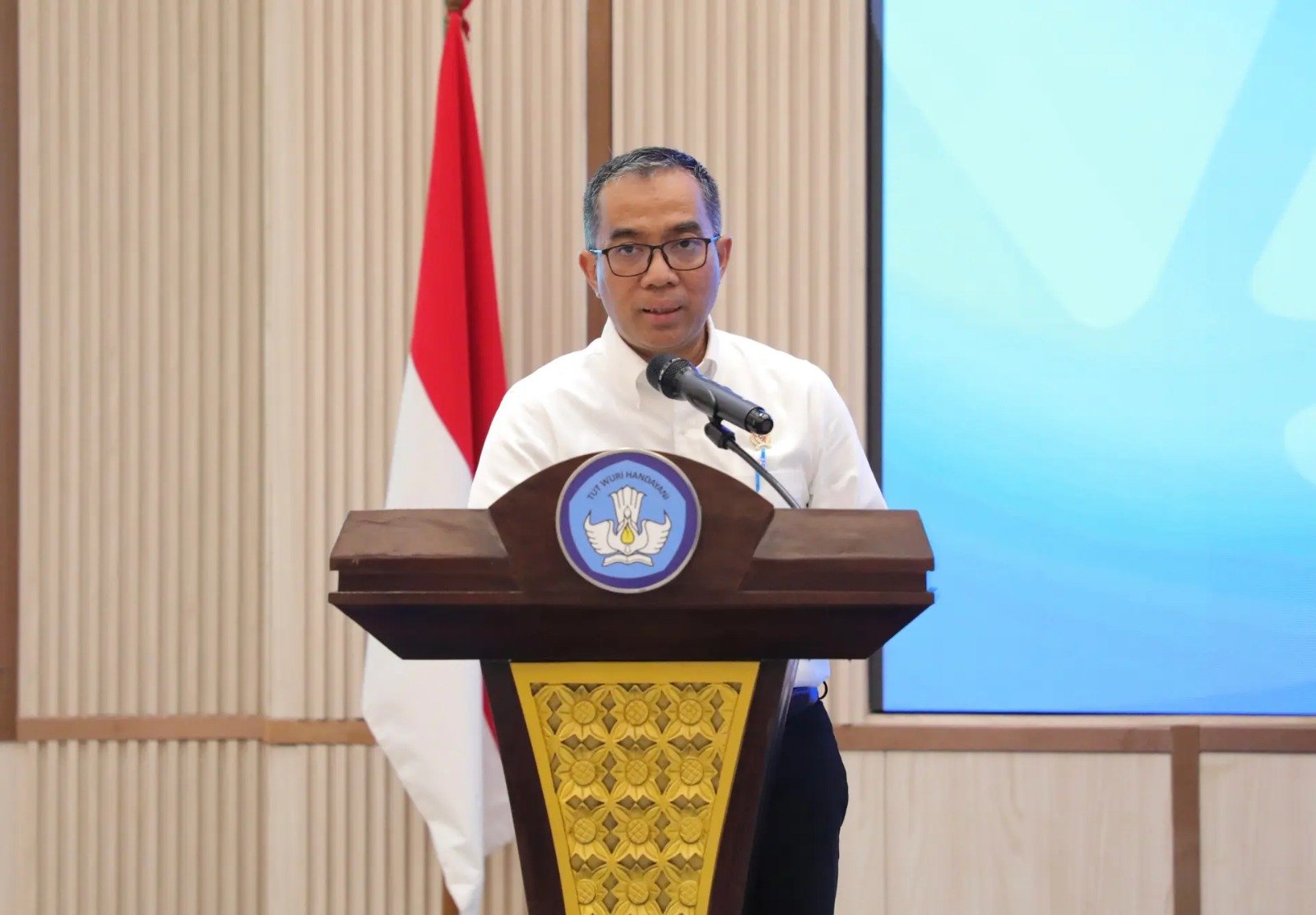
EduAsiaNews, Jakarta — As 2025 draws to a close, the government has finally completed a long-awaited task for the academic community. Minister of Higher Education, Science, and Technology Brian Yuliarto has signed Ministerial Regulation Number 52 of 2025 on the Profession, Career, and Income of Lecturers. The regulation marks a new chapter in the governance of the academic profession in Indonesia—more orderly, more certain, and claimed to be fairer.
The regulation replaces Minister of Education, Culture, Research, and Technology Regulation Number 44 of 2024, which was considered insufficient in addressing lecturers’ needs amid increasingly competitive higher education dynamics. Brian described the new policy as an effort to consolidate best practices already in place while strengthening aspects that have long been sources of uncertainty. “This regulation unifies and reinforces lecturer policies to make them clearer, fairer, and more sustainable,” Brian said.
At the heart of the policy is legal certainty. For the first time, the profession, career pathways, and income of lecturers are integrated into a single, coherent policy framework. The government hopes this certainty will allow lecturers to focus more fully on carrying out the tridharma of higher education—teaching, research, and community service—without being burdened by layered administrative and regulatory issues.
Ministerial Regulation No. 52 of 2025 also reaffirms four core competencies for lecturers: pedagogical, personal, social, and professional. These competencies are positioned as the foundation for improving the quality of higher education. Lecturer certification is clarified through more measurable and transparent criteria and is framed as a quality assurance instrument rather than merely an administrative requirement. “Improving lecturers’ welfare must go hand in hand with enhancing their quality and professionalism,” Brian emphasized.
In terms of career development, the regulation provides a more systematic and performance-based framework for the promotion and advancement of lecturers, covering both civil servant lecturers and non–civil servant lecturers. Special attention is also given to Professors Emeritus, who are now explicitly recognized as national intellectual assets that can continue to contribute after retirement. At the same time, broader space is opened for the involvement of academic diaspora and the recognition of international experience as part of lecturers’ career development.
Governance reforms are also introduced through the delegation of authority to appoint functional academic positions to LLDIKTI and selected autonomous state universities that meet specific requirements. This policy aims to streamline bureaucracy, accelerate services, and strengthen university autonomy. “This delegation of authority speeds up services while reinforcing governance and campus autonomy,” Brian said.
The most sensitive issue—income—has finally gained clarity. The regulation clearly sets out the components of lecturers’ income, ranging from basic salary and attached allowances to professional, functional, special, honorary allowances, as well as additional benefits in accordance with prevailing laws and regulations. For many lecturers, this clarity answers long-standing concerns about career direction and financial security.
With the enactment of Ministerial Regulation Number 52 of 2025, the government reaffirms its commitment to managing the lecturer profession in a more transparent and equitable manner. More than a mere administrative rule, the policy is expected to serve as a foundation for higher-quality campus life—and, ultimately, for greater impact on society at large. (**)