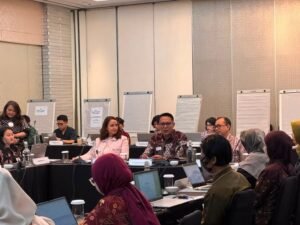





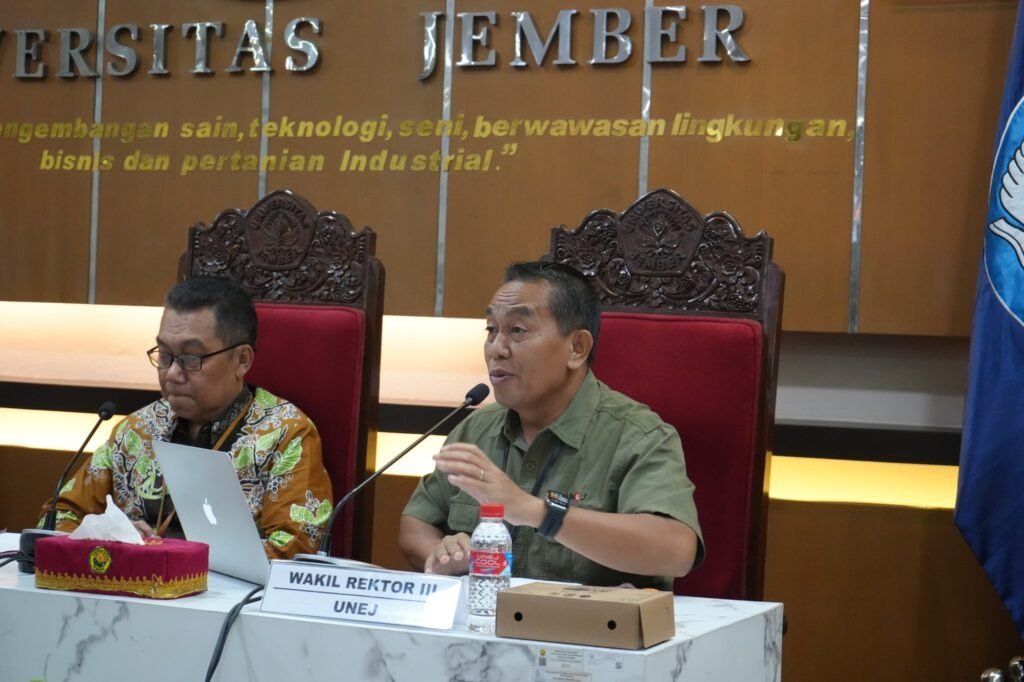
EduAsiaNews, Jember — The University of Jember (UNEJ) has become a preferred destination for comparative studies among State Universities (PTN) in the field of governance. This week alone, two institutions conducted comparative study visits: the Surabaya State Shipbuilding Polytechnic (PPNS) and Lambung Mangkurat University, Banjarmasin. The purpose of these visits was to observe firsthand the implementation, systems, and experience of UNEJ in managing university governance. Both institutions visited the Tegalboto campus, with PPNS arriving first on Wednesday afternoon (10 December 2025).
According to the Vice Rector for Planning, Cooperation, and Information Systems (Vice Rector IV) of UNEJ, the comparative studies conducted by PPNS and Lambung Mangkurat University were motivated by UNEJ’s achievements in governance. Among these achievements is UNEJ’s success in ranking among the top five Public Service Agency State Universities (PTN BLU) nationwide in achieving Key Performance Indicators (IKU). This year, UNEJ placed fourth out of fifty-three PTN with BLU status across Indonesia.
“Alhamdulillah, UNEJ has also received an international award in the field of governance, namely the Asia Sustainability Reporting Rating (ASRRAT) 2025. The ASRRAT event assesses sustainability reporting that is transparent, comprehensive, and aligned with global standards, while also emphasizing commitment to best practices in sustainable governance,” stated Prof. Bambang Kuswandi.
During the discussion session, PPNS Deputy Director III, M. Hakam, explained that the purpose of this visit was to learn about BLU management from UNEJ, particularly in strengthening institutional capacity and cooperation. Therefore, the delegation included key officials such as the Head of Cooperation and Public Relations, a financial analyst, and the coordinator of the Management and Business study program. “We hope to engage in dialogue that provides practical insights as a medium for sharing experiences, perspectives, and strengthening institutional collaboration,” said M. Hakam. (*)