




EduAsiaNews, Jakarta – A multidisciplinary approach framed the discussions at The 6th International Symposium on Earth, Energy, Environmental Science and Sustainable Development 2025, organized by the Journal of Environmental Science and Sustainable Development (JESSD) in a virtual format on Friday (7 November).
A total of 402 research papers from 15 countries were curated to present global perspectives on environmental issues, energy, and sustainable development.
Participants joined from various countries, including the Philippines, Indonesia, Vietnam, Uzbekistan, Russia, Malaysia, Japan, Kyrgyzstan, Taiwan, Australia, Ireland, the Netherlands, Poland, Thailand, and Türkiye.
The event was opened by Prof. Dr. Drs. Supriatna, M.T., Director of the Postgraduate School of Sustainable Development, who emphasized the importance of aligning science, policy, and Indigenous wisdom.
“We are discussing the harmonization of scientific knowledge, policymaking, and local wisdom that has safeguarded nature across generations. The integration of these three elements is the key to sustainability,” he said.
The Keynote Speaker Session featured two speakers. Dr. Mari E. Mulyani of the University of Oxford underscored the need to recognize Indigenous Peoples’ knowledge as an epistemic authority equal to modern scientific knowledge, in order to make conservation efforts more inclusive and effective.
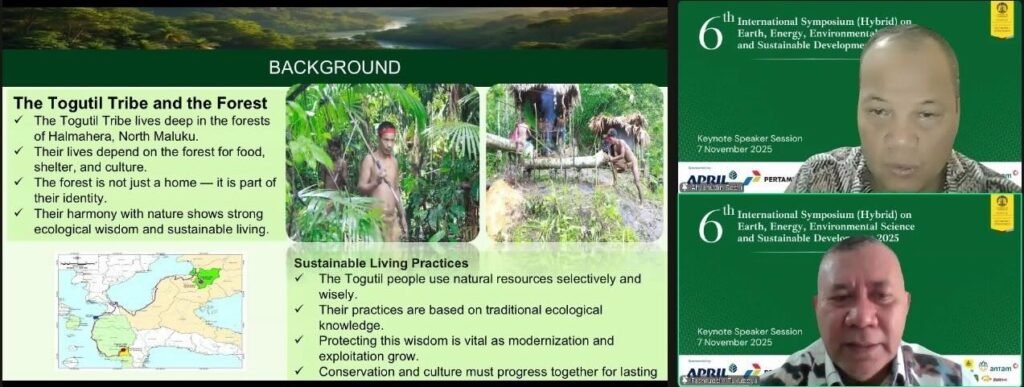
Meanwhile, Dr. Fachruddin Tukuboya presented his research on the traditional knowledge of the Togutil Tribe in Halmahera, highlighting their traditional hunting calendar and selective wildlife-use practices that maintain forest ecosystem balance.
The symposium continued with presentations of research findings from participants across multiple disciplines. Discussions covered renewable energy, biodiversity conservation, environmental governance, climate change, and community-based innovations.
The symposium was held as part of JESSD’s commitment as a Scopus-indexed scientific journal. Given the complexity of environmental challenges involving multiple stakeholders, JESSD hopes this symposium will serve as a platform for advancing knowledge that delivers tangible impacts for both the environment and society.