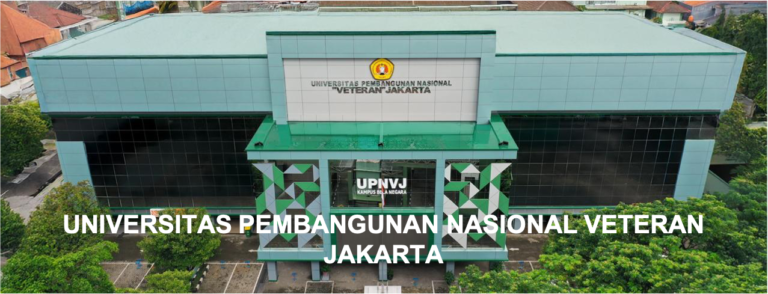





EduAsiaNews, Jakarta – Universitas Pembangunan Nasional “Veteran” Jakarta (UPNVJ) has once again demonstrated its commitment to enhancing the quality of higher education in accordance with international standards through the implementation of an On-Site Visit for Provisional Accreditation by the Indonesian Accreditation Board for Engineering Education (IABEE) for the Undergraduate Study Programs in Naval Architecture and Electrical Engineering, Faculty of Engineering, UPNVJ. The two-day event took place on November 23–24, 2026, and officially commenced at the Tanah Airku Auditorium, 5th Floor, Limo Campus, UPNVJ, on Monday (November 23, 2026).
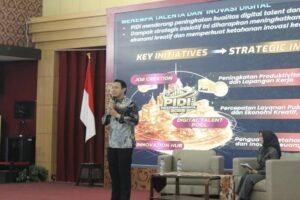
The accreditation visit was officially opened with remarks by the Acting Rector of UPNVJ, Nur Syarifah, S.H., LL.M., who also delivered a presentation on UPNVJ’s Transformation for the 2025/2026 Academic Year. The event was attended by university officials, Faculty of Engineering leadership, study program coordinators, and the IABEE accreditation team.
In her opening remarks, Nur Syarifah expressed her appreciation for the presence of the IABEE evaluation team and emphasized that the on-site visit represents an essential part of the university’s commitment to improving the quality of engineering education in alignment with international standards.
“This accreditation visit is an important part of UPN ‘Veteran’ Jakarta’s commitment to delivering engineering education that meets international standards. Through the IABEE accreditation process, we hope to ensure that all aspects of the curriculum, teaching and learning, research, and community service within the Faculty of Engineering comply with the standards of Outcome-Based Education (OBE) and are aligned with globally recognized learning outcomes,” she stated.
Furthermore, Nur Syarifah emphasized that the accreditation process is not solely focused on obtaining formal recognition but also serves as an evaluation mechanism to promote continuous improvements in academic quality.
According to her, the principle of continuous improvement must become an integral part of the university’s quality assurance culture, ensuring that every evaluation process leads to meaningful improvements in educational quality and graduate competencies.
“Guided by the spirit of National Defense (Bela Negara), which forms the core identity of UPN ‘Veteran’ Jakarta, we are committed to continuously improving the quality of our graduates so that they are professional, possess integrity, and are capable of competing at both national and international levels,” she emphasized.
On the same occasion, Nur Syarifah presented several achievements and strategic directions for UPNVJ’s transformation throughout the 2025/2026 Academic Year. The presentation covered the strengthening of institutional governance, improvements in study program accreditation, academic and research development, internationalization, and the development of educational facilities and infrastructure.
One of the achievements highlighted was the improvement in UPNVJ’s Government Agency Performance Accountability System (SAKIP) score, which reached 90.05 percent with an AA rating in 2026. This achievement reflects positive progress in strengthening the university’s accountability and governance.
In the academic sector, UPNVJ continues to promote the quality of its study programs through both national and international accreditation. These efforts form part of the university’s strategy to enhance institutional competitiveness while producing competent graduates whose qualifications are relevant to the needs of the professional workforce.
At the Faculty of Engineering, the IABEE accreditation process has been carried out in several stages. The Undergraduate Study Programs in Mechanical Engineering and Industrial Engineering previously obtained provisional accreditation recognition from IABEE. Meanwhile, the Undergraduate Study Programs in Naval Architecture and Electrical Engineering are undergoing the second-stage accreditation visit, scheduled for November 23–24, 2026.
The accreditation visits for these two study programs represent a strategic step toward expanding the scope of international quality recognition within UPNVJ’s Faculty of Engineering.
In addition to strengthening accreditation, the university also prioritizes the development of facilities that support teaching and learning activities. One of these initiatives is the planned construction of an engineering laboratory at the Limo Campus in 2026, which is expected to support practical sessions, research activities, and the development of students’ competencies within the Faculty of Engineering.
The enhancement of academic facilities is part of UPNVJ’s efforts to provide a learning environment that is increasingly adaptive to developments in science and technology, as well as the evolving needs of industry.
Through these various transformation initiatives, UPNVJ continues to pursue its vision of becoming an internationally recognized, excellent, and innovative university that is competitive and grounded in the values of National Defense (Bela Negara).
The implementation of the IABEE On-Site Visit for Provisional Accreditation serves as an important opportunity for the Naval Architecture and Electrical Engineering Study Programs to evaluate the extent to which their educational practices comply with international quality standards, particularly in the implementation of Outcome-Based Education(OBE).
Through this activity, the university also provides an opportunity for the evaluation team to offer feedback and recommendations that can serve as a foundation for the continuous development and improvement of academic quality.
Nur Syarifah expressed her hope that the entire accreditation visit would proceed smoothly and productively, providing valuable benefits for the development of both study programs and the Faculty of Engineering as a whole.
Through this IABEE accreditation visit, UPNVJ further reaffirms its commitment to strengthening its quality assurance culture, enhancing the competitiveness of engineering higher education, and preparing graduates who can contribute to national development while addressing global challenges.