


EduAsiaNews, Brisbane — An innovation born from an Australian university laboratory has now broken onto the global health stage. French pharmaceutical giant Sanofi has officially acquired Vicebio, a biotechnology company developing a vaccine platform based on the intellectual property of the University of Queensland (UQ), for a staggering sum of 1.6 billion US dollars, or approximately Rp 26.08 trillion.
The transaction includes an upfront payment of 1.15 billion US dollars (around Rp 18.74 trillion), plus potential milestone payments of up to 450 million US dollars (Rp 7.33 trillion), contingent on development and regulatory achievements. This marks the largest acquisition ever involving intellectual property from an Australian university.
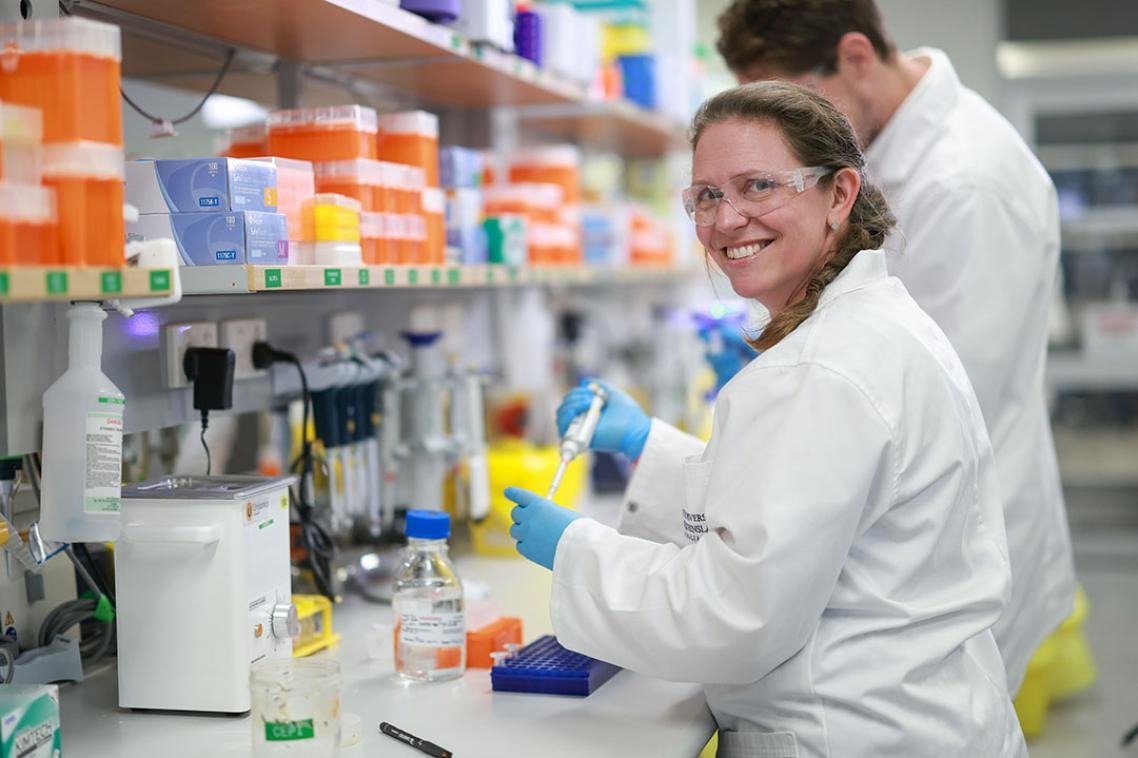
At the heart of this historic deal lies a technology known as the Molecular Clamp, an innovative vaccine platform discovered by three UQ researchers: Professor Keith Chappell, Professor Daniel Watterson, and Professor Emeritus Paul Young. The technology works by stabilising viral proteins in their native form, enabling the immune system to recognise and respond to disease threats more effectively. Furthermore, the platform allows vaccines to be produced in a ready-to-use liquid format that requires no freezing, greatly simplifying distribution across the globe.
Vicebio, established in 2018 to commercialise the technology, now holds a flagship vaccine candidate called VXB-241, a bivalent vaccine targeting Respiratory Syncytial Virus (RSV) and Human Metapneumovirus (hMPV), two respiratory viruses that frequently pose life-threatening risks to the elderly and vulnerable populations. This candidate is currently undergoing exploratory clinical trials and stands as the primary reason Sanofi was willing to invest so heavily to secure the technology.
The road to this success was far from straightforward. The Molecular Clamp technology briefly captured the world’s attention in early 2020 when UQ was selected by the Coalition for Epidemic Preparedness Innovations (CEPI) to develop a Covid-19 vaccine candidate, before the programme was ultimately discontinued. Professor Chappell noted that his team remained confident in their approach and continued to focus on research, until they finally saw their work reach this remarkable milestone. More than a decade of perseverance has now paid off.
For the University of Queensland, this transaction is more than a business triumph, it is tangible proof that a university can become a world-class engine of innovation. UQ Vice-Chancellor Professor Deborah Terry described the deal as “an extraordinary outcome that validates 12 years of UQ research” while demonstrating the global value of the university’s innovation pathway. Through its commercialisation arm, UniQuest, UQ has now registered more than 360 patents in the United States and established over 130 start-up companies based on its intellectual property, including the cervical cancer vaccine Gardasil, already known worldwide.
UQ’s achievement comes amid broader scrutiny of Australia’s higher education sector as a whole. In a pre-budget submission released in early February 2026, Universities Australia stated that Australia’s research ecosystem suffers from chronic underfunding, and urged the government to prioritise education budget allocations in the upcoming May federal budget. Meanwhile, a report from Adelaide University revealed that every university in Australia records high levels of psychosocial risk among academic staff, a striking irony against the backdrop of the very scientific breakthroughs that are burnishing Australia’s name on the world stage. (**)