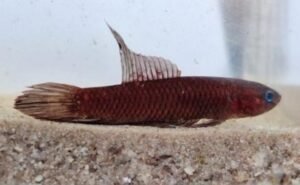





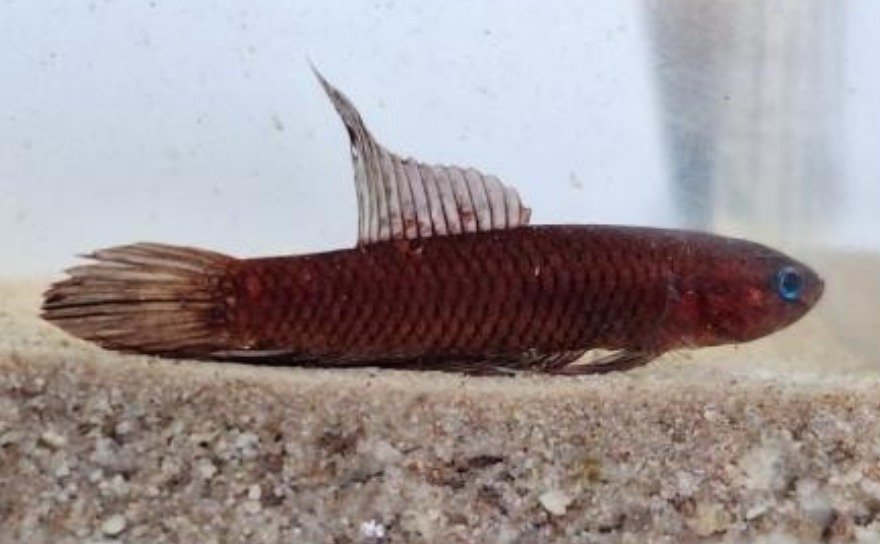
EduAsiaNews, Pangkalpinang — In the peat swamps of Bangka Belitung, Betta burdigala, a wine-red fighting fish found nowhere else on earth, is a story nearly told to its end. Indonesia’s National Research and Innovation Agency (BRIN), together with the Faculty of Agriculture, Fisheries, and Marine Sciences at the University of Bangka Belitung (UBB), announced a joint conservation effort for the species in February 2026. The initiative is no ordinary academic project, it is an emergency rescue mission for a creature the International Union for Conservation of Nature (IUCN) has classified as Critically Endangered, the last threshold before total extinction.
BRIN’s Center for Applied Zoology Research serves as the scientific engine of the collaboration, partnering with UBB field researchers who have spent years intimately familiar with Bangka’s peat swamp ecosystems. The approach goes well beyond keeping fish alive in tanks, it strikes at the root of the problem: genetic impoverishment caused by worsening habitat fragmentation. Decades of tin mining, land conversion, and peatland degradation have severed the natural migration corridors of Betta burdigala, forcing its populations into isolated pockets increasingly vulnerable to inbreeding.
Ahmad Fahrul Syarif, the lead researcher from UBB, stressed that the program is designed to reach beyond captive breeding. “This collaboration simultaneously supports population recovery in its natural habitat through domestication and sustainable genetic management,” he said. The research team will map the genetic diversity of surviving populations, then devise controlled breeding schemes to maintain sufficient genetic variation in captivity, a critical foundation before the fish can eventually be reintroduced into the wild.
The findings, according to Fahrul, are built for dual purpose. On one hand, they will serve as a scientific reference for genetic conservation recommendations specific to Betta burdigala . On the other, the methodology is intended to be replicable for monitoring the genetic diversity of other endemic freshwater fish across the Indonesian archipelago, a nation that harbors the richest concentration of endemic freshwater fish in Southeast Asia, yet ranks among the fastest to lose them.
The story of Betta burdigala mirrors a deeper Indonesian paradox: a country blessed with extraordinary biodiversity, yet persistently neglectful of that inheritance until the hour grows dangerously late. The BRIN-UBB collaboration offers a sliver of hope — that science, arriving just in time, can still serve as the last anchor for a species nearly swallowed by the tide of development. (**)