




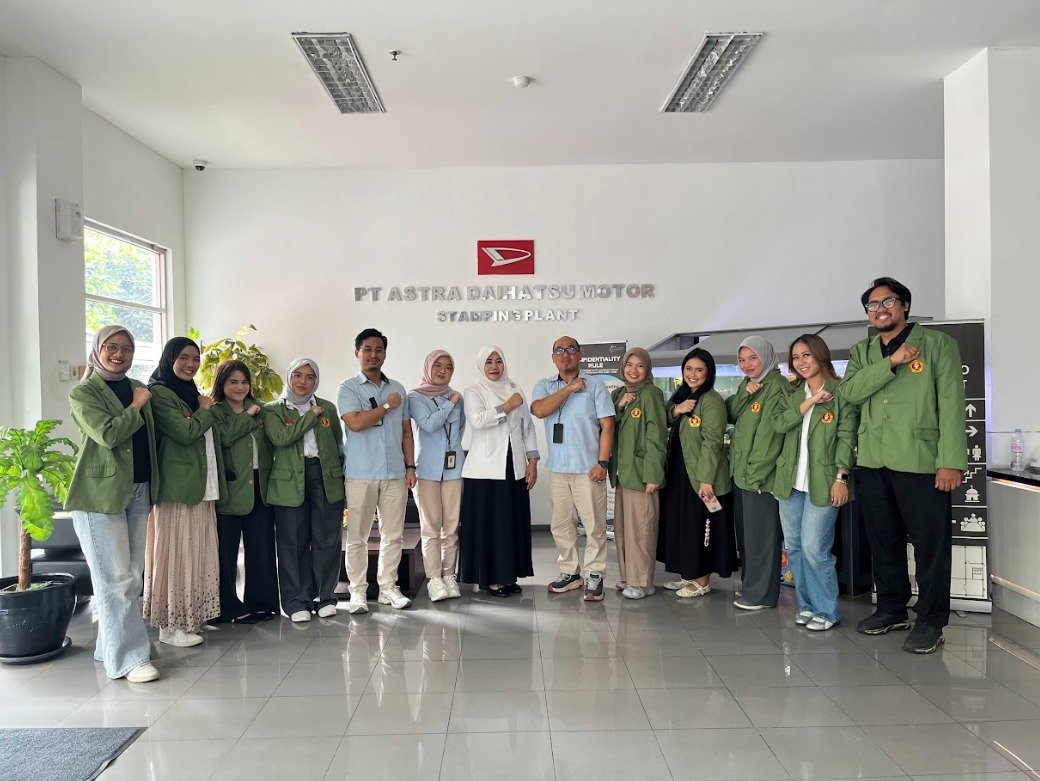
EduAsiaNews, Jakarta – Students of the Master’s Program in Communication Science at the Faculty of Social and Political Sciences, Universitas Pembangunan Nasional Veteran Jakarta, together with a supervising lecturer, conducted a company visit to PT Astra Daihatsu Motor (ADM) at the Astra Assembly Point in Sunter, North Jakarta, on Wednesday, 13 May 2026. The visit formed part of the learning activities for courses related to Corporate Social Responsibility (CSR), stakeholder management, and corporate communication, aiming to provide students with direct insight into the implementation of corporate communication strategies within the industrial sector.
The visit began with an introduction to ADM’s corporate profile and workplace culture, which strongly emphasizes occupational safety and safety culture. Participants were introduced to the importance of workplace safety through ADM’s safety commitment program under the slogan, “Safety is my responsibility.” Students also received an overview of ADM’s history as one of Indonesia’s largest automotive companies, established in 1978 and now playing a significant role in both the national and global automotive industries.
Yazid, CSR Department Manager of ADM, explained that CSR implementation at ADM has evolved into a sustainable corporate strategy through the Creating Shared Value (CSV) approach and the strengthening of relationships with surrounding communities.
“At Astra Daihatsu Motor, CSR begins with a local community approach. We believe that the success of CSR programs is not merely about corporate activities, but about how these programs truly create impact and benefits for society,” Yazid stated during the presentation session.
ADM implements its CSR initiatives through four main pillars: Pintar Bersama Daihatsu (Education), Sehat Bersama Daihatsu (Health), Hijau Bersama Daihatsu (Environment), and Sejahtera Bersama Daihatsu (Economic Empowerment). These four pillars are carried out through a community needs-based approach aligned with the Sustainable Development Goals (SDGs).
Under the education pillar, ADM has supported hundreds of vocational schools across various regions through industrial curriculum development, DOJO classes, and collaborations with Astra Polytechnic. In the health sector, ADM actively conducts integrated health service programs, mobile clinics, and community health center development initiatives reaching thousands of beneficiaries.
In the environmental sector, ADM carries out conservation programs including tree planting, turtle conservation, waste bank management, and the use of renewable energy through solar panels. Meanwhile, under the economic pillar, the company promotes MSME empowerment and the development of Kampung Berseri Astra (KBA) as part of strengthening local community economies.
Students also learned how ADM manages stakeholder relations in implementing these programs. ADM identifies seven primary stakeholders: communities, government, shareholders, customers, employees, suppliers, and the environment. Each stakeholder group is approached through different communication strategies based on their respective characteristics and levels of interest.
“Stakeholder approaches cannot be generalized. Every stakeholder has different needs and characteristics, so companies must be capable of building appropriate and sustainable communication,” Yazid explained.
The students were further introduced to the importance of social mapping in designing CSR programs. ADM emphasized that all CSR initiatives are developed through processes of identifying community and stakeholder needs, ensuring that the programs remain targeted and sustainable.
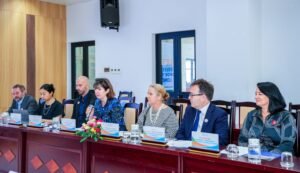
During the interactive discussion session, students from the Master’s Program in Communication Science at UPN “Veteran” Jakarta raised various questions concerning CSR implementation challenges, government relations management, program success indicators, and CSR communication strategies through digital media and corporate publications.
The supervising lecturer stated that the visit provided students with valuable real-world experience in understanding the implementation of corporate communication practices within industry settings.
“This activity serves as an important learning experience because students not only study theories of corporate communication and stakeholder management in the classroom, but also directly observe how companies implement them in business practices and community relations,” said Dr. Ana Kuswanti, Lecturer of the Master’s Program in Communication Science at UPN “Veteran” Jakarta.
Meanwhile, one of the participating students, Haura Asqo Balqis, stated that the visit offered new insights into how major corporations establish relationships with stakeholders through structured and sustainable CSR programs.
“Through this company visit, we came to understand that CSR is not merely a company’s social activity, but also part of a communication strategy and long-term relationship building with stakeholders,” she explained.
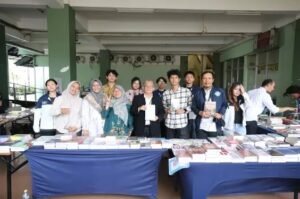
The company visit concluded with a joint documentation session and hopes that collaboration between academia and industry will continue to strengthen the development of communication studies, particularly in the fields of corporate communication, CSR, and stakeholder engagement.(www.upnvj.ac.id)