




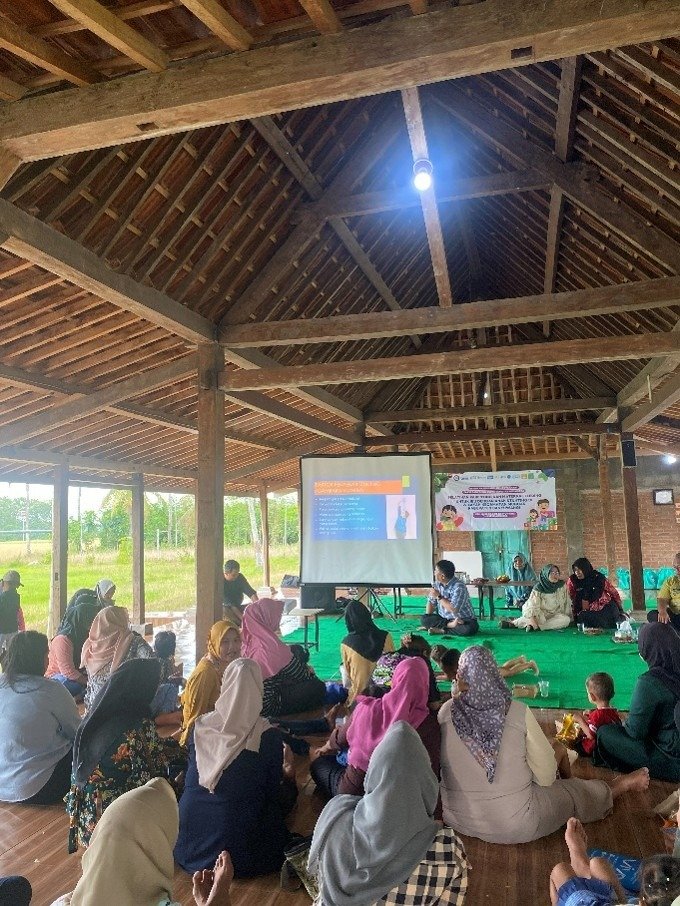
EduAsiaNews, Surabaya – Stunting is associated not only with adequate nutritional intake but also with parenting practices and the ways in which parents provide food to their children. In response to this issue, a community service team involving the Faculty of Psychology of Universitas Airlangga (UNAIR) provided training on parental and maternal feeding practices for mothers in Muncar District, Banyuwangi.
The activity formed part of efforts to complement various stunting prevention and intervention measures, which have largely focused on ensuring and monitoring nutritional intake. Through the training, mothers were provided with an understanding of stunting, positive parenting practices, and appropriate feeding strategies for children.
Professor of Psychology at UNAIR, Prof. Dr. Suryanto, M.Si., Psychologist, explained that the urgency of the program was reflected in the stunting situation in Muncar District. Based on data used by the community service team, 105 children under five were recorded as experiencing stunting in May 2024. The figure increased to 121 children under five in June 2024.
Parenting Practices and Feeding Methods Also Play a Role
According to Prof. Suryanto, stunting needs to be addressed comprehensively because it is a multifactorial issue and is not solely associated with poverty or nutritional deficiencies.
Feeding practices are one of the aspects that require attention. Young children remain highly dependent on their parents, particularly their mothers, in developing eating patterns and habits.
“Therefore, the way mothers plan, prepare, and provide food can influence children’s eating behavior,” he explained.
One of the approaches introduced to participants was responsive feeding. This approach emphasizes positive interaction between mothers and children during mealtimes, including providing food gradually, avoiding coercion, and creating positive eating experiences.
Prof. Suryanto hopes that the education provided will help mothers not only understand their children’s nutritional needs but also pay attention to how food is provided and how parent-child relationships develop during mealtimes.
Engaging 43 Mothers
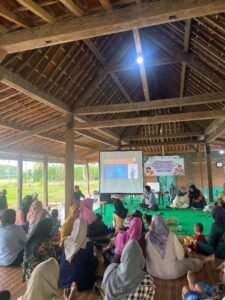
The training was attended by 43 mothers with children under five. During the program, participants received materials on stunting, child-rearing practices, and appropriate ways to provide nutritional intake.
In addition to presentations, the learning process also involved discussions and question-and-answer sessions. This approach provided participants with an opportunity to relate the training materials to their everyday experiences of raising and feeding their children.
The results showed an increase in participants’ knowledge following the training. The analysis was conducted using 28 pre-test and post-test datasets that had undergone data-cleaning procedures.
Statistical analysis produced a t-test value of -2.360 with a p-value of 0.026. These results indicate a statistically significant difference between participants’ knowledge before and after the training.
Qualitatively, participants also demonstrated a good understanding of the materials. This was evident during the discussions and question-and-answer sessions, including when participants practiced basic parenting techniques they had learned.
Promoting Sustainable Stunting Prevention
The UNAIR Psychology faculty member explained that the parental and maternal feeding training demonstrates how efforts to address stunting can be strengthened by increasing parents’ capacity. In addition to ensuring that the food provided meets children’s nutritional needs, parents also need to understand parenting practices and feeding strategies that support children’s growth and development.
The program also complements the stunting prevention and intervention approaches implemented by the government. While nutritional interventions focus on meeting the nutritional and health needs of mothers and children, education on parenting and feeding practices can strengthen behavioral changes within the family environment.
By increasing mothers’ knowledge and encouraging changes in their attitudes, the training is expected to strengthen public awareness of the important role parents play in shaping children’s eating habits. In this way, stunting prevention goes beyond nutritional provision and develops into a sustainable effort that begins with everyday parenting practices within the family.
Written by: Prof. Dr. Suryanto, M.Si., Psychologist / Khefti Al Mawalia