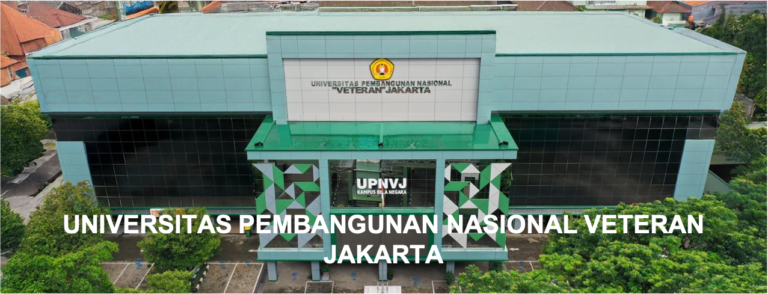





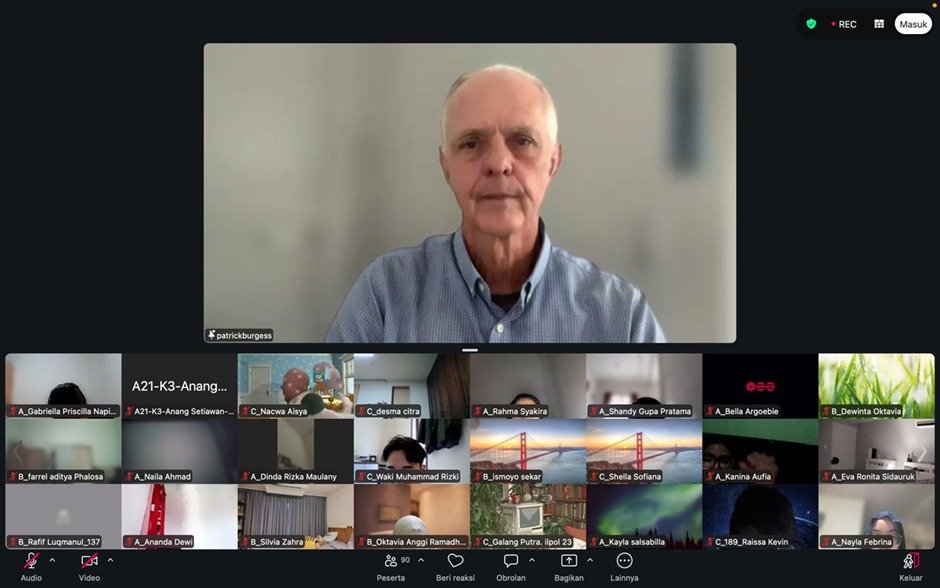
EduAsiaNews, Jakarta – The Faculty of Social and Political Sciences (FISIP), Universitas Pembangunan Nasional “Veteran” Jakarta (UPNVJ), organized a public lecture titled Public Lecture: Democracy and Human Rights, focusing on the theme “Are Human Rights Universal or Culturally Relative?”. The event, held on Tuesday, April 7, 2026, took place via the Zoom Meeting online platform and was attended by 114 participants consisting of enthusiastic students and lecturers.
The event was opened by a lecturer from the Political Science Study Program, Sri Lestari Wahyuningrum, Ph.D. Through this activity, students were able to learn from experts and practitioners about the complexity of the relationship between democracy, human rights, and cultural diversity in an ever-evolving global context.
The lecture featured an international expert and practitioner, Patrick Burgess, who is the President of Asia Justice and Rights (AJAR) as well as a human rights specialist. In his presentation, Patrick invited participants to explore the fundamental question of whether human rights are universal for all people regardless of context, or whether they should be understood as relative to the cultural, traditional, and social values of each society.
In his remarks, Patrick Burgess explained that international human rights law essentially recognizes cultural differences, including religious and social practices. Every society has the right to preserve its cultural identity and values. However, he emphasized that not all cultural practices can be justified under the name of cultural relativism.
According to him, when a cultural practice restricts or even denies fundamental rights—particularly women’s rights to education, freedom of movement, employment, healthcare services, and participation in public life—such practices can no longer be considered legitimate cultural differences. From the perspective of international human rights law, such restrictions constitute a violation of the principles of equality and women’s rights.
The session was conducted interactively with active participation from attendees. Through the discussion, students were expected to gain a deeper understanding of the complexities of justice and democracy beyond classroom theory. The session concluded with appreciation to the speaker for his comprehensive and reflective insights, as well as hopes for future collaboration.
Through this public lecture series, FISIP UPNVJ reaffirms its commitment to expanding international networks and providing opportunities for students to learn directly from global practitioners and experts.(www.upnvj.ac.id)