


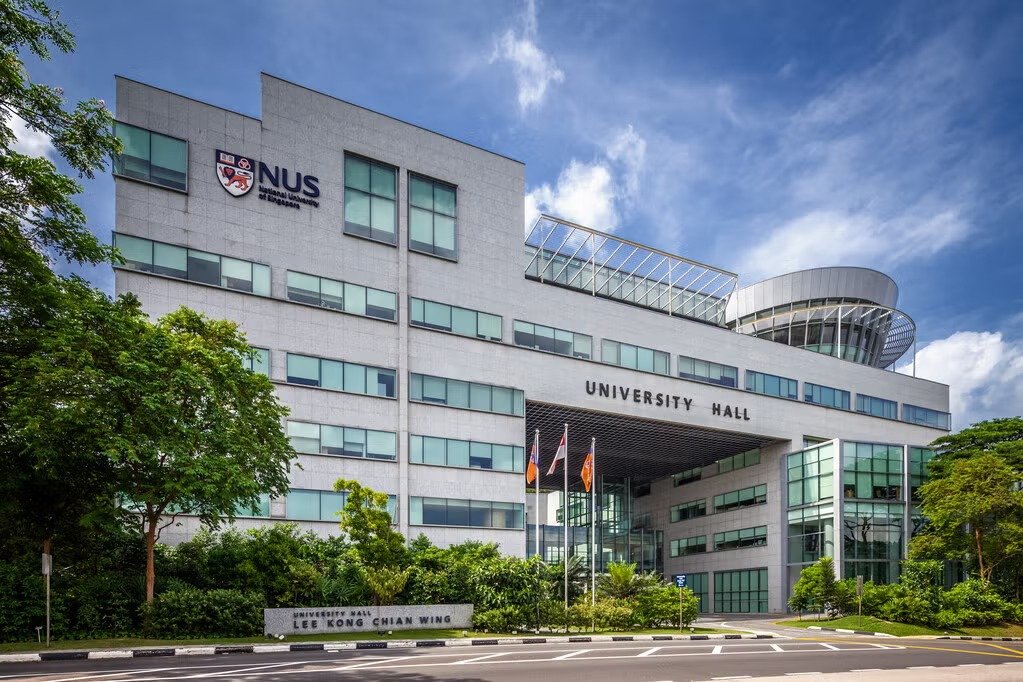
EduAsiaNews, Singapore — The National University of Singapore (NUS) has officially launched the Centre for Computational Social Science and Humanities, a new research centre that brings together the power of data science, artificial intelligence, and the study of social sciences and humanities. The move marks a new chapter in the prestigious Asian university’s efforts to broaden the horizons of interdisciplinary research in order to address the growing complexity of social issues in an ever-accelerating digital era.
Housed under the NUS Faculty of Arts and Social Sciences, the centre is designed to harness computational technology to dissect a wide range of contemporary social phenomena — from the dynamics of digital communities and patterns of public behaviour in online spaces, to social transformations driven by rapid technological advancement. By leveraging large-scale data analysis, researchers affiliated with the centre are expected to gain sharper and more comprehensive insights into the evolving social patterns shaping societies today.
NUS Dean of the Faculty of Arts and Social Sciences, Chong Terence, affirmed that the computational approach is no longer merely supplementary — it has become the backbone of modern social research. “By harnessing data science and artificial intelligence, researchers can study social phenomena more broadly and accurately, while also understanding societal changes that are occurring at tremendous speed,” said Chong in an official university statement.
Chong further revealed that the centre will also serve as an incubator for cross-disciplinary collaboration, bringing together social scientists, data experts, and technology researchers under one roof. The convergence of expertise from these diverse fields is expected to produce research that is not only academically rigorous, but also highly relevant to the needs of public policy.
Beyond the academic realm, the findings generated by the centre are aimed at delivering data-driven policy recommendations for use by governments, public institutions, and civil society organisations. By synergistically integrating social science, humanities, and computational technology, NUS reaffirms its commitment to strengthening the role of universities as strategic partners in understanding and responding to the increasingly complex social challenges of the future.
The establishment of this research centre also reflects a broader global trend in which the boundaries between the humanities and technology are growing ever more blurred — a convergence widely regarded as key to unravelling the defining challenges of this century. (**)