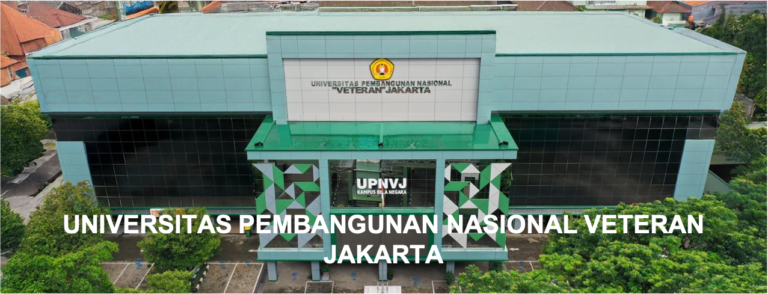






EduAsiaNews, Jakarta – The Faculty of Medicine of Universitas Pembangunan Nasional “Veteran” Jakarta (FK UPNVJ) welcomes the issuance of Decree of the Director General of Higher Education No. 106/B/KPT/2026 concerning Technical Guidelines for the Recognition of Prior Learning (RPL) and Development Programs for Students of Higher Education Programs for Medical and Health Professionals who have Completed All Learning Processes in Vocational and Professional Education Programs. The policy provides a mechanism for students who have completed all learning processes but have not yet passed the competency examination and have exceeded the prescribed maximum study period. Its implementation continues to require assessment and fulfillment of competencies in accordance with professional education standards.
Dean of the Faculty of Medicine at UPNVJ, Dr. dr. H. Taufiq Fredrik Pasiak, M.Kes., M.Pd.I., considers the policy to be consistent with the faculty’s approach of continuing to recognize the learning process of students who have undergone medical education over an extended period. According to him, students who have completed approximately two years of professional education or clinical clerkship (koas) have acquired learning experiences and exposure to medical service settings that should be taken into consideration in the academic process.
The idea of recognizing students’ learning processes had been put forward by FK UPNVJ before Director General of Higher Education Decree No. 106/B/KPT/2026 was issued. In a video published on the faculty’s social media on May 25, 2026, Dr. Taufiq stated that students who had undergone medical education but had not yet passed the competency examination should still receive recognition for the learning they had completed.
“Students who have been studying medicine for quite a long time have already been exposed to the conditions, situations, and nuances of medical services. Then, simply because they fail the competency examination at one point, whether the CBT or OSCE, their considerable experience is not recognized,” said Dr. Taufiq.
As a form of recognition of this educational process, FK UPNVJ had previously issued certificates confirming that students had completed two years of clinical clerkship (koas) training. The document was not a certificate stating that the student had passed the Indonesian Medical Doctor Competency Examination (UKMPPD), but rather a statement documenting the educational process and learning outcomes completed by the student.
“We provide it. If they have passed certain courses, we certify that they have passed them. Then, if they take the UKMPPD and pass the OSCE or CBT, we provide a statement. It is only a statement, not a statement of passing, to show anyone that they have studied medicine, learned, and been exposed to the field. In that sense, we recognize their learning,” he said.
Type A RPL Based on Individual Assessment
During the socialization of Director General of Higher Education Decree No. 106/B/KPT/2026 on September 16, 2026, the Ministry of Higher Education, Science, and Technology (Kemdiktisaintek) explained that the policy establishes a special Type A RPL scheme. The scheme is intended for students in higher education programs for medical and health professionals who have completed all learning processes in vocational and professional education programs but have not yet passed the competency examination and have exceeded the maximum study period.
Under the scheme, recognition of learning outcomes is not granted automatically. Higher education institutions are required to conduct individual assessments by considering several components, including the results of the most recent competency examination. An assessment team or expert panel then identifies the learning outcomes that have already been achieved, as well as competency gaps that still require further development.
The assessment results serve as the basis for determining the study load following recognition and the type of development program required by each student. Previously acquired learning outcomes may be recognized through credit transfer in accordance with academic regulations, including learning outcomes related to the final project.
Through this mechanism, students are not required to repeat the entire learning process. Development programs are designed according to each student’s needs and the competency gaps identified through the assessment. Such programs may include in-depth study of course material, remedial sessions and tutorials, case-based learning, question-solving exercises and competency examination simulations, as well as practical skills development.
These stages are followed by intensive guidance in preparation for the competency examination until students take the National Competency Examination (UKOM Nasional) in accordance with applicable regulations. Thus, RPL and development programs do not replace the competency examination but form part of a series of processes designed to help students meet the required competency standards.
A Second Chance Without Lowering Competency Standards
Dr. Taufiq views the policy as an opportunity to provide a second chance to students who have undergone the educational process. In his view, student evaluation should take into account the entire learning journey rather than relying solely on the results of an evaluation conducted at a single point in time.
“As educators, I realize that assessing a student based on one item at one point in time is unfair. We have to assess students throughout the learning process. CBT and OSCE scores, after all, are obtained at a particular point in time,” he said.
However, this second chance does not mean lowering the competency standards required in the medical profession. He emphasized that competency remains a non-negotiable requirement because it is directly related to human safety.
“Competency cannot be compromised because we are dealing with human lives. Competence in caring for people and the authority to practice cannot be compromised; we must make every effort to protect human life. But in my view, this second chance is very important,” he stressed.
This principle is consistent with Kemdiktisaintek’s explanation that the implementation of Director General of Higher Education Decree No. 106/B/KPT/2026 must continue to safeguard the competence of medical and health professionals, establish learning outcomes based on assessment results, and serve as a transitional solution for students who meet the stipulated requirements. The government has also emphasized that the policy is not intended to lower educational or graduate competency standards.
FK UPNVJ Ready to Support Students
For FK UPNVJ, the policy provides an opportunity to offer guidance and support to students who meet the stipulated requirements. Dr. Taufiq encouraged students who have not yet passed the UKMPPD to study Director General of Higher Education Decree No. 106/B/KPT/2026 and consult with the faculty.
“To our students in the UPN Faculty of Medicine, as far as I know, there are not many who have failed, but this is also about people’s futures. Whether there is one student or many, each one remains important to us. Take immediate steps to anticipate this, follow Decree No. 106, read it carefully, and come to the Faculty of Medicine,” he said.
He emphasized that FK UPNVJ would assist students in understanding the available mechanisms while continuing to comply with government regulations.
“We will help them understand how the mechanism works while supporting the decisions made by the government,” he continued.
At the national level, implementation of the policy is being followed up through the identification of students who meet the criteria. Kemdiktisaintek stated that the collection of data on RPL participants refers to the results of the August 2026 competency examination. Technical assistance for the implementation of RPL by the Directorate General of Higher Education, together with associations of educational institutions, is scheduled to take place gradually beginning in the fourth week of September 2026.
The policy is part of the government’s efforts to accelerate the completion of studies and ensure the availability of medical and health professional graduates while maintaining educational quality standards. In its implementation, students are still required to complete the RPL process, assessment, development program, competency strengthening, and competency examination in accordance with applicable regulations.
For UPNVJ, its commitment to supporting students goes hand in hand with its responsibility to maintain the quality of medical education. Recognition of students’ learning processes, opportunities to continue their academic journey, and guidance toward the competency examination form part of the faculty’s efforts to provide measurable academic solutions. At the same time, fulfillment of competency requirements remains the primary principle before graduates exercise their professional authority as medical practitioners.(www.upnvj.ac.id)