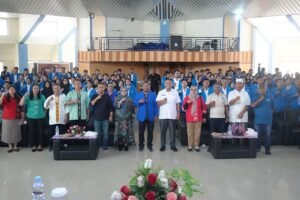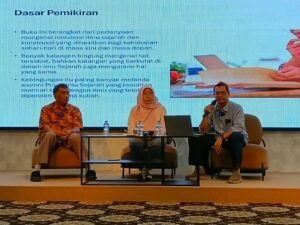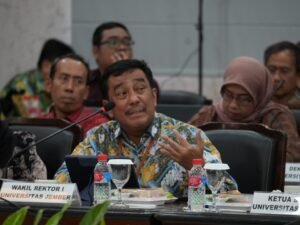





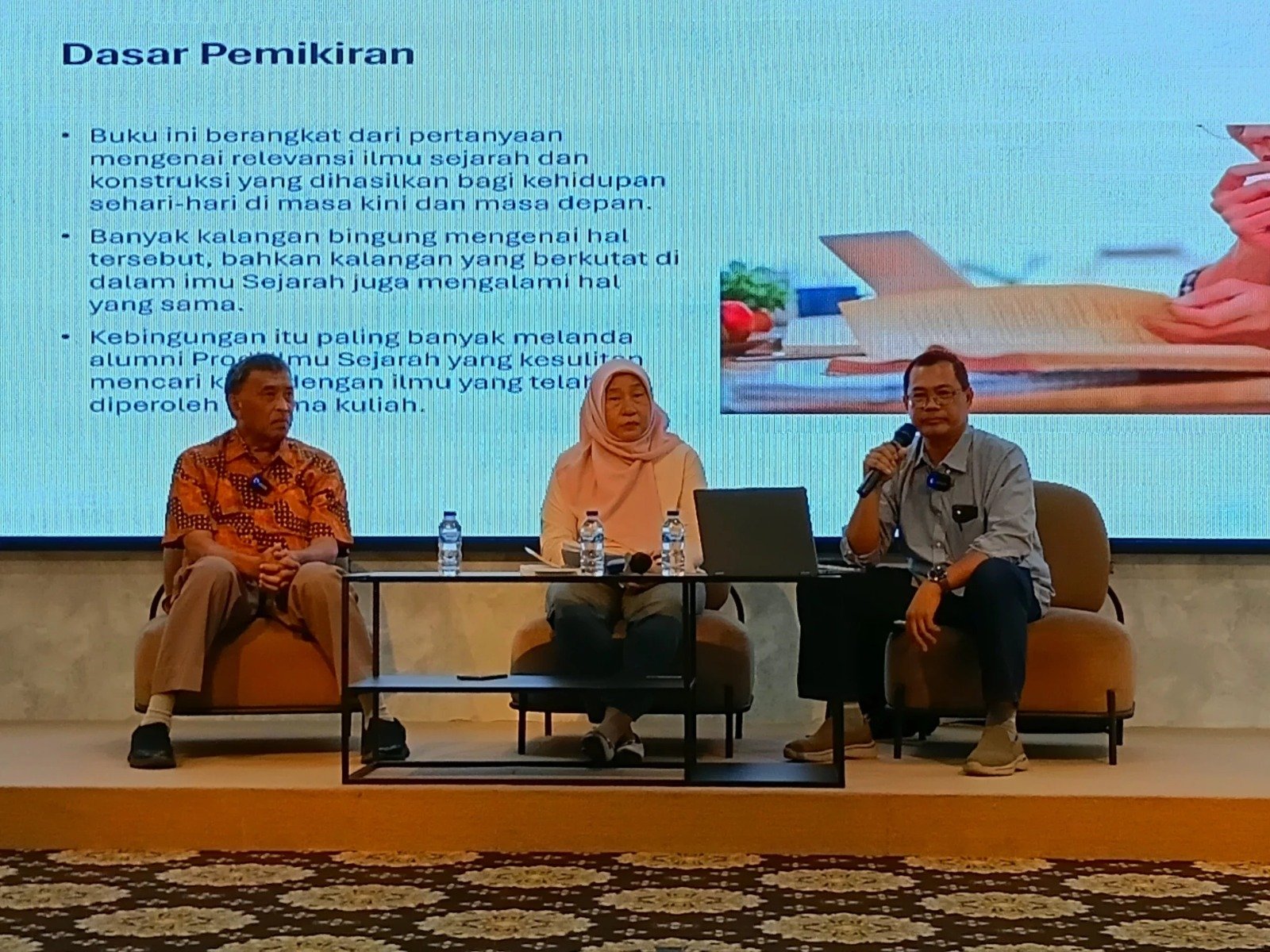
EduAsiaNews, Surabaya – Departemen Ilmu Sejarah Fakultas Ilmu Budaya Universitas Airlangga held a book discussion on Jejak Masa Lalu di Masa Kini dan Masa Depan, authored by Prof. Bambang Purwanto, on Tuesday, March 31, 2026, at Sriwijaya Room, ASEEC Tower, Campus B-Dharmawangsa. The event featured Prof. Purnawan Basundoro, a Professor of Urban History, as the main speaker, along with students from the Department of History. The discussion focused on analyzing the book and providing self-critique on the role of historians today.
Cycles of Historical Repetition
Dr. Johny Alfian Khusyairi, SSos, BA, MSi, MA, Head of the History Department, highlighted WS Rendra’s poem Kemarin dan Esok adalah Hari Ini, emphasizing that history often repeats itself in cyclical patterns. He illustrated several historical cycles that frequently recur unnoticed and stressed that historians have the responsibility to raise public awareness about these recurring patterns.
Challenges for Historians in Indonesia
Prof. Purnawan explained that the book serves as a self-critique for historians, presenting five key arguments.
Loss of Collective Memory – Using the COVID-19 pandemic as an example, he noted that the government had to improvise policies due to a lack of collective memory about the Spanish flu a century earlier, resulting in trial-and-error responses.
“During the COVID-19 disaster in 2019, one problem was that we nearly had no memory of a similar event that occurred 100 years ago with the Spanish flu,” said Prof. Purnawan.
Historical Legitimacy – He discussed the relocation of Indonesia’s capital to IKN, emphasizing its historical and archaeological significance, including the discovery of the Yupa Inscription, which marks a transition from prehistoric to historic eras and challenges Java-centric historical perspectives.
3–5. Other Arguments – He also explored issues regarding succession in elections, multiculturalism, and natural resource management, highlighting their relevance today and value as a self-critical reflection for historians.
Prof. Purnawan concluded by encouraging historians to write history with the purpose of preventing public confusion and preserving historical archives.
Author: Yongki Eka Cahya
Editor: Ragil Kukuh Imanto