




EduAsiaNews, Sembalun East Lombok — A total of 37 participants took part in the Basic First Aid for Lay Rescuers – Mountain Activities training under the DARSINEM Initiative (Recognize and Respond to Emergency Conditions), held on August 10–11, 2026, at Rinjani Camping Ground, Sembalun, East Lombok, West Nusa Tenggara.
Unlike conventional first-aid training, which is typically conducted in classroom settings, the DARSINEM Initiative incorporates nature and the surrounding environment as integral components of the learning process. The approach combines Nature and Environmental Learning, outdoor education, and experiential learning to provide participants with a more contextual learning experience tailored to the characteristics of emergencies in mountainous areas.
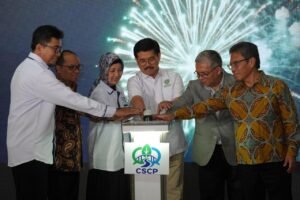
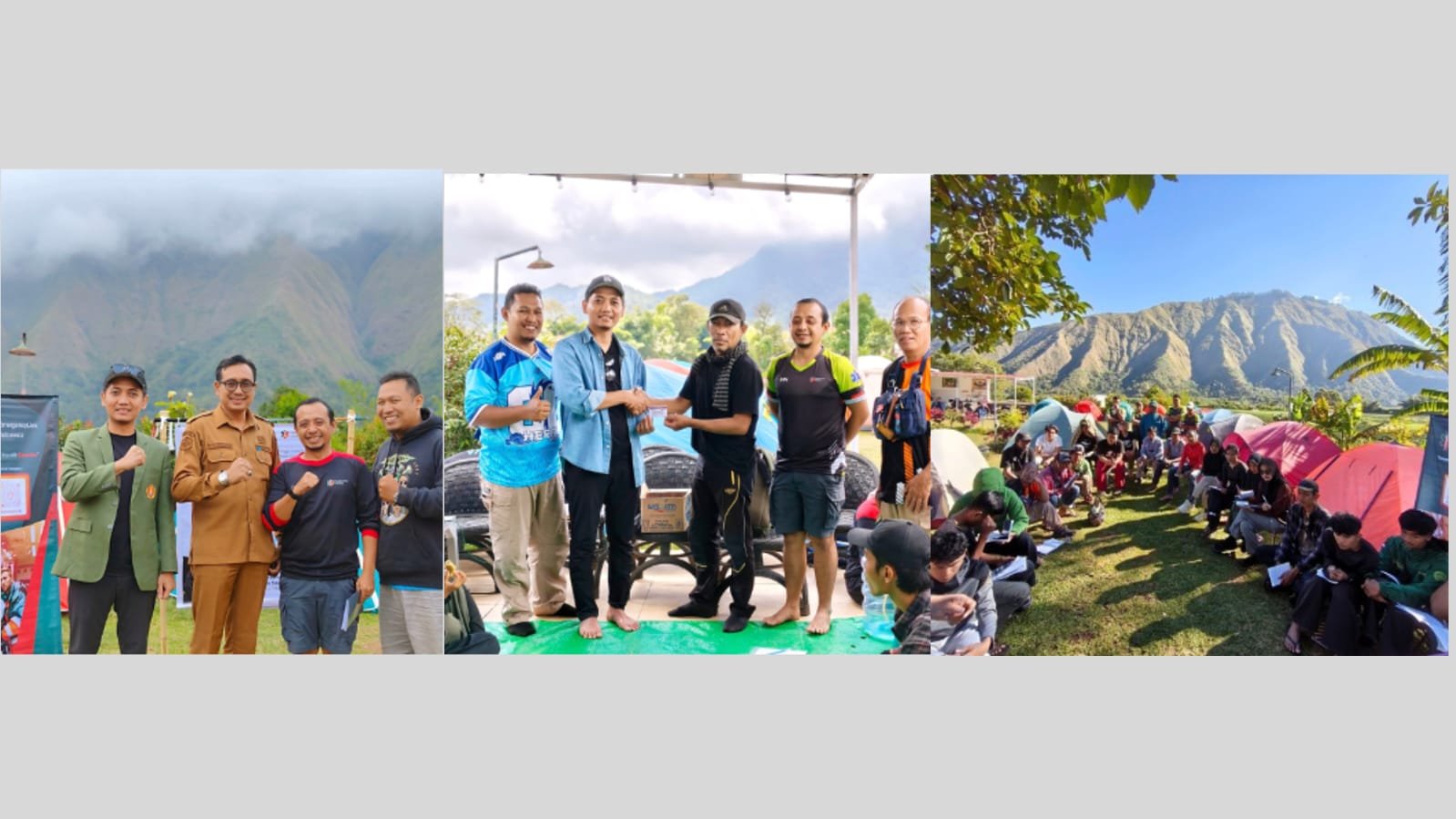
The training was officially opened by Head of the East Lombok Health Office, Ns. Lalu Aries Fahrozi, M.Kep., The opening reflected the local government’s support for strengthening community capacity to respond to emergencies in nature-based tourism areas, particularly around Sembalun and Mount Rinjani.
The opening session was followed by a presentation on the DARSINEM program by Dr. Ns. Arief Wahyudi Jadmiko, M.Kep., M.Pd.Ked., head of the community engagement team. The presentation outlined the program’s background, objectives, approach, and strategies for building community-based emergency preparedness.
The program was implemented through a cross-institutional collaboration involving Universitas Pembangunan Nasional “Veteran” Jakarta (UPNVJ), Universitas Mataram, ITSK RS dr. Soepraoen Malang, Stikes Mataram, Bapelkes Mataram, and PT Emergency Link, together with “Rinjani Bagus,” a community group dedicated to Mount Rinjani, with support from the East Lombok Health Office.
Nature as a Learning Environment
The Nature and Environmental Learning concept adopted by DARSINEM positions the natural environment not merely as the venue for training, but as a source and context for learning. The Sembalun landscape and Mount Rinjani area provide a real-world setting in which participants can understand how geographical conditions, terrain, weather, altitude, accessibility, and available resources can affect emergency response.
Through this approach, participants learn not only what to do when assisting a casualty, but also why certain actions must be taken while considering the characteristics of the surrounding environment. The learning process becomes more contextual as participants engage directly with an environment similar to situations they may encounter while hiking or taking part in outdoor activities.
Learning Through Environment and Experience
Direct experience is a key component of nature-based learning. Participants are given opportunities to observe their surroundings, identify potential hazards, make decisions, take action, and reflect on their experiences.
In DARSINEM, this principle is applied through a combination of lectures, skills practice, simulations, discussions, reflection, and evaluation. Participants learn concepts and techniques including cardiopulmonary resuscitation (CPR), hands-only CPR, the use of an automated external defibrillator (AED), choking management, high-altitude sickness, animal bites, trauma management, and evacuation, while also practicing these skills in an outdoor context.
This hands-on approach is particularly important because emergencies in outdoor environments present complexities that differ from those encountered in healthcare facilities. Responders must consider the casualty’s condition alongside environmental safety, equipment availability, communication, and evacuation options.
The natural environment therefore functions as a living laboratory, enabling participants to develop critical thinking, problem-solving, communication, teamwork, and decision-making skills in realistic situations.
First-Aid Training for Mountain Emergencies
The two-day training focused specifically on emergency situations that may occur during hiking and outdoor recreational activities.
On the first day, participants completed a pre-test, followed by an introduction to CPR and hands-only CPR practice. They then learned about AEDs and practiced CPR and AED procedures, followed by sessions on choking and high-altitude sickness.
The second day covered animal bites, trauma, and evacuation, before the program concluded with a skills examination and post-test. The selection of topics reflected the specific risks associated with mountainous environments, including trauma, altitude-related conditions, animal bites, and the need for evacuation.
Bridging the Gap Between the Classroom and Real-World Conditions
One of the key strengths of the DARSINEM approach is its effort to narrow the gap between what participants learn and the situations in which they may need to apply those skills.
While conventional training may rely on mannequins, videos, or controlled simulations, nature-based learning exposes participants to more complex environmental contexts, making the decision-making process more realistic.
The DARSINEM proposal explicitly incorporates experiential learning, with participants practicing casualty assessment, basic life support, injury stabilization, and basic evacuation techniques through field simulations designed to resemble real-life situations. The approach therefore positions nature not simply as a place for learning, but also as a learning medium and source of experience.
All 37 Participants Pass Knowledge and Skills Assessments
The training produced positive results, with all 37 participants successfully passing the knowledge and skills assessments for providing first aid in outdoor emergencies. The achievement followed a series of learning sessions, practical exercises, simulations, a skills examination, and a post-test.
The results suggest that combining theoretical knowledge, direct experience, and environmental context can serve as a promising approach to strengthening community preparedness for emergencies in outdoor settings.
Under the DARSINEM program design, participants who meet the required competency standards are subsequently expected to become DARSINEM Cadres, allowing the knowledge and skills gained through the program to be shared with other members of the community.
Turning Nature Into a Space for Risk Awareness
The Nature and Environmental Learning approach also introduces an important dimension of environmental and risk awareness. By learning directly in a mountainous environment, participants develop not only first-aid skills but also the ability to interpret environmental conditions as part of the decision-making process.
Steep terrain, changing weather, altitude, limited accessibility, and evacuation distances are among the factors that must be considered when determining an appropriate response. First-aid skills therefore become integrated with the ability to identify and assess environmental risks.
This approach is particularly relevant to Mount Rinjani, which carries significant risks for hikers. The program records 273 hiking accidents between 2016 and 2024, resulting in 17 deaths and more than 200 injuries. By mid-2025, the number of hikers had reached approximately 36,500. These figures highlight the importance of strengthening the community’s ability to recognize risks and provide an appropriate initial response in nature-based tourism areas.
From First Aid to Community-Based Health Tourism
DARSINEM advances a Community-Based Health Tourism approach by positioning health and safety as integral components of nature-based tourism development.
Under this model, local communities are not merely beneficiaries of tourism but also become actors in destination safety. Universities contribute knowledge and technology transfer, local governments provide support and networks, communities serve as implementers and grassroots drivers, while professional partners strengthen emergency-response training.
This collaborative approach is expected to create a more sustainable preparedness system through cadre development, mentoring, evaluation, and stronger networks involving the Health Office, Regional Disaster Management Agency (BPBD), and Search and Rescue (SAR) teams.
Building Safer and More Sustainable Nature-Based Tourism
The implementation of DARSINEM in Sembalun demonstrates how health education can be developed by harnessing the natural environment as a learning space.
Through Nature and Environmental Learning, outdoor education, and experiential learning, participants engage in training that closely reflects the real-world conditions they may encounter.
The approach brings together three critical elements: first-aid skills, environmental risk awareness, and community empowerment. For the Mount Rinjani area, strengthening these capacities has implications beyond first aid. Safety is an important component of destination quality and one of the foundations for sustainable nature-based tourism.
The successful completion of the knowledge and skills assessments by all 37 participants represents an initial step toward building a community that is better prepared to respond to emergencies.
Ultimately, DARSINEM conveys a broader message: nature is not merely a place to visit, but also a space for learning, developing risk awareness, strengthening practical skills, and cultivating a culture of safety.
Through collaboration among local governments, universities, communities, businesses, and emergency-response networks, the model is expected to be further developed and replicated in other nature-based tourism destinations across Indonesia.