




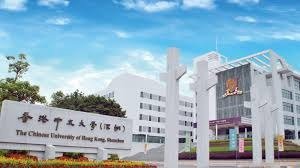
EduAsiaNews, Homg Kong — A team of scientists from The Chinese University of Hong Kong (CUHK) has successfully developed a worm-shaped nucleic acid nanostructure — or “nanoworm” — specifically engineered to overcome what has long been the greatest obstacle in gene therapy: endosomal entrapment inside cells. This breakthrough has the potential to open a new frontier toward safer and more effective gene therapy for humans, as research has demonstrated that fewer than 0.04 percent of studies published since 2019 have successfully shown efficient endosomal escape — making endosomal entrapment a significant barrier that has long hindered therapeutic outcomes in gene therapy. The findings have been published in the internationally acclaimed journal Science Advances.
The nanoworm, developed by a team led by Prof. Jonathan Choi Chung-hang of CUHK’s Department of Biomedical Engineering, consists of four to five gold nanoparticle cores measuring 40 nm in diameter, coated with a polydopamine shell of 20 nm thickness. Each nanoworm is capable of carrying 900 to 1,000 therapeutic oligonucleotides or approximately 30 therapeutic mRNA strands, and can deliver a wide variety of genetic payloads, including DNA, siRNA, miRNA, and mRNA, to different cell types both in culture and in animals, without requiring cationic transfection agents that frequently cause harmful side effects.
Dr. Reese Xiao Yu, the study’s first author and a doctoral graduate from CUHK’s Department of Biomedical Engineering, explained the superior advantage of the nanoworm in terms of its mechanism of action. “The unique worm-like shape of the nucleic acid nanostructure significantly enhances its ability to escape from endosomes by regulating ClC3 ion exchange, with minimal overlap between the nanostructure and endosomes, placing it in the top 1 percent of nanoparticle-based gene carriers in the field,” Dr. Reese told CUHK’s official website. Prof. Jonathan Choi added that the findings open an important new horizon for the medical world. “This study not only advances the field of nucleic acid nanotechnology through a novel worm-shaped nanoarchitecture capable of achieving efficient endosomal escape, but also offers a critical vision for designing safe and effective gene therapies based on non-cationic nanoparticle carriers,” said Prof. Choi.
This achievement is inseparable from Prof. Choi’s long track record in nanomedicine. Prof. Sham Mai-har, CUHK’s Pro-Vice-Chancellor for Research, stated that “Prof. Choi’s unwavering dedication to advancing nanobiotechnology has yielded significant breakthroughs in drug delivery systems and the treatment of complex diseases,” and that CUHK remains committed to supporting innovative research that drives clinical translation for the betterment of people’s quality of life. Experts have hailed the nanoworm research as a major leap forward, since unlike viral vectors that risk triggering immune responses, these gold nanoparticle-based nanoworms are able to enter a wide range of cells naturally — including cancer cells, brain endothelial cells, primary macrophages, and mesenchymal stem cells — without detectable toxicity in in vivo animal studies.
(Sources: CUHK Communications and Public Relations Office (cpr.cuhk.edu.hk); Science Advances, DOI: 10.1126/sciadv.adw0891; CUHK Department of Biomedical Engineering)