




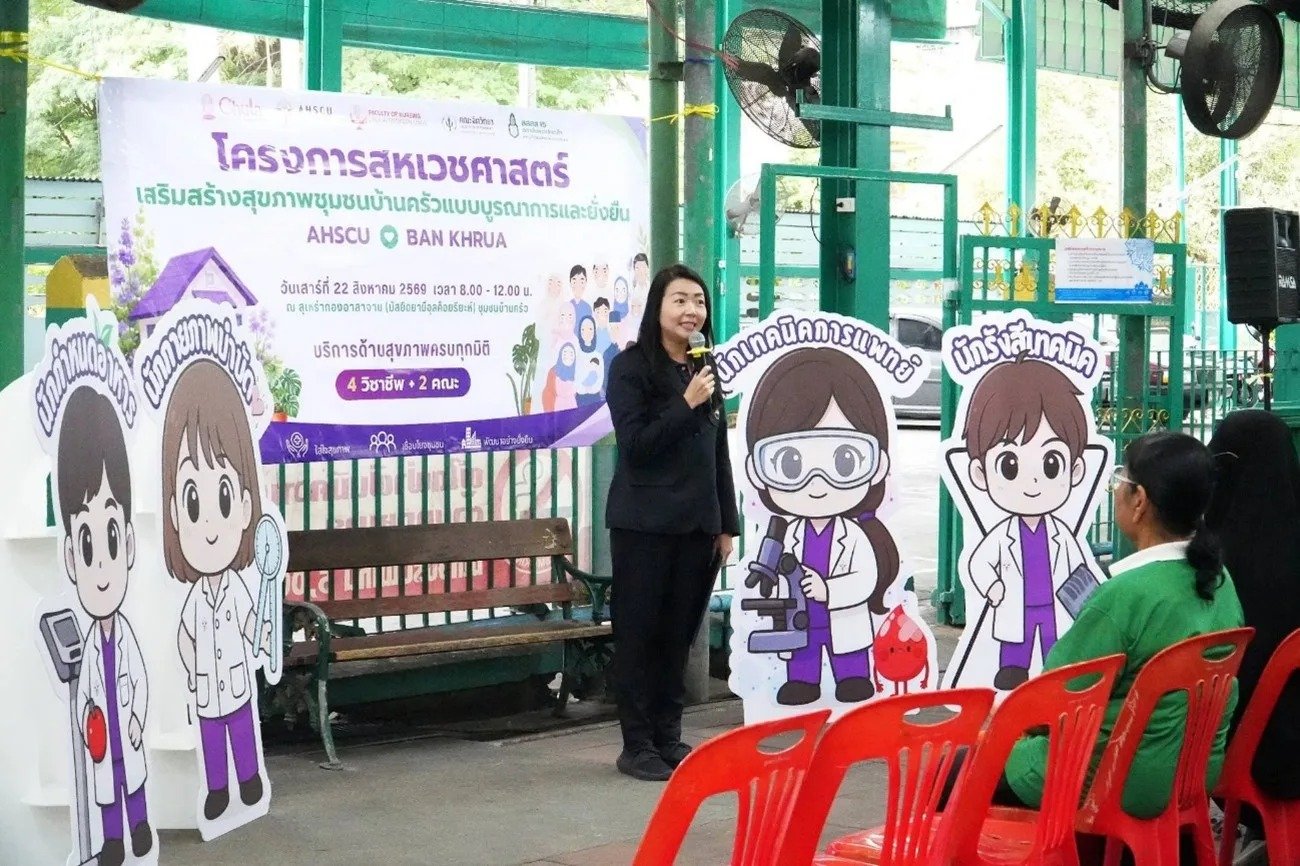
Deputy Dean of the Faculty of Allied Health Sciences, Chulalongkorn University
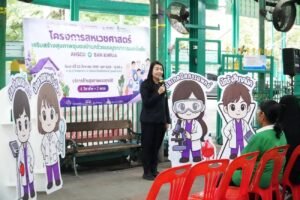
EduAsiaNews, Bangkok – The Faculty of Allied Health Sciences, Chulalongkorn University, organized the “Allied Health Sciences for Integrated and Sustainable Health Promotion in the Ban Khrua Community” project on Saturday, August 22, 2026, at the Ban Khrua Community. The initiative aims to promote integrated and holistic community healthcare by bringing together knowledge and health services from multiple professional disciplines. It enables community members to access health screening and assessments close to home, become more aware of their health status, identify risk factors or abnormalities at an early stage, and receive appropriate guidance from healthcare professionals
The project was led by Assoc. Prof. Dr. Anong Tantisuwat, Deputy Dean of the Faculty of Allied Health Sciences, Chulalongkorn University, and implemented by faculty members, staff, and students from four professional disciplines within the Faculty of Allied Health Sciences: Physical Therapy, Medical Technology, Radiological Technology and Medical Physics, and Nutrition and Dietetics. The initiative also involved the Faculty of Nursing and the Faculty of Psychology, Chulalongkorn University.
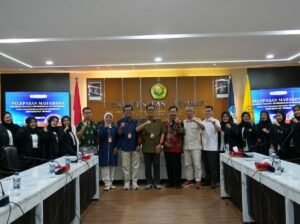
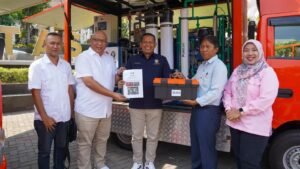
Additional support was provided by participants of the Advanced Certificate Course in Building Peaceful Society, Class 15 (4S15), King Prajadhipok’s Institute, who sponsored refreshments and drinking water for community members and participants, as well as by local leaders and networks in the Ban Khrua Community.
Assoc. Prof. Dr. Anong explained that the project places particular emphasis on health promotion, disease prevention, health literacy, and empowering people to manage their own health appropriately and continuously. It also contributes to reducing disparities in access to healthcare by bringing the university’s knowledge and services directly into the community. At the same time, the initiative provides students with the opportunity to develop interprofessional collaboration skills and gain hands-on learning experience in real community settings.
The project primarily serves residents of the Ban Khrua Community and surrounding areas, covering people of all ages—from children and young people to adults and older persons—particularly those who may face barriers to accessing healthcare services. The latest event welcomed 144 community members, 52 faculty members and staff, and 140 students, bringing the total number of personnel providing services to 192 and the overall number of participants to 336.
Assoc. Prof. Dr. Anong noted that the Faculty of Allied Health Sciences has continuously provided community-based health services in Ban Khrua. Activities have included integrated health check-ups for the general public, health assessments for older adults, and health-related programs for children and young people. The long-term objective is to build a strong relationship and a sustainable community healthcare system together with Ban Khrua, with activities designed to address the differing health needs of people across all age groups.
The first integrated health screening activity for the general public was held on July 20, 2025, in the Ban Khrua West Community. It integrated services from the faculty’s four professional disciplines in collaboration with the Faculty of Nursing, Chulalongkorn University.
The project has also continued to organize targeted activities for specific groups. These included an integrated health assessment for older persons based on the ICOPE (Integrated Care for Older People) framework on April 5, 2026, which assessed health conditions and identified risks among older adults from a holistic perspective. The Young Allied Health Scientist Camp, held from April 9–16, 2026, provided children and young people with health knowledge and skills through hands-on learning activities.
On August 22, 2026, another integrated community health screening was held, this time expanding the collaboration to include the Faculty of Psychology, Chulalongkorn University. This enabled the services to more comprehensively address physical health, mental well-being, nutrition, disease prevention, and health literacy. The activity represents part of a continuing, long-term partnership with Ban Khrua, using diverse programs tailored to different population groups to promote health across the life course and ultimately establish a sustainable community-based healthcare system.
Health services provided during the event included integrated screenings and assessments covering physical health, nutrition, and psychological well-being.
- The Physical Therapy Team conducted balance assessments to evaluate postural control and screen for fall risk, together with hand grip strength tests to assess muscular strength and physical performance.
- The Medical Technology Team provided laboratory testing, including blood tests for vitamin D levels to assess vitamin D deficiency, Complete Blood Count (CBC) testing to screen for blood abnormalities, and homocysteine testing to assess risk factors associated with cardiovascular disease.
- The Radiological Technology and Medical Physics Team provided bone mass assessments to evaluate bone density and screen for osteoporosis risk. Meanwhile, the Nutrition and Dietetics team conducted body composition assessments using Bioelectrical Impedance Analysis (BIA) to measure muscle mass, body fat, and body water while also providing individualized nutritional advice based on each participant’s health status.
The Faculty of Nursing, Chulalongkorn University, provided basic health screenings and organized the “Care Jit, Care Jai” activity to promote both physical and mental well-being. The Faculty of Psychology, Chulalongkorn University, conducted the “Mind Fullness – Kind-Hearted Flower Workshop,” designed to promote psychological well-being and mindfulness.
The integration of services from various health disciplines reflects the project’s core principle of providing holistic care. Beyond identifying health risks and abnormalities, the project emphasizes health promotion, disease prevention, and strengthening people’s understanding so that they can apply the knowledge gained to appropriately manage their own health.
Assoc. Prof. Dr. Anong said that results from previous activities showed that some community members had health risk factors requiring continued monitoring and support. Individuals identified as being at risk of non-communicable diseases (NCDs) received personalized recommendations and guidance for continued health management.
Health assessments also covered important issues requiring monitoring among adults and older persons, including muscle strength, balance and fall risk, bone health, body composition and nutritional status, as well as risk factors for NCDs. Evaluation results showed that approximately 70% of participants reported increased health knowledge, while around 75% reported positive changes in their health-related behaviors after participating in the project.
The project follows the approach of “screen, identify risks, provide guidance, and ensure continuity of care.” When abnormalities or risks requiring further investigation are identified, community members are advised on appropriate follow-up and referral to relevant healthcare services.
At the same time, information collected through community outreach activities enables the faculty and its partner networks to gain a clearer understanding of local health concerns and needs. The findings can subsequently be used to design future health promotion activities that more closely respond to the needs of the community.
“The heart of this project is not simply bringing health screening services into the community but working continuously together with the community. We want people to understand their own health status and risks at an early stage, receive appropriate guidance, and gain the knowledge needed to care for themselves and their families in the long term. The collaboration among the Faculty of Allied Health Sciences, the Faculty of Nursing, the Faculty of Psychology, our partner networks, and the community allows us to view health holistically, covering physical health, mental well-being, nutrition, and disease prevention. This is an important pathway toward creating sustainable community well-being,” Assoc. Prof. Dr. Anong concluded.
Mr. Yanyong Amin, 62, Imam of Jamiul Khairiyah Mosque (Ban Khrua), said he was pleasedthat health services were being brought into the community and considered the initiative highly beneficial, particularly for older people and those who face difficulties traveling to hospitals. The project allows residents to access health screening and care directly within their community. He expressed hope that similar activities would continue to be organized on a regular basis.
Ms. Meena Muhammadaree, 57, a village health volunteer, also welcomed the Faculty of Allied Health Sciences’ continued involvement in community healthcare, noting strong interest among both people with underlying medical conditions and those wishing to undergo general health checks.
She said that each activity provides a diverse range of assessments and services, with different examinations offered on each occasion, allowing residents to select services that best suit their health needs. She also suggested that the program be organized annually and expanded to include more general health examinations and screening for diseases or conditions not routinely covered by primary healthcare services, thereby improving community access to comprehensive health screening.
Ms. Apinya Katsanthia, 46, a resident of the Ban Khrua South Community, acknowledged that participating in the activity helped her better understand and assess her own health condition. She also expressed her appreciation for the staff and students who were friendly, approachable, and attentive in providing care throughout the event.