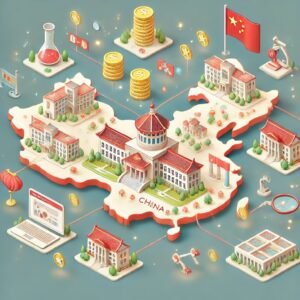





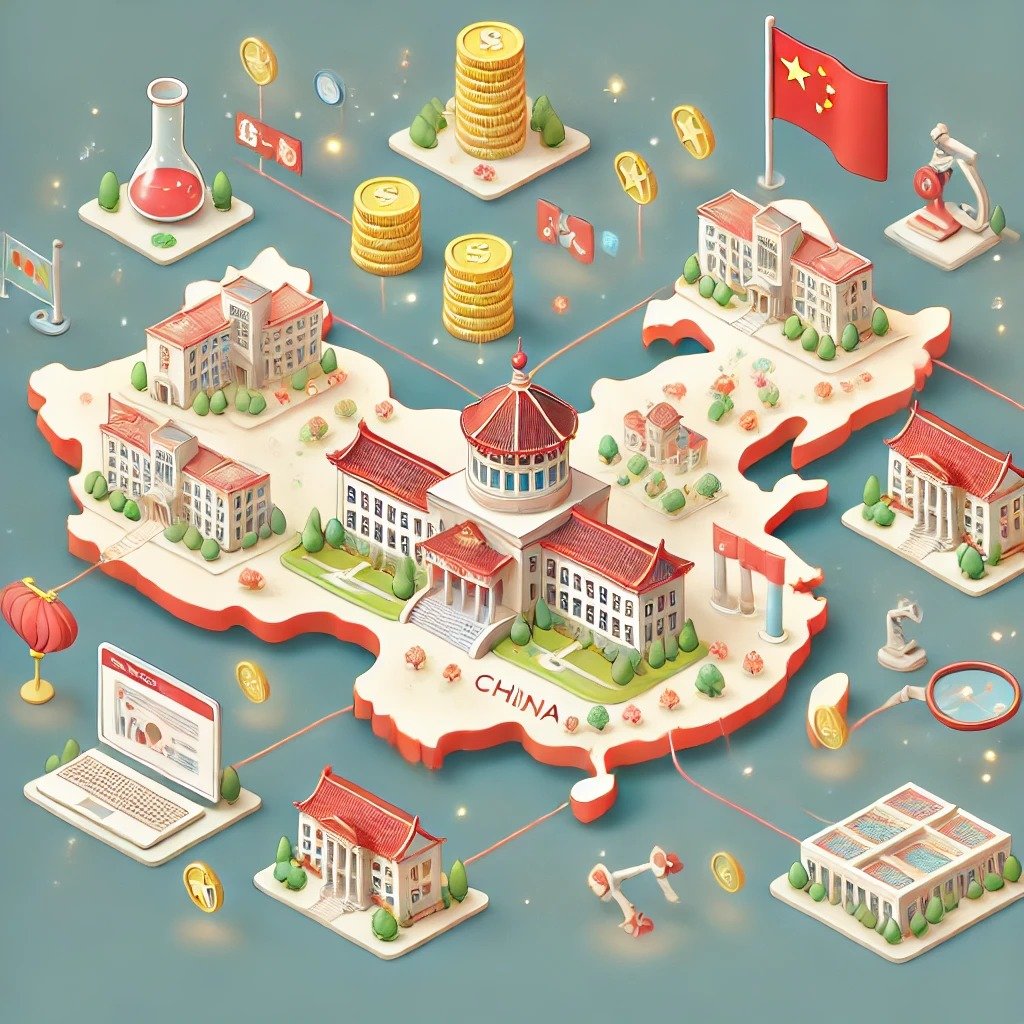
EduAsiaNews, Beijing — China’s science policy has once again drawn the attention of the global scientific community this week, following the formal adoption of the 15th Five-Year Plan (FYP) covering the period 2026–2030 by the National People’s Congress in Beijing. The plan affirms that China will employ “extraordinary measures” to support its ambition of becoming a global leader in artificial intelligence, quantum technology, and a range of other cutting-edge technological fields. Researchers describe the document as reflecting a level of self-confidence from China that has never been seen before.
China’s latest research and development (R&D) targets have been set as part of this 15th FYP. Although the proportion of the R&D budget relative to gross domestic product (GDP) remains unchanged from the 14th FYP, China’s spending on science and technology in absolute terms continues to grow significantly. This was noted by Steven Hai, a political economist specialising in technological innovation from Xi’an Jiaotong-Liverpool University. Hai projects that China’s consistent investment in science will attract global talent and innovation resources into the country.
Unlike many countries, including the United States, which rely on private enterprises as the engine of R&D, China has historically underpinned its research largely through state-owned enterprises and government laboratories. Under the 15th FYP, however, China is now positioning private companies as the parties expected to lead R&D over the next five years. The plan explicitly designates enterprises as the “primary entities” of innovation — a significant paradigm shift within China’s research ecosystem.
China’s Minister of Science and Technology, Yin Hejun, stated that the government intends to develop a high-level policy framework for artificial intelligence, with a focus on the development of new models and advanced computing chips. Yin also affirmed that technological innovation is the “core element” in developing new high-quality productive forces, and that China will pursue an innovation-driven development strategy to enhance total factor productivity. Priority areas include semiconductors, biotechnology, quantum computing, and 6G communications.
Stefanie Kam, a China politics researcher from Nanyang Technological University, Singapore, observes that the Chinese government now views science — particularly artificial intelligence — as crucial to every aspect of the economy. Meanwhile, Meicen Sun, an information scientist from the University of Illinois Urbana-Champaign, notes that the mindset among China’s science policymakers has shifted: from merely not wanting to fall too far behind the United States, they now sense a genuine opportunity to become true leaders. This paradigm shift is regarded as a strong signal that China is no longer simply catching up, but has begun to set the direction for the world. (**)
(Source: Nature, Xinhua, People’s Daily)