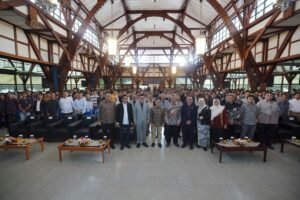



EduAsiaNews, Jakarta — Universitas Pembangunan Nasional “Veteran” Jakarta (UPNVJ), in collaboration with the Ministry of Higher Education, Science, and Technology (Kemendiktisaintek), strengthened professional development and career advancement for lecturers through the Socialization of Lecturer Professional Development and Career Guidance held at the Bhinneka Tunggal Ika Auditorium on Wednesday, 11 February 2026. The event reaffirmed UPNVJ’s commitment to a more measurable governance of academic careers—from the fulfillment of workload requirements and performance indicators to strategies for accelerating academic promotion—as part of its broader agenda to enhance quality and competitiveness toward becoming a world-class university.
The Rector of UPNVJ, Prof. Dr. Anter Venus, M.A., Comm., stated that the socialization was essential to align the academic community’s understanding of lecturers’ duties, functions, and career roadmaps to ensure more effective academic human resource management. “Today we thoroughly discuss the duties and functional roles of lecturers in managing and planning their careers. The presence of Prof. Tjitjik provides clarification based on legal frameworks and policy breakthroughs that will shape future lecturer career management,” Anter Venus remarked in his address.
He added that direct clarification from Kemendiktisaintek was expected to assist work units and university leadership in formulating harmonized internal policies, while also preparing strategies for lecturer career advancement aligned with institutional targets. According to him, aligning perceptions is crucial to ensure that career development processes go beyond mere administrative compliance and lead to academic productivity and tangible impact for both the university and society.
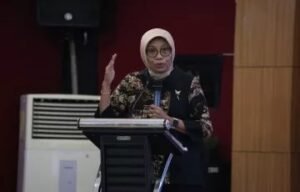
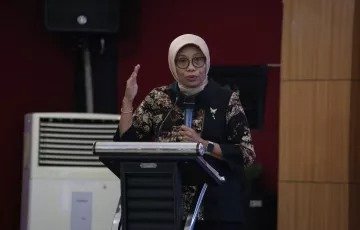
In her presentation, the Special Staff to the Minister for Governance and Accountability at Kemendiktisaintek, Prof. Tjitjik Srie Tjahjandarie, Ph.D., emphasized that current lecturer career development policies increasingly prioritize performance, productivity, and contribution. This approach encourages lecturers to produce relevant Tri Dharma outputs, including publications, innovations, and community service initiatives.
One of the key topics discussed was the mechanism for credit point conversion and the strengthening of credit assessment within academic rank services. Various lecturer career service documents note that periodic credit conversion can be facilitated through the SISTER platform, which is synchronized with the government personnel system, enabling more orderly data updates and service processes. The service policies also outline several administrative adjustments, including provisions on deadlines for academic rank promotion proposals linked to retirement age starting in 2026, in accordance with applicable circular letters.
On that occasion, Prof. Tjitjik further explained that the academic rank structure for lecturers remains Assistant Expert, Lecturer, Associate Professor, and Professor, with requirements emphasizing workload fulfillment, performance indicators, and competency assessments in line with lecturer career development regulations. For the rank of Professor, stricter requirements are highlighted to ensure that academic achievements demonstrate strong competitiveness and recognition, particularly in terms of publication quality and scholarly contribution.
In addition to strengthening the regular career pathway, the session also highlighted opportunities for merit-based accelerated promotion through widely recognized achievements such as reputable publications, innovations, patents, awards, or the mentorship of outstanding students, provided that established prerequisites and mechanisms within lecturer career services are fulfilled. Retention policies for Professors were likewise emphasized: fulfillment of performance obligations and reporting requirements remains a key instrument in safeguarding sustained academic quality and accountability.(www.upnvj.ac.id)