




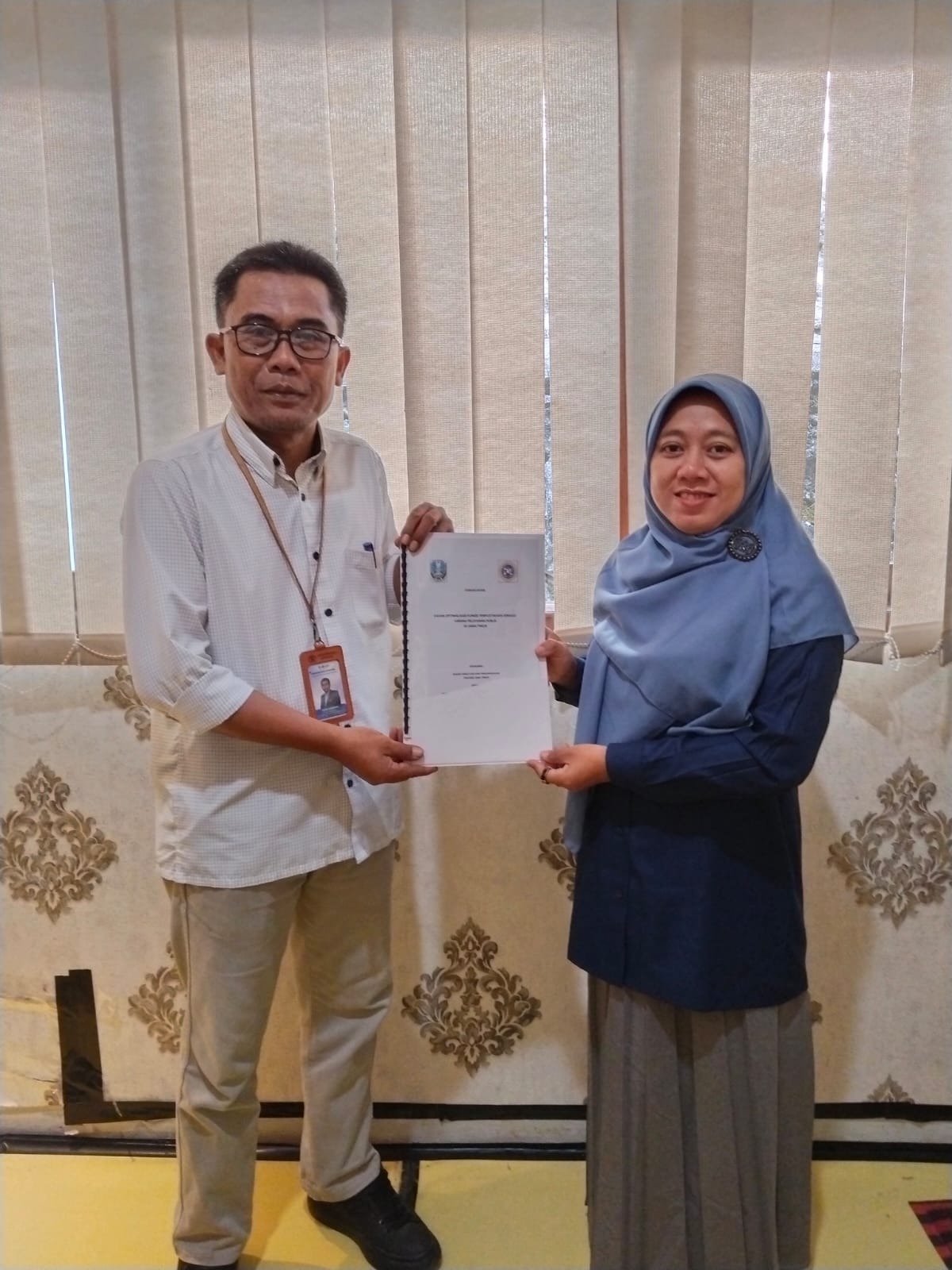
EduAsiaNews, Pamekasan – As part of his commitment to carrying out the Tri Dharma of Higher Education, academician Fajar Surahman from Universitas Madura is currently finalizing a scientific study and policy brief entitled “Policy Review of the Regional Spatial Planning Program” within the Government of Pamekasan Regency Government. This comprehensive study specifically examines the effectiveness and challenges in implementing the Regional Regulation (Perda) concerning the Regional Spatial Planning (RTRW) of Pamekasan Regency for the 2012–2032 period.
In its executive summary, the study explains that the Regional Spatial Planning policy program was fundamentally designed to develop the region’s economic potential in order to achieve independence and prosperity, while simultaneously minimizing potential social issues within the community. Fajar Surahman emphasized that spatial planning policies play a crucial role in accommodating both present and future societal needs.
Conceptually, the study indicates that the policy framework related to the Regional Spatial Planning program formulated by the Pamekasan Regency Government has been systematically structured. However, an in-depth analysis employing George C. Edward III’s public policy implementation theory—which focuses on four critical variables: communication, resources, disposition, and bureaucratic structure—identified several practical challenges in the field.
In the realization of spatial structure development and the enhancement of its utilization capacity, the implementation of this policy continues to face various inconsistencies. The most prominent issues include land-use conversion, the increasing prevalence of land conflicts, and the threat of water deficits in the region.
The study also critically evaluates the bureaucratic mechanisms among related institutions. It found that communication processes among Regional Apparatus Organizations (SKPD) in Pamekasan Regency frequently overlap. Furthermore, human resource placement has not fully adhered to the principle of the right man in the right place, resulting in insufficient specialized expertise within several operational units.
As part of its recommendations for improvement, the policy brief proposes several strategic measures. To create stronger synergy among policy implementers, the Pamekasan Regency Government is encouraged to intensify the dissemination and socialization of the Regional Regulation concerning the 2012–2032 Regional Spatial Planning framework. At the same time, the public is urged to develop greater awareness of the importance of complying with spatial planning and land-use arrangements as mandated in the regional regulation.