


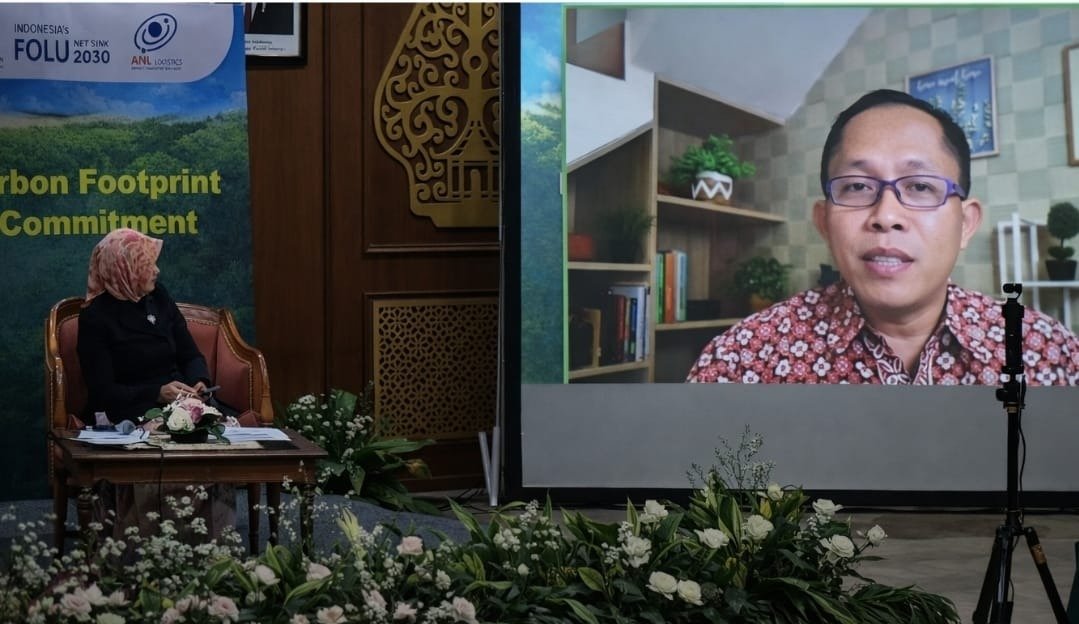
EduAsiaNews, Jakarta — Mahawan Karuniasa, a lecturer at the Graduate Program in Environmental Science at the University of Indonesia (UI), emphasized that the implementation of green logistics is one of the key pillars in supporting Indonesia’s greenhouse gas emission reduction targets, as outlined in its Nationally Determined Contribution (NDC) and Net Zero Emission agenda.
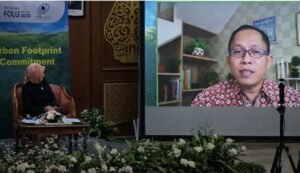
Mahawan delivered the statement during the Green Logistics Talk held in Jakarta on Thursday (Feb. 19), under the theme “Measuring, Reducing, and Managing Carbon Footprint in Logistics for Indonesia’s Climate Commitment.”
“Green logistics is not merely about transportation efficiency; it is part of the broader low-carbon development agenda. Distribution systems must be designed to be energy-efficient, low-emission, circular, and carbon-transparent,” Mahawan said.
He explained that the logistics sector contributes significantly to national emissions through transportation, distribution, and warehousing activities. Without a transformation toward a low-carbon logistics system, Indonesia’s emission reduction targets—32 percent independently and 43 percent with international support by 2030—will be difficult to achieve.
Mahawan added that the implementation of green logistics must be integrated with national development policies, energy transition strategies, and the strengthening of sustainable supply chain systems. Through this approach, the logistics sector can actively contribute to achieving the Sustainable Development Goals (SDGs) and advancing the circular economy.
Meanwhile, Agus Justianto, Project Director of FOLU NC-1 and Member of the Expert Advisory Board for FOLU Net Sink 2030, stressed that transforming the logistics sector into a low-carbon system is a critical factor in supporting the national climate agenda, particularly the achievement of FOLU Net Sink 2030.
“Efficient, transparent, and low-emission supply chains will strengthen the contribution of various sectors in reducing national emissions. Green logistics must become an integral part of a climate policy ecosystem that is connected from upstream to downstream,” Agus said.
According to Agus, strengthening green logistics systems also enhances emission management accountability, promotes carbon data transparency, and reinforces multi-stakeholder collaboration among government, businesses, academia, and society.
He added that the development of green logistics aligns with the government’s efforts to strengthen greenhouse gas inventory systems, carbon trading mechanisms, and the utilization of carbon economic value instruments as part of climate change mitigation strategies.
From the business sector, Netty Sri Rejeki, Founder of ANL Logistics, expressed the private sector’s commitment to accelerating the adoption of green logistics principles through operational improvements and strengthened sustainable business governance.
“ANL Logistics continues to undertake operational transformation by prioritizing energy efficiency, optimizing distribution routes, utilizing environmentally friendly technologies, and measuring carbon footprints in accordance with international standards,” Netty said.
She added that the company has also reinforced its commitment to sustainable development through membership in the United Nations Global Compact and the Indonesia Global Compact Network.
According to Netty, the implementation of environmental, social, and governance (ESG) principles, along with carbon transparency, is no longer merely a regulatory requirement but has become a demand of the global market, which is increasingly concerned about sustainability issues.
The three speakers agreed that the successful transformation of green logistics requires consistent policy support, economic incentives, strengthened human resource capacity, and the utilization of digital technologies and integrated information systems.
Mahawan underscored that collaboration among academia, government, and the private sector is the primary foundation for accelerating the adoption of green logistics practices in Indonesia.
“The transformation of green logistics must become a collective movement. With strong synergy, Indonesia will not only be able to fulfill its global climate commitments but also enhance the competitiveness of its national industries,” he stated.
By strengthening green logistics, Indonesia is expected to build a more efficient, inclusive, and environmentally resilient supply chain system, while making a tangible contribution toward achieving its NDC targets, FOLU Net Sink 2030, and Net Zero Emission by 2060 or sooner. (**)