




EduAsiaNews, New York – Artificial intelligence (AI) is changing the world. But who will enjoy its benefits: the wider public, or only a handful of countries and technology giants?
That question was the focus of a delegation from the Bandung Institute of Technology (ITB) at a Think20 (T20) meeting, part of the Group of 20 (G20) process, in New York on Nov. 18 and 19. Led by Prof. Suhono Supangkat, with members Wahyu Hidayat and Devi Anggara, the ITB delegation carried a key message: AI progress must narrow inequality, not widen it.
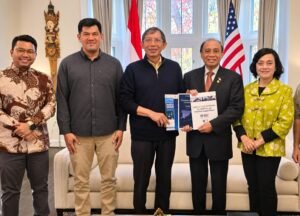
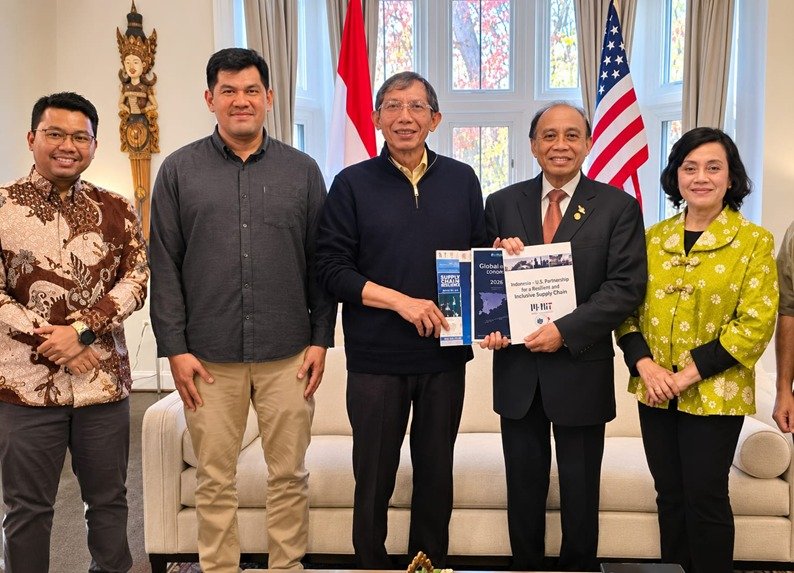
On Nov. 20, Suhono and his team presented the outcomes of the T20 meeting to Indonesian Ambassador to the United States Indroyono Soesilo in Washington.
The challenge is real. Control of leading AI models and massive computing facilities remains concentrated in the United States and China, while about 4 billion people worldwide still face limited digital access.
Without joint action, developing countries risk becoming merely buyers of services and suppliers of raw data. It is like a kitchen: the ingredients come from many countries, but the recipes, equipment and profits are held by a handful of players.
The T20 forum therefore urged that AI become part of open digital public infrastructure. Developing countries need their own computing capacity, as well as access to AI models that can be developed to suit local needs.
India was cited as an interesting example. Access to tens of thousands of graphics processing units (GPUs) has helped local innovators. AI-based agriculture services in regional languages also show how technology can reach people’s needs, including those of 140 million farmers.
Amid rivalry among superpowers, middle powers and developing countries are being encouraged to act together. One idea is an AI Stability Board, a forum to align security standards, data exchange among systems and reporting of disruptions to critical infrastructure.
Funding must also be fair. Grants, multiyear financing and equal partnerships are needed so that building AI does not add to debt burdens or sideline local talent.
For Indonesia, the homework is clear: strengthen the One Data Indonesia initiative, build sovereign computing capacity and develop AI that understands the languages and cultures of the archipelago.
Indroyono welcomed the input. As a follow-up, the ITB T20 team was introduced to Apple and Intel, which are investing in Indonesia, to explore cooperation on AI.
The message is simple: Indonesia cannot be content with merely using AI. It must help build it, set the rules and ensure the benefits reach the people, from farmers to researchers and from villages to cities. The technology should open opportunities, not create new fences to shared progress.