



EduAsiaNews, Malang East Java – A team of lecturers from the art education study program at the State University of Malang (UM) developed a project-based learning model, Objective-Oriented Project Planning (OOPP), and a collaborative platform, OOPP-KOLASE, for students in the Teacher Professional Education (PPG) program in cultural arts from May to November. The innovation, led by Ike Ratnawati, is designed to strengthen the leadership competencies of prospective art teachers through structured, collaborative and technology-supported project-based learning.
The development involved PPG cultural arts students, lecturers, mentor teachers and a creative industry partner, Bangun Kreatifa. The research was funded by UM’s PPG program in 2026.
OOPP was developed to bridge leadership learning, which has largely been understood conceptually, with real experience in designing and managing arts education projects. Students are placed as the main actors in the learning process, from identifying problems, setting goals, planning and organizing activities to carrying out projects, monitoring them, and reflecting on and evaluating the results.
“Prospective cultural arts teachers need learning experiences that are not only oriented toward mastering material but also give them the chance to develop the ability to lead and manage learning activities. Through the OOPP model, students are trained to plan, carry out and evaluate projects systematically and collaboratively,” Ike said.
The process began with a needs analysis involving PPG students, lecturers and Bangun Kreatifa, using observation, surveys, interviews and focus group discussions. The mapping showed several leadership competencies that need strengthening, especially project management, team communication, cross-institutional coordination and decision-making.
The findings became the basis for a project-based curriculum design that integrates problem identification, goal setting, planning, implementation, monitoring, reflection and evaluation. The team also drew up leadership competency indicators and a draft evaluation instrument to measure students’ ability to coordinate teams, communicate, manage activities and make decisions systematically.
One of the main outputs is OOPP-KOLASE, a web-based digital learning platform designed to support the OOPP model. Its main features are Home, Project Journey, Mentor, Gallery, Portfolio and Certificate.
The platform has three main portals: one for PPG students, one for lecturers and mentor teachers, and a project gallery. Through the student portal, users follow project stages in a structured way, while lecturers and mentor teachers provide guidance and monitor progress. The gallery and portfolio features document students’ processes and work.
The platform integrates planning, implementation, reflection and project documentation in one digital environment. It is expected to make learning better organized, make mentoring easier and provide a record of students’ project development. Digital portfolios can also serve as a tool for reflecting on the growth of prospective teachers’ professional competencies.
“The strength of this development lies in the connection among the learning model, the evaluation tools and the digital platform. We want to create a learning ecosystem in which students learn to lead through project experience while receiving guidance and feedback from lecturers and mentor teachers,” Ike said.
Bangun Kreatifa contributed to preparing digital content and developing the OOPP-KOLASE website, and offered perspectives on how learning relates to the needs of the creative industry. The collaboration brought together academic perspectives, school learning needs and technological support, making the products more contextual and applicable.
So far, the outputs include the OOPP model, a project-based curriculum design, an edukit, or information technology-based learning media, and a draft leadership competency evaluation instrument. The OOPP-KOLASE platform has also been prepared and is accessible online.
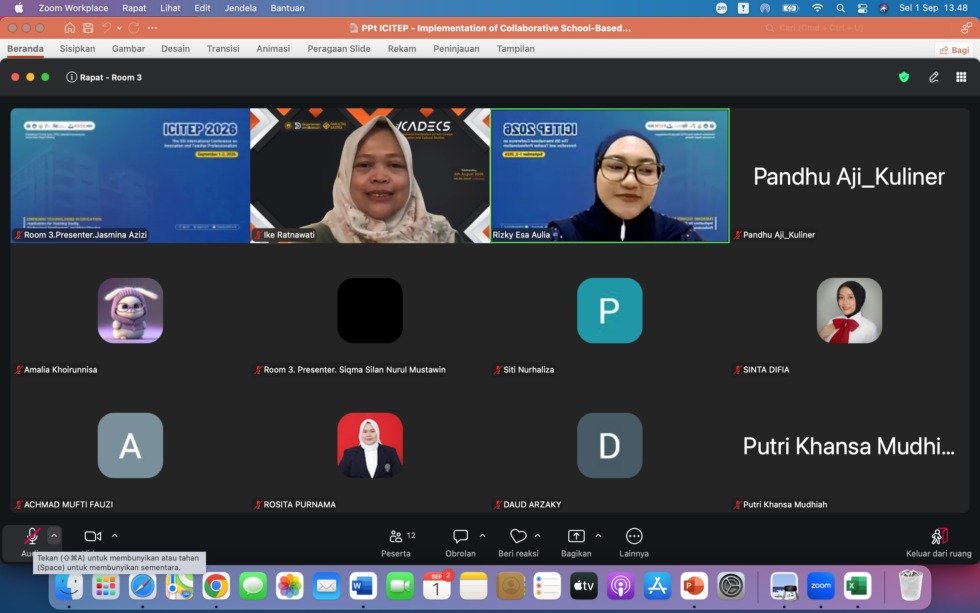
The research results were presented at the 5th International Conference on Innovation and Teacher Professionalism (ICITEP) 2026, hosted by UM’s graduate school. A supporting book has been submitted for publication, and an application for intellectual property rights has been filed. The team is also preparing media publications and a poster to disseminate the results.
The program contributes to Sustainable Development Goal (SDG) 4 on quality education through the development of a learning model, curriculum, evaluation instruments and a digital platform to improve the quality of teacher education. It also supports SDG 17 on partnerships through cooperation among the university, students, lecturers, mentor teachers, partner schools and the creative industry.
The team stressed that the model and platform are an initial foundation that still needs continuous refinement. Next steps include refining the edukit features, increasing the involvement of partner schools, improving the evaluation instruments and gathering feedback from the model’s application. Further evaluation is also needed to measure how effectively the model strengthens students’ leadership competencies.
Through OOPP and OOPP-KOLASE, UM hopes to offer an innovative learning approach that helps prospective cultural arts teachers develop leadership through hands-on project experience, while strengthening partnerships among universities, schools and the creative industry to improve arts and culture education in Indonesia.