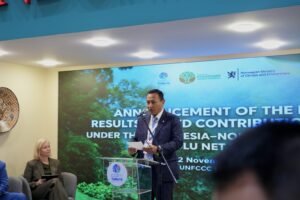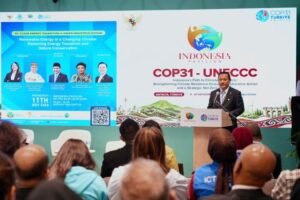





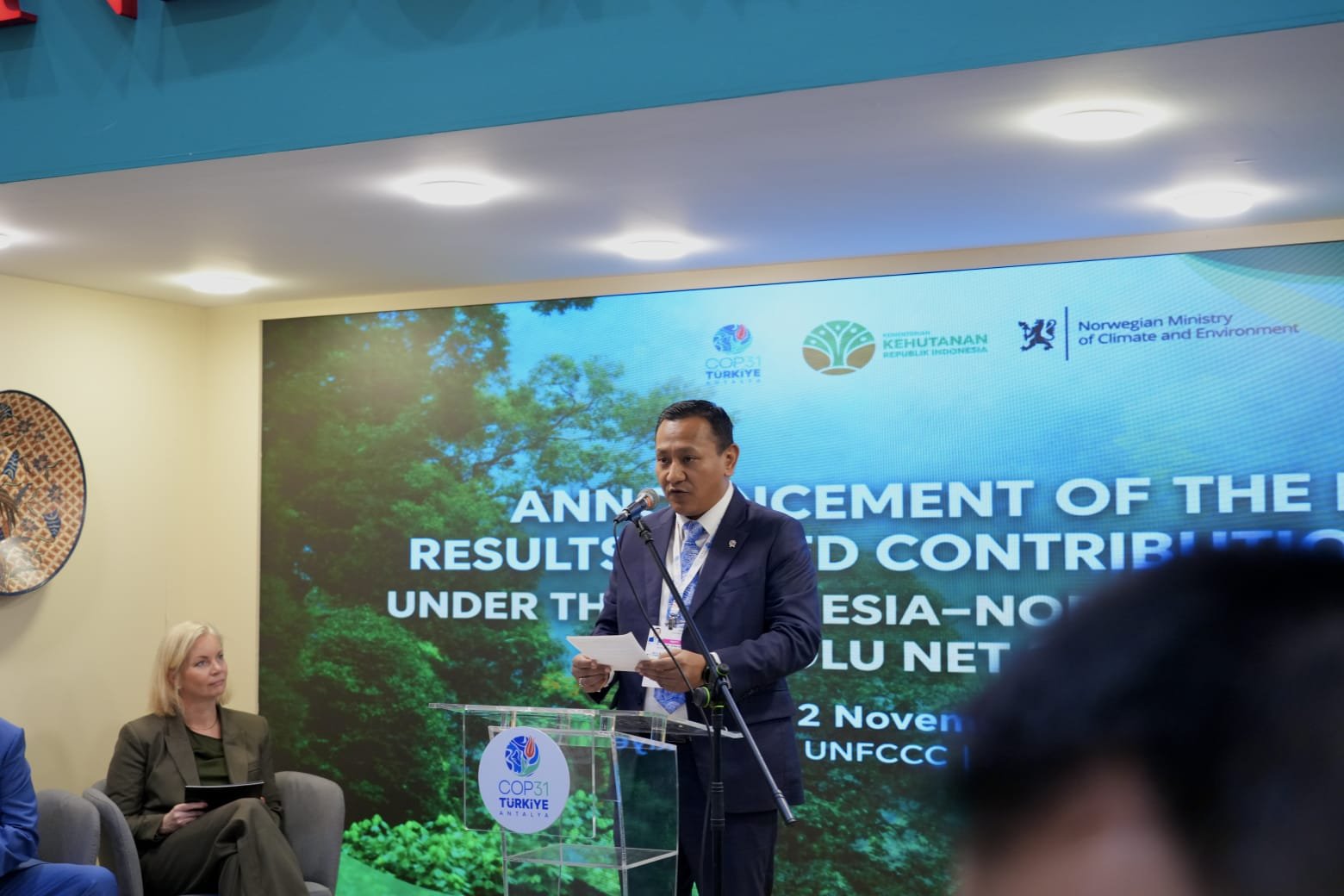
EduAsiaNews, Antalya — Indonesia and Norway announced the fifth phase of their Results-Based Contribution (RBC 5) at the Indonesia Pavilion during the United Nations Climate Change Conference (COP31) on Thursday, November 12, 2026. Through this contribution, Norway recognizes Indonesia’s achievements in reducing emissions from the forestry and land-use sector.
In his remarks, the Special Envoy of the President of the Republic of Indonesia for Energy and Environment said, “Indonesia welcomes Norway’s fifth results-based contribution of US$100 million, which complements its previous support of US$216 million, as a demonstration of confidence in Indonesia’s verified emission-reduction achievements. This commitment strengthens our concrete actions on the ground, ranging from the addition of 70,000 forest protection personnel to the establishment of the National Peatland and Mangrove Management Agency (BPGMN), to ensure the achievement of Indonesia’s FOLU Net Sink 2030 target for the sake of forest sustainability, community welfare, and the global climate.”
In a video message broadcast at the Indonesia Pavilion, Minister of Forestry Raja Juli Antoni expressed his appreciation to the Norwegian Government. According to the minister, this fifth contribution recognizes the daily efforts of forestry officers and local communities in protecting and sustainably managing forests. He emphasized that Indonesia determines the priorities for using the contribution in accordance with its national policies and manages it transparently and accountably.
The Minister of Forestry highlighted four priorities to ensure that the benefits of this contribution can be sustained over the long term: forest and land fire prevention, ecosystem restoration, biodiversity conservation, and improving the welfare of communities whose livelihoods depend on forests.
“The Ministry of Forestry is committed to continuing to strengthen forest monitoring and working with regional governments, communities, and partners to ensure that progress is credible and measurable,” the minister said.
This view was also emphasized by Norway’s Minister of Climate and Environment, Sigrun Aasland, who praised Indonesia’s achievements and stated, “Indonesia has demonstrated that ambitious policies and targeted measures can deliver significant results for the climate, nature, and communities. Through this contribution, we recognize Indonesia’s progress in protecting its forests.”
On the occasion, Indonesia’s Minister of Environment stated, “The success of Indonesia–Norway cooperation is measured not only by emission-reduction achievements or results-based payments, but also by the maintenance of environmental integrity, ecosystem protection, and tangible benefits for communities.”
Deputy Minister of Forestry Rohmat Marzuki, who represented the Indonesian Government at the event, highlighted the role of Fire Awareness Communities in preventing forest and land fires.
According to him, local residents’ knowledge also helps protect forests from the threat of fires. “People living in and around forests must become partners in conservation and sustainable forest management, while also having opportunities to improve their livelihoods,” the Deputy Minister said.
The Norwegian Government has committed a total of US$100 million for the fifth contribution phase, with a contribution rate of US$10 per ton of CO2 equivalent (CO2e). This amount represents an increase from the previous rate of US$5 per ton of CO2e applied to the four earlier contribution phases. RBC 5 is Norway’s recognition of Indonesia’s efforts to reduce CO2 emissions during the 2020–2023 period.
Before the announcement of the fifth phase, Indonesia had received a total of US$216 million from Norway through four contribution phases. These contributions were provided in recognition of Indonesia’s verified emission reductions for the periods from 2016–2017 to 2019–2020.
The Deputy Minister of Forestry emphasized that follow-up actions under RBC 5 need to clearly define the responsibilities of each implementing party and ensure that the use of funds is reported transparently. Through regular monitoring, the Ministry of Forestry aims to ensure that the support reaches communities living around forests and strengthens Indonesia’s efforts to ensure that, by 2030, the forestry and land-use sector absorbs more greenhouse gases than it emits. (*)