



EduAsiaNews, Antalya – Indonesia and the Republic of Congo have discussed stronger forestry cooperation, covering market recognition for sustainably sourced timber, supply chain traceability, and the management of peatlands and mangroves.
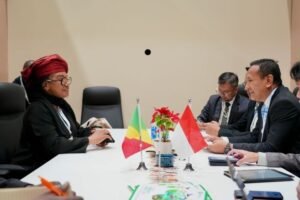
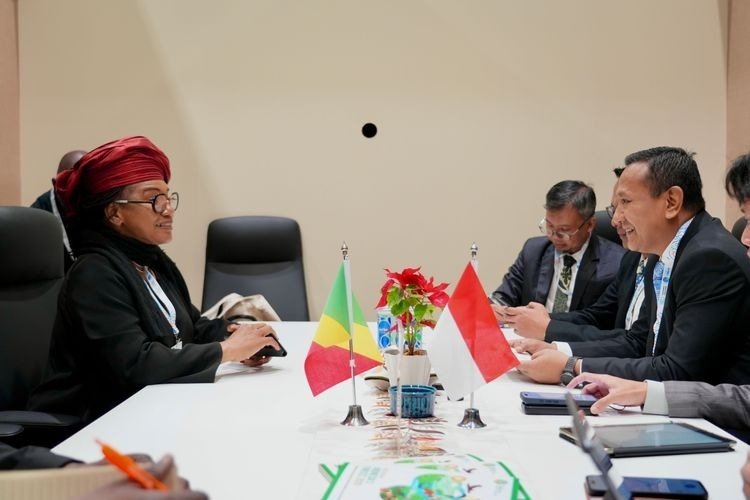
The matter was raised during a bilateral meeting between Indonesian Vice Minister of Forestry Rohmat Marzuki and Congolese Minister of Forest Economy Rosalie Matondo at the Indonesia Pavilion at the 31st UN Climate Change Conference (COP31 UNFCCC) in Antalya, Turkey, on Tuesday.
As custodians of two of the world’s most important tropical forest landscapes, Indonesia and the Republic of Congo bear a distinct global responsibility. This meeting is a strategic opportunity to align our visions and translate our shared environmental responsibility into tangible, sustainable and mutually beneficial economic opportunities,” Rohmat said, as quoted in a press release from the Forestry Ministry.
The talks focused on the Broader Market Recognition Coalition (BMRC), an alliance of tropical timber-producing countries formed in 2023 by Indonesia, the Republic of Congo, Cameroon, Ghana, Guyana and Liberia. The coalition seeks wider international recognition of the sustainable forest management systems developed by each producer country.
According to Rohmat, a united voice within the coalition would encourage international consumer markets to reduce non-tariff barriers, so that verified sustainable forest products gain equal market access.
On traceability, Indonesia is ready to explore practical cooperation to develop and strengthen systems that track forest products from source to market. Indonesia’s experience in implementing its Timber Legality and Sustainability Verification System (SVLK) could serve as a technical reference for both countries. The Republic of Congo had earlier expressed interest in studying the SVLK, including its timber traceability mechanisms.
“Credible international timber trade must be supported by transparency and verifiable legality. Through this partnership, we hope to build an accountable supply chain, strengthen global market confidence and demonstrate our commitment to combating illegal logging,” Rohmat said.
Indonesia also proposed strengthening institutional ties between the two ministries through structured information exchange and technical cooperation. This would include data sharing, forest inventory methodologies, the use of remote sensing and best practices in sustainable forest governance. Both sides also discussed green investment opportunities in the forestry sector, particularly in sustainable value chains, ecosystem restoration and community-based forest management.
On peatland management, Rohmat urged the Republic of Congo to help bring the International Tropical Peatland Center (ITPC) to full operation. Indonesia, the Republic of Congo and the Democratic Republic of the Congo initiated the ITPC as a follow-up to the Brazzaville Declaration signed in March 2018. Accelerated joint research, harmonized management practices and innovative climate financing are expected to make the ITPC a global reference center for tropical forest conservation and emission reduction.
The vice minister also introduced the newly established National Peatland and Mangrove Management Agency (BPGMN). Through the agency, Indonesia hopes to launch a mangrove conservation program with the Republic of Congo, share wetland restoration expertise and empower coastal communities.
“Indonesia remains committed to partnerships grounded in mutual respect, national ownership and measurable results. Let us ensure that our tropical forests continue to serve as a global environmental asset and a driver of prosperity for our people,” Rohmat said. (**)