




EduAsiaNews, Munchen Jerman – People who experience infections or traumatic events during childhood or adolescence are at a higher risk of developing Alzheimer’s disease. However, how these early-life stressors may contribute to the development of the disease decades later remains unclear. A new research project aims to answer this question over the coming years.
The researchers’ hypothesis is that stress-induced inflammatory responses alter certain long-lasting molecules, which may, in turn, affect cellular function.
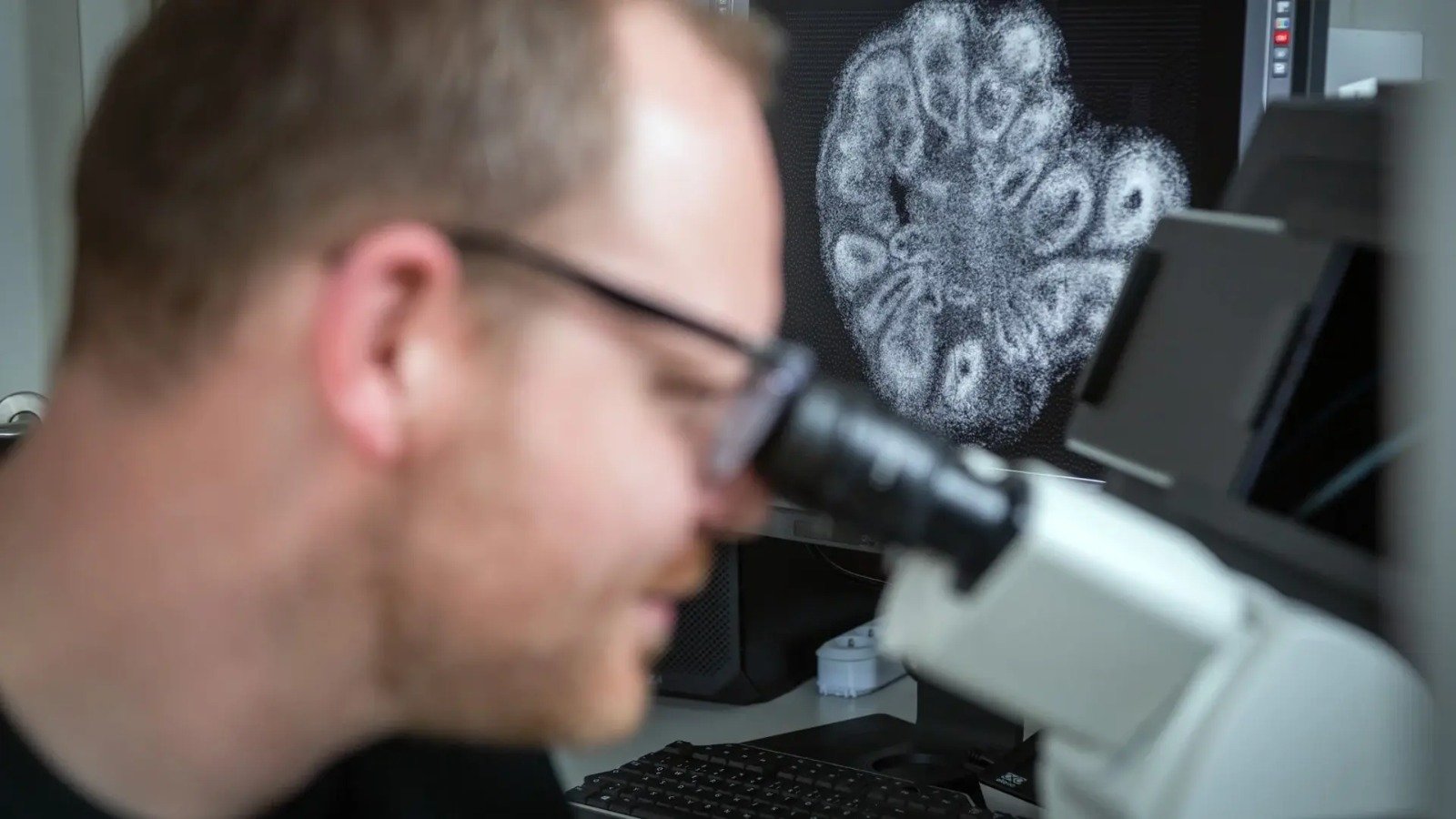
Brain organoid expert Prof. Simon Schäfer (pictured) is leading the research project alongside Prof. Tomohisa Toda of FAU. Their work investigates how inflammation shapes long-term immune processes in the brain.
At a Glance
The “Memory Within” project investigates how the brain’s protective mechanisms weaken over the long term.
Researchers are studying the mechanisms of long-lived RNA molecules using brain organoids.
The Volkswagen Foundation is funding the project with approximately €2.2 million.
The project, “Memory Within: Collective Cellular Memory Erodes Central Nervous System Gatekeeper Function in Alzheimer’s Disease,” is a collaborative effort involving research teams from the Technical University of Munich (TUM), Friedrich-Alexander University Erlangen-Nuremberg (FAU), and the Max Planck Center for Physics and Medicine (MPZPM). The Volkswagen Foundation is providing approximately €2.2 million in funding.
When someone develops Alzheimer’s disease in old age, it is usually impossible to determine retrospectively what triggered the dementia. However, several factors are known to increase the risk, including hearing loss, physical inactivity and high cholesterol levels. Infections and traumatic experiences during childhood are also thought to be potential risk factors.
Yet it remains unclear how these stressors could lead to brain tissue degeneration decades later.
“Following an infection with a pathogen or even extreme stress, the activity of various brain cells changes in the short term,” explained Tomohisa Toda, professor of neural epigenomics at FAU and MPZPM. “For example, immune cells in the brain, known as microglia, become activated. They trigger an inflammatory response that subsides after a certain period. Neurons—the cells responsible for information processing—show a similar pattern: Their activity also changes temporarily before returning to its original state.”
Long-term cellular memory alters immune responses
Normally, cells return to their original state afterward. However, Toda and Simon Schäfer, professor of advanced organoid technology for mental health research at TUM, suspect that stressful events may also leave long-lasting traces inside cells.
A form of “long-term cellular memory” may develop, permanently altering cellular activity. Microglia may then remain prone to heightened inflammatory responses, while neurons may become strongly activated even in response to mild stressors.
Over time, this could weaken the brain’s protective mechanisms and increase vulnerability to Alzheimer’s disease.
“At least, that is the hypothesis we want to investigate in our project,” Toda said.
The research teams are focusing on specific molecules, particularly those with long lifespans. Long-lived RNA molecules are believed to play a key role. Although RNA molecules in cells are generally degraded within hours or even minutes, long-lived RNA molecules have been detected in mouse nerve cells even years later.
In simple terms, these molecules can wrap themselves around specific regions of DNA. They are thought to influence how genes in those regions are expressed, thereby shaping cellular function over the long term.
Long-lived molecules may become damaged
“We suspect that these long-lasting molecules can be damaged by inflammation and trauma, altering their function,” Schäfer explained. “As a result, these stressors have lasting effects: Figuratively speaking, neurons and glial cells remember these experiences and develop permanently altered response patterns. This leads to an accumulation of damage in the brain, which eventually manifests in the characteristic symptoms of Alzheimer’s dementia.”
To investigate this hypothesis, the researchers will use, among other methods, so-called brain organoids. These complex cellular models replicate the composition and development of the human brain.
Brain organoids are a major focus of Schäfer’s research at TUM’s newly opened Center for Organoid Systems (COS). In the current study, the organoids will be used to model the effects of bacterial or viral infections in an environment resembling the human brain.
“We want to analyze how early-life stressors shape the long-term functioning of glial cells and neurons,” Toda said. “In the long run, we also want to determine whether these changes can be reversed—and, if so, whether doing so could reduce the risk of Alzheimer’s disease.”
Whether the research will ultimately open up new possibilities for prevention remains to be seen.
Medicine and Health
How can serious diseases such as cancer, diabetes and Alzheimer’s disease be treated? Find out more about research in medicine, sports science and health