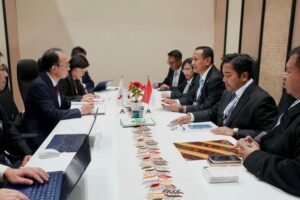





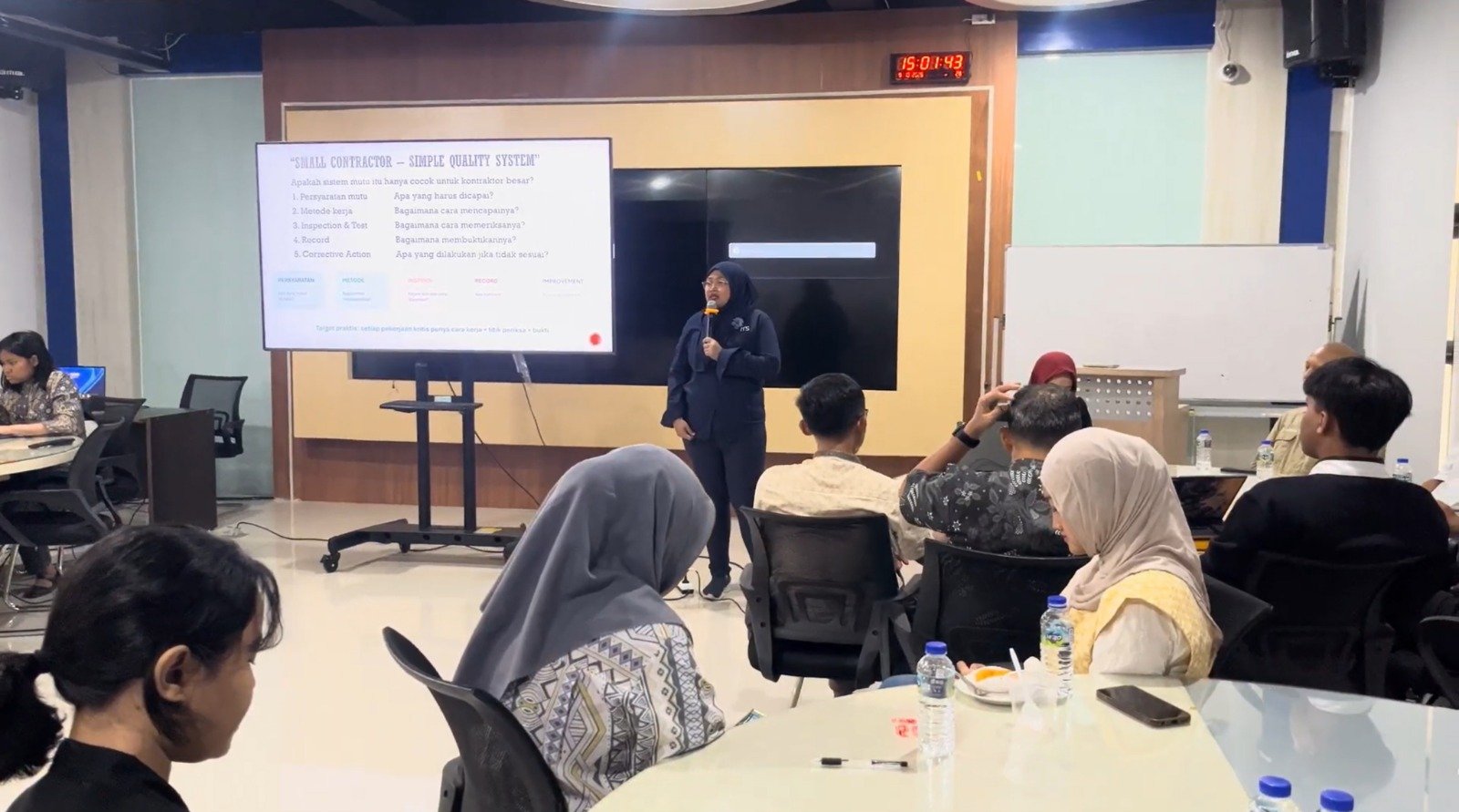
EduAsiaNews, Surabaya – Institut Teknologi Sepuluh Nopember (ITS) provided construction service providers in the small-business category in Surabaya with training on quality management systems. The training combined presentations and case study discussions to strengthen participants’ understanding of construction quality management. Organized by the community service team from ITS Department of Civil Engineering, the program took place at the Smart Learning Class, first floor of the Department of Civil Engineering, on Friday (October 9).
A total of 60 participants from construction companies and higher education institutions attended the training. Based on attendance records, participants represented limited partnerships (CVs), limited liability companies (PTs), and internal ITS units. Their professional backgrounds varied, ranging from business owners and project implementers to administrative staff, supervisors, and other supporting personnel.
The training emphasized that construction quality must be managed from the stage of establishing technical requirements, rather than being assessed only after the work is completed. On-site inspections require clear acceptance criteria, well-defined responsibilities, and proper documentation to ensure that work results can be traced and verified.
The training covered three main aspects: quality planning, quality management, and quality control. Quality planning addressed the establishment of requirements and work acceptance criteria. Quality management focused on personnel responsibilities and efforts to prevent errors. Meanwhile, quality control emphasized work inspections, documentation of nonconformities, and follow-up actions to resolve them.
One of the practical tools introduced during the training was a checklist. This tool helps contractors and inspectors ensure that each work item meets the established requirements. Recording the work location, inspection criteria, inspection results, and inspector’s identity was also highlighted as an essential part of maintaining project document traceability.
In addition to inspection procedures, participants learned how to address nonconformities through root cause analysis and corrective actions. Addressing findings involves more than simply repairing defective work. The underlying causes of nonconformities must also be identified to ensure that corrective measures address the actual problems. The results of corrective actions must subsequently be re-inspected and supported by proper documentation.
Case study discussions, including those related to construction projects within ITS, helped participants connect the training materials with real-world situations. Through this approach, participants explored the relationship between technical requirements, inspection decisions, documentation, and communication among parties involved in construction projects.
An interactive session with workshop participants
The team of lecturers involved in the program comprised Yusroniya Eka Putri R W, Christiono Utomo, Tri Joko Wahyu Adi, Moh. Arif Rohman, Farida Rachmawati, I Putu Artama Wiguna, Steffanie Christarindra, and Cahyono Bintang Nurcahyo. The program also involved CV Barata Satya Cipta as a collaborative partner, along with other companies and internal stakeholders.
As a follow-up measure, quality management practices can be introduced through companies’ routine operations. Business operators can appoint personnel responsible for inspections, apply relevant technical standards, and maintain records of nonconformities along with evidence of their resolution. These measures can help establish more systematic working practices and facilitate the evaluation of construction quality.
The program is part of ITS’s efforts to strengthen the capacity of construction businesses through community service initiatives. This initiative supports Sustainable Development Goal (SDG) 8, which promotes decent work and economic growth. While the training provides an initial foundation, its implementation in construction projects and its impact on the quality of construction outcomes will require continuous monitoring. (*)