




EduAsiaNews, Memtawai – Bandung Institute of Technology (ITB) has introduced a technology that converts seawater into clean water while turning the salt produced as a byproduct into an economically valuable product. The initiative was carried out through the PRISMA SEA community service programme in Beriulou Village, Mentawai Islands Regency, West Sumatra, from June 28 to July 1, 2026.
The programme aims to help coastal communities overcome limited access to clean water while creating business opportunities through the production of consumable salt.
Using solar-powered desalination technology, salt purification methods and water filtration systems made from locally available materials, ITB provided training to equip residents with the skills to independently apply these simple technologies. The initiative is expected to reduce the community’s dependence on limited clean water sources while creating opportunities to increase household income through the utilisation of marine resources.
The programme, titled PRISMA SEA (Prisma for Salt & Empowered Aqua: A Desalination System for Providing Clean Water and Consumable Salt to Empower Beriulou Village, Mentawai), was organised by ITB’s Directorate of Community Service and Expertise Services (DPMK) under its 2026 Community Service Programme, in collaboration with Andalas University (Unand) and the Mentawai Islands Regency Government.
The programme was led by Dr. Lamona Irmudyawati Bernawis, S.Pi., M.Sc., and involved a multidisciplinary team comprising Aep Patah, S.Si., M.Si., Ph.D., from the Inorganic Chemistry Research Group, Faculty of Mathematics and Natural Sciences (FMIPA) at ITB; Dr. Andi Egon, S.T., M.Sc., from the Environmental and Applied Oceanography Research Group, Faculty of Earth Sciences and Technology (FITB) at ITB; undergraduate Oceanography students Luqmannul Hakim, Indrawan and Putri Dara Jingga; postgraduate Chemistry student Gerald Arya Dewangga; and undergraduate Chemistry student Daffa Hadian from Andalas University.
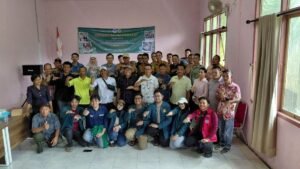
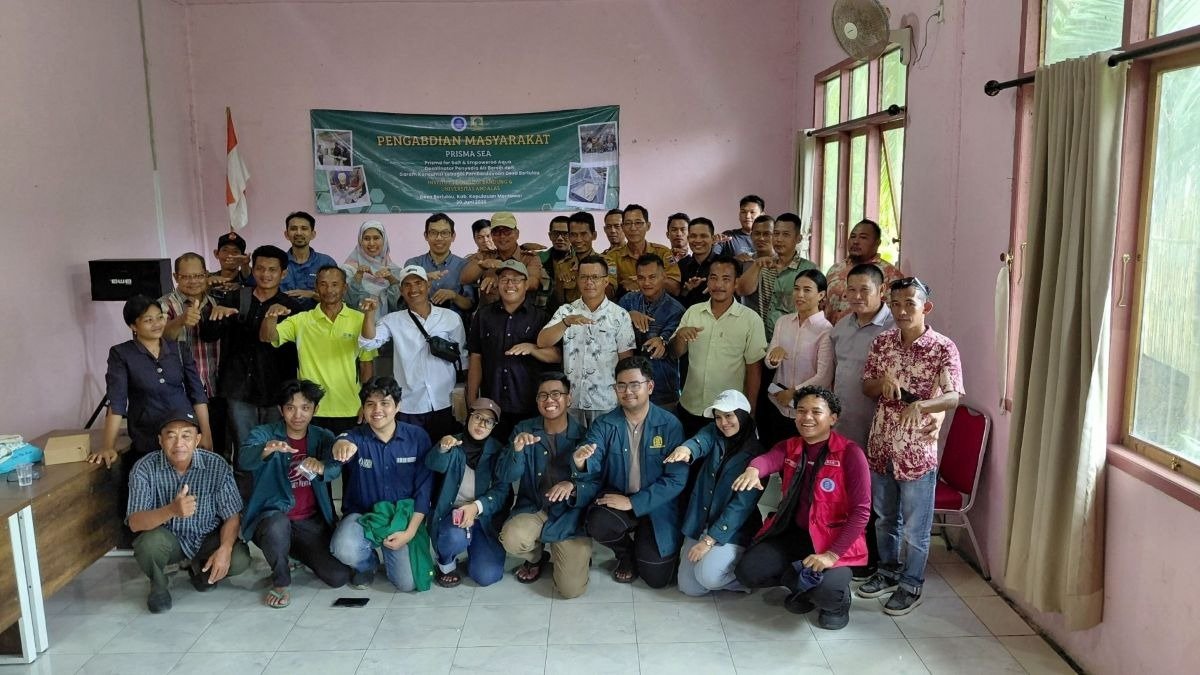
[Image: PRISMA SEA training session attended by Beriulou Village residents, village officials and representatives of the Mentawai Islands Regency Government.]
A total of 62 participants, comprising Beriulou residents, village officials and representatives of the Mentawai Islands Regency Government, attended the programme’s main activities on June 30, 2026. They received both theoretical instruction and hands-on training in seawater processing, salt purification and water filtration using appropriate technologies designed to suit local conditions.
Three Technological Innovations for Clean Water and Salt Processing
[Image: The community service team explains how PRISMA SEA works as a simple solar-powered desalination system and guides participants through the assembly process.]
The first innovation is PRISMA SEA, a simple desalination system that harnesses solar energy to convert seawater into freshwater. The device features an aluminium frame and a polycarbonate cover, supporting the seawater distillation process through solar heating.
During the training, participants learned the principles behind the desalination process and practised assembling the units using equipment and materials provided by the community service team. The technology was introduced as an alternative source of clean water that utilises renewable energy.
[Image: The community service team provides salt purification training to improve the quality and economic value of salt produced as a byproduct of desalination.]
The second innovation focuses on utilising salt produced as a byproduct of desalination. Salt remaining after seawater distillation is processed through washing and purification to improve its quality and potential market value.
Participants were introduced to a salt-washing technique using concentrated brine as one of the purification stages. Through these skills, residents are expected to develop business opportunities based on salt processing, allowing clean water production to generate additional economic benefits.
[Image: Participants receive explanations and practical training on assembling a simple water filtration system using locally available materials, guided by Dr. Andi Egon, S.T., M.Sc.]
The third innovation is a simple water filtration system using a 120-litre drum filled with several layers of filtering materials, including gravel, beach sand, wood charcoal and a final layer of gravel.
Under the guidance of Dr. Andi Egon, S.T., M.Sc., participants learned the function of each filtration layer and practised assembling the system. The use of locally available materials is one of the technology’s key advantages, as it allows residents to obtain the necessary materials more easily and maintain the system independently.
Promoting Self-Reliance in Coastal Communities
Programme leader Dr. Lamona Irmudyawati Bernawis, S.Pi., M.Sc., said PRISMA SEA was designed to provide simple, practical and sustainable solutions to the challenges of securing clean water supplies in coastal and island communities.
“We hope the technology introduced through PRISMA SEA can be utilised and further developed independently by the people of Beriulou Village. In addition to helping meet their clean water needs, the technology also creates opportunities to increase income through the utilisation of salt produced as a byproduct of desalination, ensuring that its benefits can be sustained over the long term,” she said.
In addition to providing training and transferring technology, the community service team coordinated with the Mentawai Islands Regency Government and evaluated the programme’s outcomes to support the sustainable implementation of the technologies.
PRISMA SEA represents one of ITB’s efforts to deliver innovations that address the needs of coastal communities. Through collaboration among universities, local governments and residents, the technologies introduced are expected to be independently developed to strengthen access to clean water while creating sustainable local economic opportunities.