




EduAsiaNews, Bandung — The Faculty of Earth Sciences and Technology (FITB) at Bandung Institute of Technology (ITB) brought together academics, government officials and students to discuss the use of Earth sciences and technological innovation to accelerate Indonesia’s transition to renewable energy.
The collaboration is considered essential to addressing a number of challenges, ranging from the underutilization of the country’s renewable energy potential to the need for equitable and sustainable access to energy.
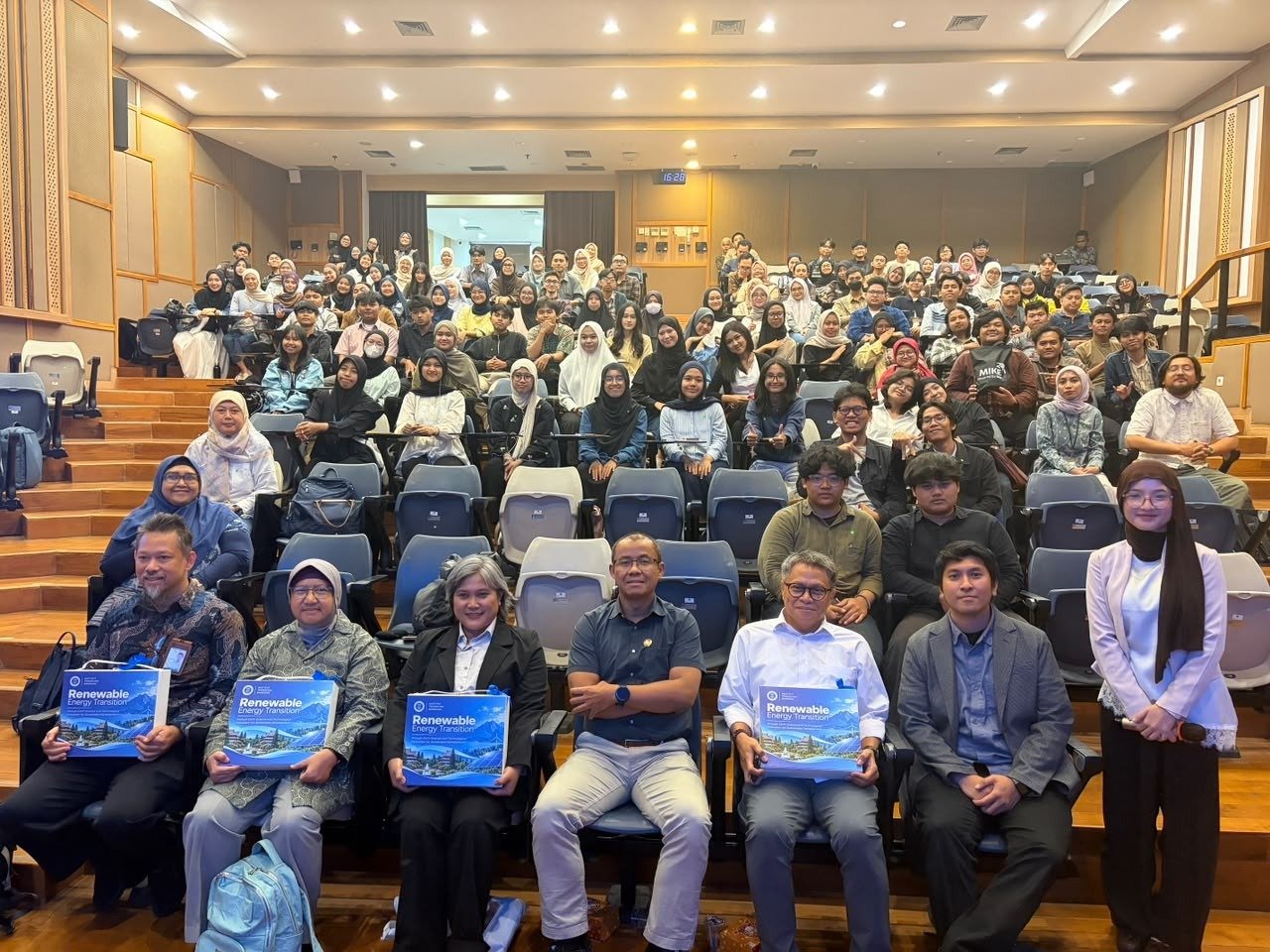
The issue was discussed at the national seminar titled “Renewable Energy Transition: Earth Science and Technological Innovation for Sustainable Development”, held on Friday (Sept. 25, 2026) at the ITB School of Business and Management (SBM) building. The seminar was attended by students from seven universities in Bandung, academics and government representatives.
FITB ITB Dean Dr. techn. Dudy Darmawan Wijaya, S.T., M.Sc., said collaboration among academia, business and government was needed to advance the energy transition. FITB ITB has been conducting research in several areas, including ocean-current energy, geothermal energy and solar observation.
Energy Policy and Transition Challenges
Tony Susandy, S.T., M.B.A., director of renewable energy at the Directorate General of New, Renewable Energy and Energy Conservation (EBTKE) of the Energy and Mineral Resources Ministry, said renewable energy was one of the pillars of Indonesia’s efforts to achieve its net-zero emissions target by 2060 or earlier.
He said climate change had further highlighted the importance of diversifying energy sources. He cited a decline in hydropower production in South Sulawesi following the El Niño phenomenon, while wind power generation increased.
The situation, he said, underscored the need to develop a more diverse and adaptive energy system.
He added that the energy transition still faced challenges related to financing, licensing, transmission infrastructure and public acceptance.
Harnessing Ocean Energy
Prof. Dr.Eng. Nining Sari Ningsih, M.S., presented research findings on Indonesia’s potential for ocean-current and wave energy.
Her team has identified several potential sites and developed a wave-energy conversion prototype that was tested in Pangandaran and was able to power an 18-watt lamp.
“Hopefully, this can be used by fishermen,” she said, noting that the technology could potentially be developed for small-scale energy needs, including those of fishing communities.
Geospatial Technology for Energy Mapping
Prof. Ir. Ketut Wikantika, M.Eng., Ph.D., discussed the use of geospatial technology and remote sensing to map renewable energy resources.
His team has developed a model to predict solar energy potential using data from the Himawari satellite, as well as a mapping platform for rooftop solar panels.
Similar technologies have also been used in research on biomass and bamboo, as well as in mapping plastic waste to support energy and environmental management.
Unlocking Geothermal Potential
Dr.Eng. Ir. Suryantini, M.Sc., highlighted opportunities to develop geothermal resources beyond volcanic systems, including in sedimentary basins and disused oil and gas wells.
The approach could open up opportunities to utilize geothermal resources that have so far received limited exploration.
She also encouraged the development of small-scale geothermal power plants in remote island areas as an alternative to reduce dependence on diesel fuel.
Collaboration to Accelerate the Energy Transition
The discussion also covered emissions from renewable energy, hybrid energy systems, human resource readiness and social resistance to energy projects.
Prof. Nining emphasized that the development of ocean energy required field testing and technological validation to attract investment.
Meanwhile, a representative of the West Java Energy and Mineral Resources Agency said the development of renewable energy continued to be promoted through regional energy policies.
The seminar moderator, Dr.Eng. Anjar Dimara Sakti, expressed hope that the cross-disciplinary forum would go beyond an exchange of ideas and lead to concrete collaboration.
“The goal of this seminar is not about presentation slides or achievements, but about the collaboration that will emerge from all of you,” he said.