





EduAsiaNews, Jakarta — Indonesian Manpower Minister Prof. Yassierli, Ph.D., highlighted the challenges facing national productivity and the readiness of Indonesia’s human resources as the country undergoes a transformation toward Industry 5.0. Over roughly the past two decades, Indonesia’s economic growth has been driven largely by capital accumulation, which contributed 61 percent, and labor, which contributed 37 percent, while pure productivity growth accounted for only 1.6 percent.
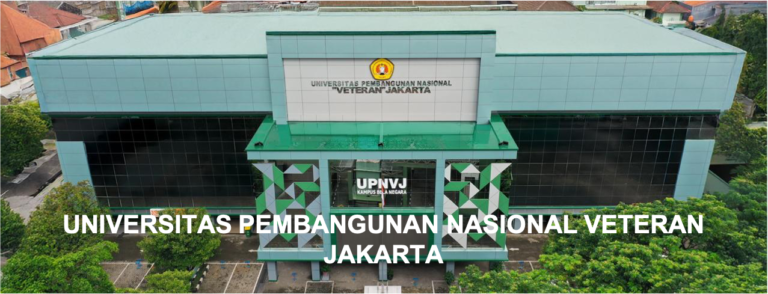
Yassierli made the remarks while delivering a presentation titled “Human Resource Readiness for Industry 5.0 to Build a National Productivity Ecosystem” at the 2026 Industrial Fair Seminar (INFAIR) at the Bhinneka Tunggal Ika Auditorium of Universitas Pembangunan Nasional “Veteran” Jakarta (UPNVJ) on Wednesday (Sept. 23, 2026).
According to Yassierli, the relatively low contribution of productivity indicates that Indonesia’s economic growth needs to be increasingly driven by improvements in efficiency, innovation, human resource quality and technology adoption. By comparison, productivity contributed 26 percent to economic growth in China, 23 percent in South Korea and 22 percent in Vietnam, based on data since 2010.
A similar challenge can be seen in labor productivity. In 2023, Indonesia’s labor productivity stood at around US$30,100 per worker, below the ASEAN average of US$32,300 per worker.
Nevertheless, Indonesia’s productivity growth has shown progress. Based on the APO Productivity Databook presented by the minister, Indonesia’s productivity growth was higher than that of Malaysia and Thailand, although it remained below the Philippines and Vietnam.
Yassierli emphasized that improving productivity requires interventions that go beyond a focus on workers alone. The government is promoting a 4P approach: People, Process, Product and Policy.
The approach places human competency development as one component of the productivity ecosystem. At the same time, production processes and work systems need to be improved, product innovation must generate added value, and policies must create an environment conducive to improving industrial competitiveness.
AI and Changes in Work Systems
Technological change is among the factors expected to reshape the structure of the workforce. Citing the World Economic Forum’s Future of Jobs Report 2025, which was included in his presentation, Yassierli said around 22 percent of jobs were expected to be affected by changes in the structure of the labor market. As many as 170 million new jobs could emerge, while 92 million jobs are projected to disappear.
These changes are being driven in part by advances in artificial intelligence (AI), robotics, digital platforms and automation. The growth of the digital and creative economies, the green economy, global value chains and the care economy is also driving shifts in work patterns toward remote work, platform work and project-based work, as well as human-machine collaboration.
Yassierli noted that AI has significant potential to boost productivity, but technology adoption alone is not enough. Data from PwC’s AI Jobs Barometer 2026, presented during the seminar, showed that companies in sectors with high AI exposure recorded productivity growth of 33.5 percent in 2025, compared with 24 percent among companies with low AI exposure.
In addition, using AI merely as an “assistant” without changing the division of roles and workflow resulted in productivity gains of only around 5 percent. When AI adoption is accompanied by workflow redesign, a clear division of roles between humans and AI, and worker reskilling, productivity gains can reach around 30 percent.
The data indicate that technological transformation needs to go hand in hand with human competency development and improvements to work systems.
Industry 5.0 Puts People at the Center
In addressing these changes, Yassierli emphasized the Industry 5.0 approach, which complements Industry 4.0 through three main orientations: human-centric, sustainable and resilient.
The human-centric approach places human capabilities, potential and well-being at the center of work systems. The sustainable principle integrates resource and environmental sustainability into industrial activities, while the resilient principle emphasizes the ability of industries to anticipate, respond to and recover from various forms of disruption.
Therefore, productivity improvements are not determined solely by sophisticated machinery and AI. The concept of human-centric productivity emphasizes three key components: capable people, technology that augments human capabilities, and work systems designed around human characteristics.
According to the presentation, the workforce of the future will require a broader range of capabilities. In addition to technical skills, workers will need human skills, ethics, empathy, a growth mindset and an innovative mindset. Competencies in AI, big data, networking and cybersecurity, technological literacy and robotics will also become increasingly important.
Universities as a Bridge to Industry
Yassierli identified higher education institutions as key actors in preparing human resources for this transformation. Universities have at least three strategic roles: ensuring that graduates possess measurable competencies, systematically integrating human skills, and serving as a strong bridge between universities and industry.
Graduate competencies, he said, should not be represented solely by academic degrees. Students’ abilities need to be demonstrated through portfolios, micro-credentials and mastery of emerging skills.
Relations between universities and industry also need to be strengthened through jointly developed curricula or co-designed curricula, the implementation of project-based learning and the development of micro-credentials recognized by the labor market.
On the government side, the Ministry of Manpower is preparing various programs to strengthen workforce competencies. In 2026, the National Vocational Training program is targeting 340,000 participants, with training programs designed based on industry needs and oriented toward employment placement.
The ministry is also targeting 150,000 participants in the National Internship Program to strengthen the transition from education to employment, or the school-to-work transition. The program includes the development of the Center of Apprenticeship Excellence, the transformation of vocational training centers, alignment of curricula and certification with industry needs, and improvements to the Labor Market Information System (LMIS).
In addition, the Ministry of Manpower is developing Labor Productivity Clinics at vocational training centers as hubs for productivity improvement. The program includes teaching factories, productivity training, company mentoring, communities of practice, as well as training in AI for Productivity Improvement and Smart Operations.
For UPNVJ, INFAIR 2026 provides a forum for bringing together the perspectives of the government, higher education institutions, students and industry to address national productivity challenges.
UPNVJ Rector Prof. Dr. Anter Venus, M.A., Comm., continues to encourage stronger links among education, research, innovation and societal needs. Through forums such as INFAIR 2026, UPNVJ seeks to ensure that students’ competencies extend beyond mastery of academic knowledge to include the ability to solve real-world problems, adapt to technological change and create added value for Indonesia’s productivity and competitiveness.(www.upnvj.ac.id)