




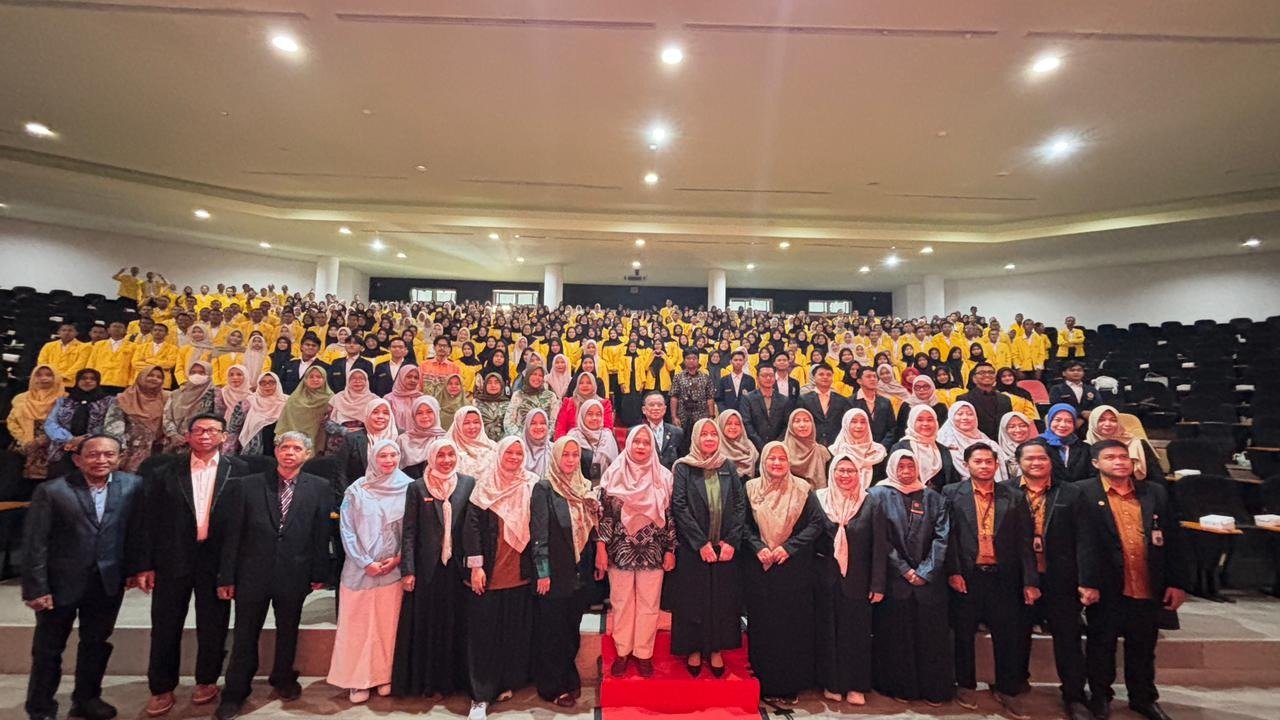
EduAsiaNews, Banjarmasin — Lambung Mangkurat University (ULM), through its Faculty of Teacher Training and Education (FKIP), held the International Conference on Instructional Leadership Based on AI for a Gold Generation on Thursday (August 27, 2026).
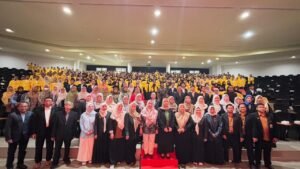
The hybrid conference was held at the Lecture Theater, ULM General Building, with participants also joining online via Zoom. The conference brought together distinguished lecturers, school supervisors, principals, teachers, presenters, invited guests, and participants from diverse educational backgrounds to broaden perspectives, exchange ideas, and foster collaboration in the development of artificial intelligence (AI)-based instructional leadership.
The conference was organized through a collaboration among five study programs within FKIP ULM: the Doctoral Program in Educational Administration, Master’s Program in Educational Administration, Master’s Program in Early Childhood Education Teacher Education (PG PAUD), Bachelor’s Program in Elementary School Teacher Education (PGSD), and Bachelor’s Program in Early Childhood Education Teacher Education (PG PAUD).
The International Conference featured two international speakers, namely Prof. Dr. Arsythambi Veloo from Universiti Utara Malaysia and Dr. Armand James Vallejo from the University of Mindanao Tagum College, Philippines.
Head of the Organizing Committee, Dr. Noorhapizah, ST., M.Pd., in her remarks, encouraged all participants to use the conference as a platform to broaden their perspectives and build collaboration.
“Let us make this conference an opportunity to think beyond boundaries, collaborate across disciplines and countries, and work together to shape the future of education,” she said.
She emphasized that the future of education would be determined not only by technological advancement but also by how wisely technology is utilized to benefit future generations.
“The future of education is determined not only by how advanced our technology is, but also by how wisely we use it for the benefit of future generations,” she added.
Meanwhile, Vice Dean for Academic Affairs of FKIP ULM, Prof. Dr. Deasy Arisanty, S.Si., M.Sc., stated that educational leadership needs to evolve in response to changing environments by making meaningful use of technology while remaining grounded in human values and sustainability.
She emphasized that technological advancement cannot replace the role of human leadership in education. Instructional leadership continues to play an important role in fostering an academic culture that encourages students to engage in lifelong learning, participate actively, think critically and creatively, remain adaptive and collaborative, and uphold ethical and responsible values.
The conference also provided a platform for students, teachers, and lecturers to broaden their knowledge through presentations by the speakers, as well as discussion and question-and-answer sessions. The exchange of ideas was expected to enrich participants’ perspectives on the challenges and opportunities of instructional leadership amid global change.
The conference reflects ULM’s commitment to promoting inspirational, innovative, human-centered, adaptive, and sustainable instructional leadership in addressing the challenges of education in the VUCA era.