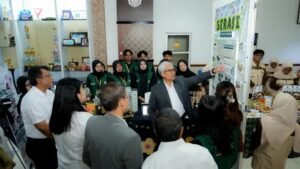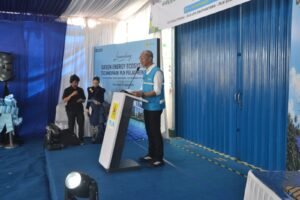



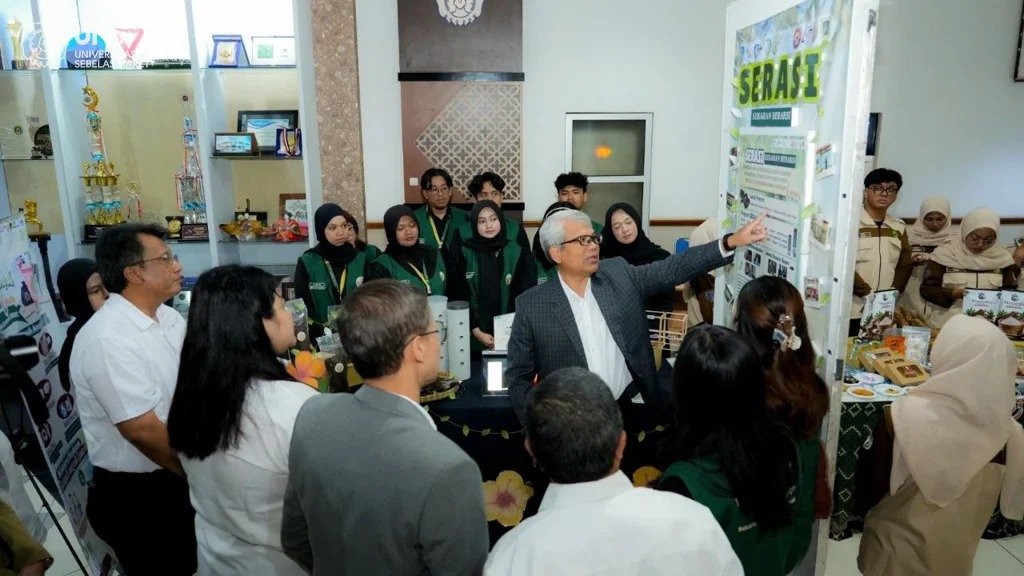
EduAsiaNews, Sukarta — Rector of Universitas Sebelas Maret (UNS) Surakarta, Prof. Dr. Hartono, dr., M.Si., has expressed his support for the implementation of the Student Organization Capacity Strengthening Program (PPK Ormawa) at UNS, which is currently undergoing the Internal Progress Assessment (PKP). The Rector conveyed his support to four UNS student teams that have advanced to the 2026 National PPK Ormawa Funding Stage, as announced by the Directorate of Learning and Student Affairs (Belmawa), Ministry of Higher Education, Science, and Technology of the Republic of Indonesia. He expressed his support while reviewing the internal PKP implementation at Meeting Room 2, Dr. Prakosa Building, UNS.
The four teams come from various faculties at UNS and successfully passed the selection process before implementing community empowerment programs in their respective partner villages.
The teams selected are:
- KM Psikologi, Faculty of Psychology, through the SERASI (Sekaran Beraksi) program: Empowering Ecological Literacy through a Multi-Family Psychoeducation-Based Waste Bank by Transforming Waste into Gold.
- KSI, Faculty of Agriculture, through Mina Wiradaya: Empowering the Wonorejo Community through One Village One Brand Based on the Downstreaming and Digitalization of Biofloc Catfish toward an Agripreneurial Village.
- KSP Principium, Faculty of Law, through Kampung Dolanan Sidowayah: Implementing STEAM-Based Water Science as a Wellness Tourism Model toward a Sustainable Tourism Village.
- HM Pelita, Faculty of Agriculture, through GRIKARSA Healthy Edibles Programme: Cassava-Based MOCAF Downstreaming to Increase the Income of the Petung Village Community.
Prof. Hartono praised the creativity and innovation developed by the students through PPK Ormawa. According to him, the programs demonstrate the students’ ability to identify existing community potential and transform it into initiatives with greater added value.
“This is very interesting. When we have raw materials with low economic value that can be processed into products with added value, complemented by good packaging and branding, this becomes an outstanding innovation,” said Prof. Hartono.
Nevertheless, Prof. Hartono noted that the students still face challenges, particularly in terms of product marketing and downstreaming. In his view, innovation should not stop at successfully producing a product. Products must be accepted by the market and generate sustainable economic benefits for the community.
UNS will continue to support the PPK Ormawa teams through mentoring and by strengthening product development, branding, marketing, and downstreaming. This support is expected to ensure that student innovations do not end with the completion of the program but continue to grow and deliver lasting benefits to communities.
Meanwhile, UNS Vice Rector for Student Affairs and Alumni, Prof. Ir. Dody Ariawan, M.T., Ph.D., added that the Directorate of Learning and Student Affairs (Belmawa) will conduct the PPK Ormawa assessment stage in September 2026. UNS hopes that all four student teams will achieve excellent results, advance to Abdidaya 2026, and receive awards at the event.
“We hope they will achieve excellent scores, qualify for Abdidaya 2026, and receive awards. Most importantly, we hope they will remain enthusiastic about creating a lasting impact on society,” said Prof. Dody.
UNS Public Relations