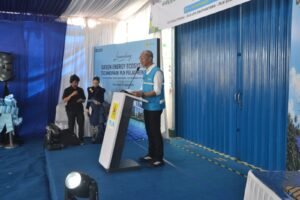





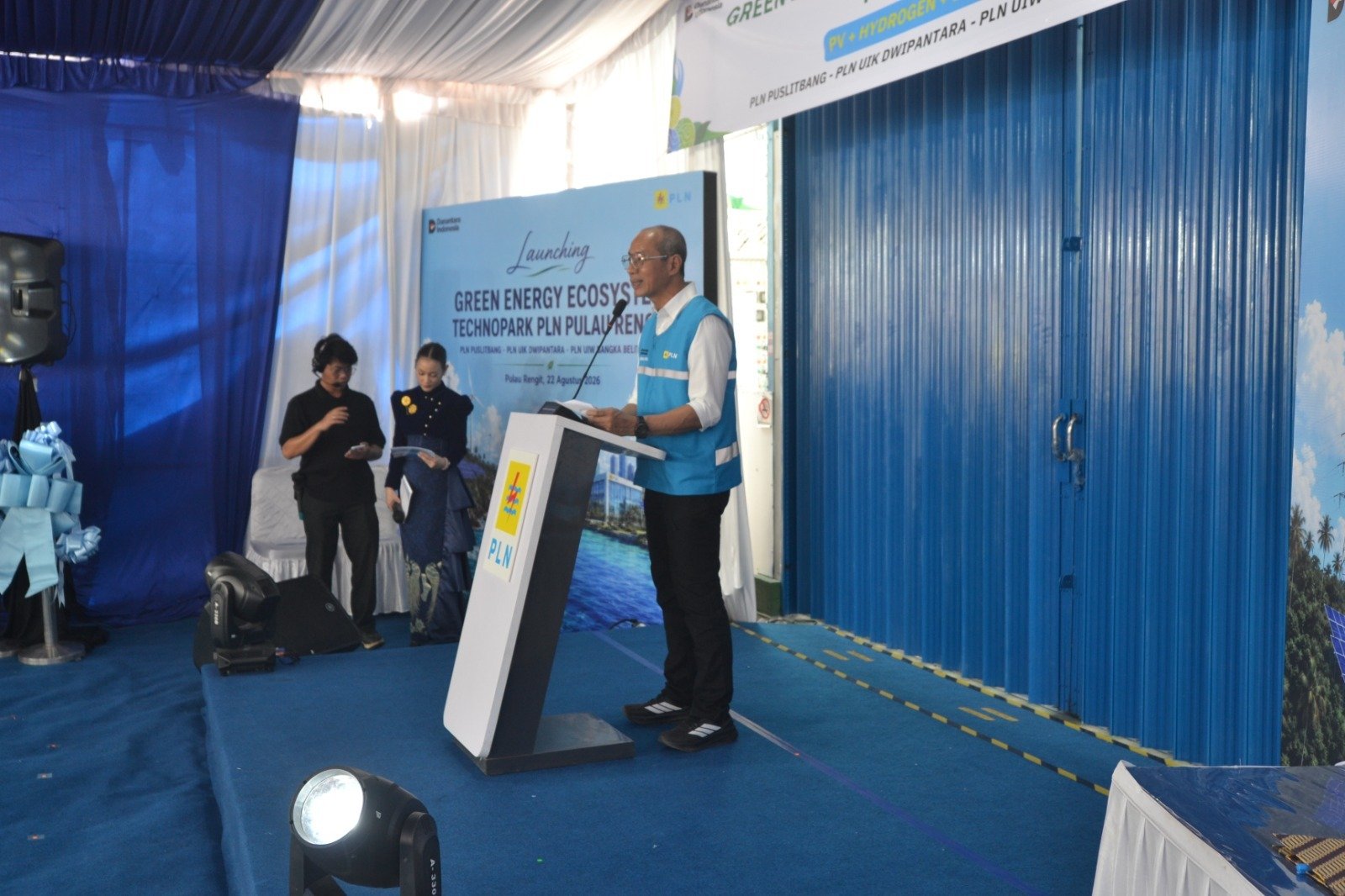
EduAsiaNews, Belitung — Universitas Bangka Belitung (UBB) has strengthened its commitment to supporting the energy transition, green technology development, and national energy resilience through collaboration with PT PLN (Persero). The commitment was formalized through the signing of a Memorandum of Understanding (MoU) between UBB and PT PLN (Persero), held alongside the launch of the Green Energy Ecosystem Technopark (GEET) on Rengit Island, Belitung, on Saturday (August 22, 2026).
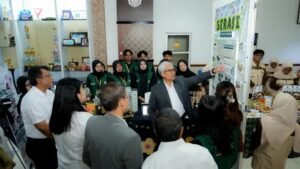
The GEET launch was attended by Governor of the Bangka Belitung Islands Hidayat Arsani; General Manager of PT PLN (Persero) Bangka Belitung Regional Main Unit (UIW), Ira Savitri; Director of Technology, Engineering, and Sustainability at PT PLN (Persero), Edwin Nugraha Putra; Member of the National Energy Council (DEN), Dr. Ir. Sripeni Inten Cahyani, M.M., ASEAN Eng.; and Director of New Energy, Ir. Senda Hurmuzan Kanam, M.Sc., along with other stakeholders.
The MoU was signed by Mochamad Soleh, General Manager of the Electricity Research and Development Center at PT PLN (Persero), on behalf of PLN, and UBB Vice Rector III for Planning, Information Systems, and Cooperation, Dr. Hamsani, S.E., M.Sc., on behalf of UBB.
The collaboration marks a strategic step toward strengthening synergies between higher education and industry, particularly in education, research, technological innovation, human resource development, and the utilization of research outcomes to support sustainable energy development.
Director of Technology, Engineering, and Sustainability at PT PLN (Persero), Edwin Nugraha Putra, said in his remarks that Rengit Island is the site of the first technopark officially developed by PLN.
“Rengit Island is the site of the first technopark officially developed by PLN,” Edwin said. He explained that GEET incorporates several clean-energy technologies, including solar power plants (PLTS), fuel cells, wind turbines, and hydrogen-based power generation technologies.
According to Edwin, the integration of these technologies forms part of PLN’s efforts to establish a green energy ecosystem while creating a space for testing, research, development, and utilization of future energy technologies.
He added that the development of GEET is aligned with Indonesia’s national challenges in strengthening energy independence and resilience, reducing reliance on oil-based fuels, and increasing the utilization of renewable energy, including solar power. “These challenges require support from research, innovation, technology, and collaboration among various stakeholders, including universities,” he said.
Governor of the Bangka Belitung Islands Hidayat Arsani expressed his appreciation for the establishment of GEET by PT PLN (Persero) on Rengit Island. He said the facility is expected to provide tangible benefits to local communities, particularly by supporting reliable electricity availability.
“We are very grateful that PT PLN (Persero) has established the Green Energy Ecosystem Technopark on Rengit Island for the benefit of the community, so that electricity can be utilized around the clock,” Hidayat said. He emphasized that reliable electricity plays an important role in stimulating economic activity and growth among local communities.
“Electricity is very important for improving the community’s economy,” he stressed.
Hidayat added that the Bangka Belitung Islands Provincial Government is also planning to develop coconut plantations and establish a coconut processing plant on Rengit Island. The development is expected to create new economic opportunities, increase the added value of local commodities, and improve the welfare of the local community.
Member of the National Energy Council (DEN), Dr. Ir. Sripeni Inten Cahyani, M.M., ASEAN Eng., welcomed the launch of GEET as a tangible manifestation of research, innovation, and technology development aimed at addressing strategic national issues.
“This is evidence of research, innovation, and development that must continue to be advanced to address strategic national issues, particularly energy resilience,” Sripeni said.
She expressed hope that GEET would continue to be developed and serve as a model that could be adopted to strengthen national energy resilience. Sripeni also expressed DEN’s support for PLN’s efforts to develop low-carbon research, innovation, and technologies. Looking ahead, she encouraged broader research initiatives, including the utilization of ocean energy, such as ocean currents, waves, tides, and differences in seawater temperature.
According to her, Indonesia’s ocean energy potential could become an important component of renewable energy diversification for the country as an archipelagic nation.
Director of New Energy, Ir. Senda Hurmuzan Kanam, M.Sc., also expressed his appreciation for the launch of GEET on Rengit Island. He viewed the facility as an important momentum for Bangka Belitung to play a greater role in developing new energy technologies, particularly hydrogen technology.
“I am very grateful for the launch of the Green Energy Ecosystem Technopark. Bangka Belitung will become an example for Indonesia in developing hydrogen technology. I can say that Bangka Belitung is already leading in energy,” Senda said.
He noted that GEET demonstrates that the development of new energy and low-carbon technologies is beginning to take concrete form through facilities that can serve as platforms for research, innovation, technology development, and clean-energy implementation.
Meanwhile, General Manager of PLN UIW Bangka Belitung, Ira Savitri, said that the geographical conditions of the Bangka Belitung Islands present distinctive challenges in electricity provision.
“The Bangka Belitung Islands face different challenges from other regions in providing electricity. The distances between islands, geographical conditions, and diverse community needs are among the challenges that must be addressed. However, this does not diminish our commitment to providing increasingly better and more reliable electricity services for all communities across the Bangka Belitung Islands,” Ira said.
She emphasized that these challenges serve as motivation to continuously develop innovations and improve the reliability of electricity services for the community. At the conclusion of her remarks, Ira expressed hope that the launch of GEET would deliver the greatest possible benefits to the people of Bangka Belitung Province.
UBB Vice Rector III, Dr. Hamsani, S.E., M.Sc., said that the partnership with PLN represents a strategic step for UBB in expanding its partnership network while strengthening the university’s contribution to green energy development.
According to him, universities play an important role in producing highly skilled human resources, research, and innovations capable of addressing development challenges, including those in the energy and electricity sectors.
“This collaboration marks an important momentum for UBB to strengthen the contribution of higher education to green energy development through education, research, innovation, and collaboration with industry,” Dr. Hamsani said.
He added that the presence of GEET on Rengit Island creates broader opportunities for collaboration among universities, government institutions, businesses, and communities in developing research and innovations in renewable energy and environmentally friendly technologies.
Through the MoU, UBB and PLN are expected to develop concrete programs in education, research and development, technological innovation, human resource development, and the utilization of research outcomes.
For UBB, the collaboration also forms part of its efforts to strengthen the connection between academic knowledge and the real-world needs of communities and industry. The launch of the Green Energy Ecosystem Technopark on Rengit Island represents an important milestone for Bangka Belitung in strengthening a clean, innovative, and sustainable energy ecosystem.
Through synergy among UBB, PLN, the government, and various stakeholders, GEET is expected not only to serve as a center for energy technology development but also to stimulate innovation, enhance human resource capacity, create new economic opportunities, and deliver tangible benefits to local communities.
The signing of the MoU further underscores UBB’s commitment to contributing through education, research, innovation, and collaboration in support of Indonesia’s energy transition and national energy resilience. (UBB Public Relations)