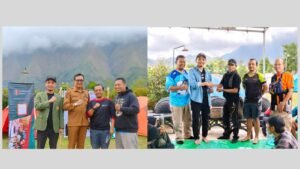





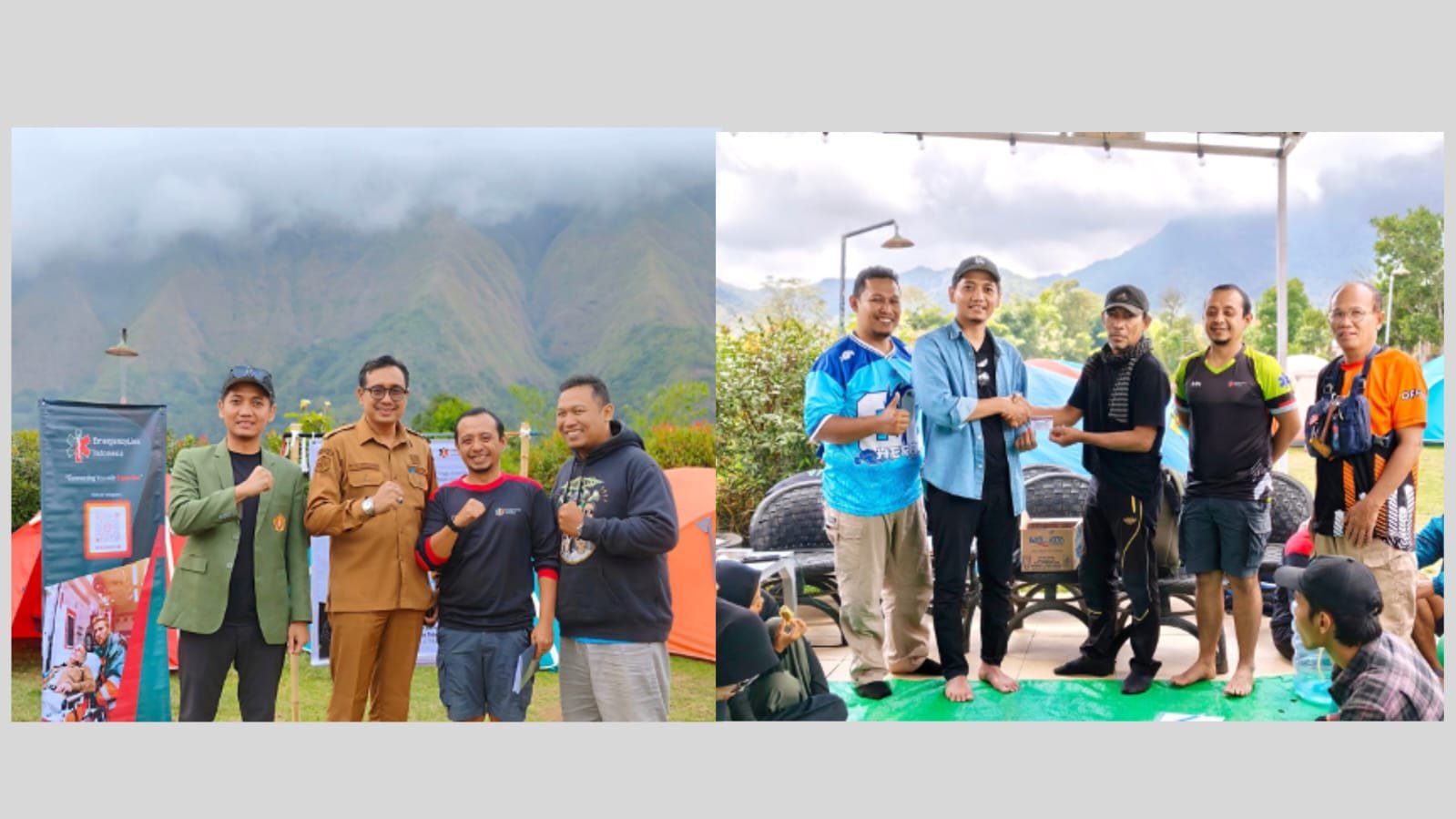
EduAsiaNews, Sembalun East Lombok — Thirty-seven participants took part in the Basic First Aid for Lay Rescuer – Mountain Activities training through the DARSINEM (Recognize and Address Emergency Conditions) initiative, held on August 10–11, 2026, at Rinjani Camping Ground, Sembalun, East Lombok, West Nusa Tenggara.
Unlike conventional first-aid training conducted primarily in classroom settings, DARSINEM incorporates nature and the surrounding environment as integral components of the learning process. The approach combines Nature and Environmental Learning, outdoor education, and experiential learning to provide participants with a learning experience that is more closely aligned with the realities of emergencies in mountainous environments.
The program was opened by the Head of the East Lombok Health Office, Ns. Lalu Aries Fahrozi, M.Kep., and is supported through cross-institutional collaboration involving Universitas Pembangunan Nasional “Veteran” Jakarta (UPNVJ), Universitas Mataram, ITSK RS dr. Soepraoen Malang, Stikes Mataram, Bapelkes Mataram, PT Emergency Link, and the Rinjani Bagus community, with support from the East Lombok Health Office.
Nature as a Learning Environment
DARSINEM’s Nature and Environmental Learning approach positions the natural environment not merely as a training venue, but as a source of learning and an integral part of the learning context. The terrain around Sembalun and Mount Rinjani provides a real-world setting in which participants can understand how geography, terrain, weather, altitude, accessibility, and available resources can affect emergency response.
Through this approach, participants learn not only what to do when responding to an emergency, but also why particular actions must take environmental conditions into account. The outdoor setting provides an atmosphere resembling the situations hikers and outdoor enthusiasts may encounter, while helping strengthen participants’ sense of emergency.
Learning Through Experience
Direct experience is a central element of nature-based learning. Participants are encouraged to observe their surroundings, identify potential risks, make decisions, take action, and reflect on their experiences.
At DARSINEM, this principle is implemented through a combination of lectures, skills practice, simulations, discussions, reflection, and evaluation. Participants learn and practice cardiopulmonary resuscitation (CPR), hands-only CPR, automated external defibrillator (AED) use, choking management, high-altitude sickness response, animal-bite management, trauma care, and evacuation techniques in an outdoor setting.
The approach is particularly relevant because emergencies in natural environments are often more complex than those occurring in healthcare facilities. Responders must consider the victim’s condition alongside environmental factors, equipment availability, responder safety, communication, and evacuation options. The natural environment therefore functions as a “living laboratory” for developing critical thinking, problem-solving, communication, teamwork, and decision-making skills in realistic situations.
First-Aid Training for Mountain Emergencies
The two-day training focused specifically on emergencies that may occur during mountain climbing and outdoor activities.
The first day included a pre-test, an introduction to CPR and hands-only CPR, AED instruction and practice, as well as sessions on choking and high-altitude sickness. On the second day, participants learned about animal bites, trauma, and evacuation. The program concluded with a skills examination and post-test.
From the Classroom to the Real World
One of the key strengths of DARSINEM is its effort to reduce the gap between what participants learn and the situations in which those skills may actually be needed. While conventional training may rely on mannequins, videos, or controlled simulations, nature-based learning exposes participants to more complex environmental conditions, making the decision-making process more realistic.
The DARSINEM program applies experiential learning through skills including victim assessment, basic life support, injury stabilization, and basic evacuation techniques tested through field simulations designed to resemble real-world conditions. In this model, nature serves not only as a place of learning, but also as a learning medium and source of experience.
All Participants Pass Knowledge and Skills Assessments
The training produced positive results, with all 37 participants passing both the knowledge and skills components of first aid for outdoor accidents. The achievement followed a series of learning sessions, practical exercises, simulations, a skills examination, and a post-test.
Under the DARSINEM framework, participants who meet the competency standards are subsequently expected to become DARSINEM Cadres, allowing the knowledge and skills gained through the program to be shared with other members of the community.
Building Environmental and Risk Awareness
The Nature and Environmental Learning approach also promotes environmental awareness and risk awareness. By learning directly in a mountainous environment, participants develop the ability to assess their surroundings as part of emergency decision-making. Steep terrain, changing weather, altitude, limited access, and evacuation distances all become factors that must be considered when determining an appropriate response.
The approach is particularly relevant to Mount Rinjani, where 273 hiking accidents were recorded between 2016 and 2024, resulting in 17 deaths and more than 200 injuries. By mid-2025, the number of hikers had reached approximately 36,500. These figures underscore the importance of strengthening the ability of local communities to identify risks and provide an initial emergency response.
From First Aid to Community-Based Health Tourism
DARSINEM advances a Community-Based Health Tourism approach that places health and safety at the heart of nature-based tourism development. Under this model, local communities are positioned not merely as beneficiaries of tourism, but also as actors responsible for destination safety.
Universities contribute knowledge and technology transfer, local governments provide support and networks, communities serve as implementers and grassroots drivers, while professional partners strengthen emergency-response training. The collaboration is expected to create a more sustainable preparedness system through cadre development, mentoring, evaluation, and stronger networks involving health authorities, the Regional Disaster Management Agency (BPBD), and Search and Rescue (SAR) teams.
Building Safer and More Sustainable Nature Tourism
The implementation of DARSINEM in Sembalun demonstrates how health education can harness the natural environment as a learning space. Through Nature and Environmental Learning, outdoor education, and experiential learning, participants acquire skills in a context closely connected to the situations they may encounter in the field.
The approach brings together three essential elements: first-aid skills, environmental risk awareness, and community empowerment. For the Mount Rinjani area, strengthening these capabilities goes beyond first aid. Safety is an important component of destination quality and a foundation for sustainable nature-based tourism.
Ultimately, DARSINEM conveys a broader message: nature is not only a place to visit, but also a space for learning, building risk awareness, developing practical skills, and fostering a culture of safety. Through collaboration among local governments, universities, communities, businesses, and emergency-response networks, the model could potentially be expanded and replicated across other nature-tourism destinations in Indonesia.(www.upnvj.ac.id)