




EduAsiaNews, Jakarta – Universitas Pembangunan Nasional “Veteran” Jakarta (UPNVJ), in collaboration with the Indonesian State Defense Movement (GBNI), has begun formulating guidelines and a curriculum for state defense education designed to be implemented and replicated across various regions of Indonesia.
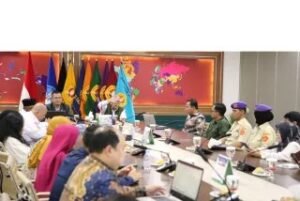
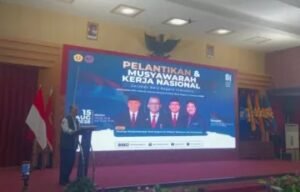
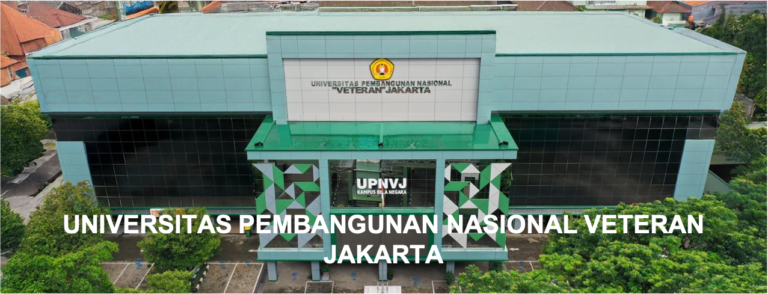
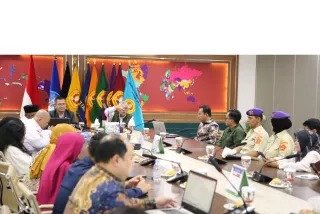
The initiative emerged as one of the key outcomes of a Focus Group Discussion (FGD) on strategies for strengthening state defense education, held as part of the inauguration of the GBNI Central Executive Board and the organization’s National Working Meeting (Mukernas) at the UPNVJ Pondok Labu Campus, South Jakarta, on Saturday (Aug. 15, 2026).
The proposed guidelines are intended to serve as a reference for organizing state defense education and training involving local governments, schools, universities, community organizations, and communities at the village level.
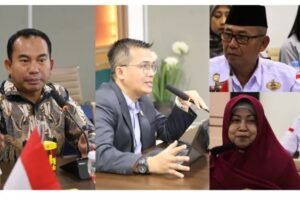
UPNVJ Rector Prof. Dr. Anter Venus, MA, Comm., said state defense education requires a structured framework to ensure that its implementation goes beyond conceptual discussions. The curriculum, he said, should address practical needs at the regional level, including program objectives, learning materials, training duration, instructor qualifications, implementing institutions, partnership mechanisms, and funding schemes.
“We have been tasked with determining how GBNI and UPN can jointly develop guidelines and a curriculum to be implemented throughout Indonesia—not only in higher education but also among rural and regional communities,” Venus said during the FGD.
According to Venus, the guidelines are needed to establish clear standards for state defense education while allowing implementation to be adapted to the characteristics and needs of individual regions. Regional offices of the National Unity and Political Affairs Agency (Kesbangpol), for example, could use the curriculum as a reference for developing state defense programs in their respective areas.
The discussion therefore focused not only on the curriculum content but also on the overall design of program implementation.
“What should state defense education look like in the regions? What activities should be carried out? What should the curriculum contain? What qualifications should instructors have? How long should the program last? And which institutions should be involved?” he said.
Venus emphasized that the forum’s outcome should ultimately take the form of an operational guide that can be used by various stakeholders.
“The output will be guidelines and a curriculum for regional training. The guidelines will cover objectives, duration and other aspects. At a broader strategic level, we also need to determine the networks, regional partnerships and funding mechanisms,” he said.
Engaging Local Governments and Community Organizations
The state defense education model being developed by UPNVJ and GBNI adopts a collaborative approach. Central and local governments, youth organizations, schools, universities and community groups can contribute according to their respective capacities and regional needs.
At the village level, youth organizations such as Karang Taruna could be considered as implementation partners. At the regency and municipal levels, partnerships could be developed with Kesbangpol offices, schools, universities and community organizations.
“When GBNI eventually works in the regions, it will partner not only with government institutions but also potentially with schools, universities and other organizations in those areas,” Venus said.
He noted that two key components must be ensured in developing the strategy: the curriculum itself and mechanisms for institutional collaboration. Clear divisions of responsibility need to be established so that the resulting education model can be replicated without becoming dependent on a single institution.
UPNVJ can contribute its academic expertise through research, curriculum development, learning methodologies and training, while GBNI can leverage its organizational network to support the expansion of the program across Indonesia.
“We want to disseminate these ideas and build a national state defense movement. One of the ways to do that is through training and state defense education,” Venus said.
Curriculum to Address Non-Military Threats
The curriculum is also being developed in response to the changing nature of threats facing the nation. Venus said state defense education needs to adopt a non-military approach, as threats to national resilience do not always take the form of physical conflict.
“The approach is a non-military one. This is no longer about conventional warfare. Warfare has changed. We now face cognitive warfare, narrative warfare and ideological warfare,” he said.
The digital sphere has become an increasingly important arena requiring attention. The rapid flow of information, disinformation, narrative warfare and the development of artificial intelligence (AI) can influence how people understand national issues.
“Challenges in cyberspace, particularly those posed by AI, can also mislead us. That is what we want to discuss,” Venus said.
These developments mean that state defense education should go beyond conventional national awareness. The curriculum also needs to strengthen critical thinking, digital literacy, ideological awareness, the ability to identify and assess information, and society’s readiness to respond to changes in the social and technological environment.
UPNVJ’s Experience as a Foundation
As a State Defense Campus, UPNVJ has developed academic experience in state defense education through its Center for State Defense Studies. One of its approaches is Actualization of State Defense (ABN), which places state defense values within the context of student and community life.
The approach is built around five fundamental state defense values: love of the homeland; awareness of national and state identity; loyalty to Pancasila as the state ideology; willingness to make sacrifices for the nation and state; and basic state defense capabilities.
Rather than positioning students solely as recipients of classroom-based instruction, the approach promotes project-based learning focused on issues relevant to communities, including entrepreneurship, digital transformation, literacy, local wisdom, sustainable development, public health and diversity.
The actualization concept has also been developed through various community-based initiatives, including State Defense Villages, Tourism Villages, Digital Villages, Literacy Villages, Anti-Corruption Villages and Bhinneka Tunggal Ika Villages.
This experience provides UPNVJ with a foundation for translating state defense education from a conceptual framework into practical activities that can be implemented within communities. The guidelines and curriculum currently being discussed with GBNI remain at the formulation stage and will be refined through further discussions among relevant stakeholders.
FGD Outcomes to Be Presented at GBNI’s National Working Meeting
The FGD was part of the inauguration of the GBNI Central Executive Board and the organization’s National Working Meeting held on the same day. In addition to discussing strategies for strengthening state defense education, the forum addressed GBNI’s organizational direction for the 2025–2028 period. The discussion outcomes will subsequently be formulated into recommendations for presentation at the Mukernas plenary session.
The event was attended by GBNI officials, including General Chair Drs. H. Abu Hasan, M.Pd.; Executive Chair Prof. Dr. H. Mansyur Achmad KM, M.Si.; Head of BACADNAS Lt. Gen. TNI Gabriel Lema; and Secretary-General Agung RC Prabowo, S.E., M.M., along with academics and other stakeholders.
For Venus, UPNVJ’s identity as a State Defense Campus must be translated into contributions that can benefit society more broadly. Universities, he said, should not limit state defense education to their own campuses but should also produce knowledge, methodologies and educational models that can be shared with governments and communities.
Through the joint development of guidelines and a curriculum with GBNI, UPNVJ is seeking to establish a more structured and adaptive approach to state defense education that responds to non-military threats and can be replicated according to the characteristics of each region. The initiative also forms part of UPNVJ’s commitment to bringing state defense values from the educational environment into communities across Indonesia.(www.upnvj.ac.id)