




EduAsiaNews, Papua – Beginning in 2041, Indonesia’s ownership stake in PT Freeport Indonesia, the copper mining giant operating in Papua, will increase from 51% to 63%. However, what is being transferred is not merely equity ownership, but also valuable expertise and human capital. Of the company’s approximately 27,000 employees, more than 40% are Indigenous Papuans, while 97% are Indonesian citizens. Papuan talent is no longer concentrated solely in technical roles; nine Indonesians currently serve on the board of directors, and more than 100 managerial positions are held by Indonesian professionals, including Tony Wenas, President Director of PT Freeport Indonesia.
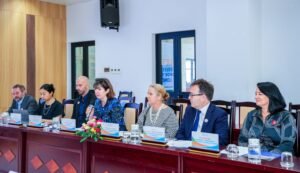
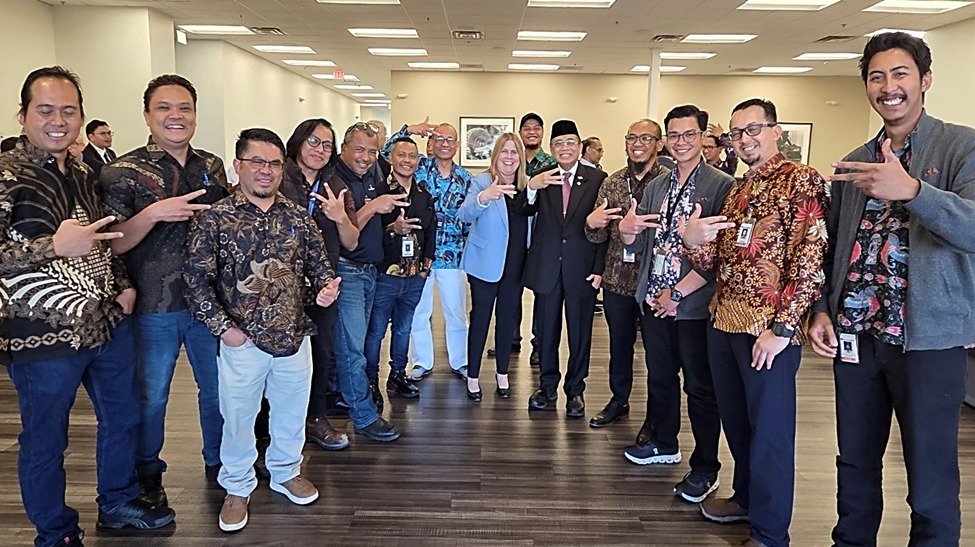
During a meeting between Indonesia’s Ambassador to the United States, Indroyono Soesilo, and Kathleen Quirk, Chief Executive Officer of Freeport-McMoRan, at the company’s headquarters in Phoenix, Arizona, on May 21, 2026, both parties reaffirmed that the long-term partnership between Indonesia and the American mining giant has become increasingly balanced and mutually beneficial. The enhancement of Indonesian human resource capabilities and mining technology transfer was highlighted as a key priority. Freeport also expressed its commitment to providing internship opportunities for Indonesian graduates from universities in the United States, enabling them to gain experience within one of the world’s largest mining operations.
Nearly nine decades after Dutch geologist Jean Jacques Dozy discovered the Ertsberg ore body in 1936, Papua’s vast copper and gold resources are increasingly coming under Indonesian ownership. Following the landmark divestment in 2018, Indonesia’s shareholding through MIND ID increased from 9.36% to 51.23%. A new chapter began in February 2026, when the extension of mining operations through 2061 included an agreement by Freeport-McMoRan to transfer an additional 12% stake at no cost, raising Indonesia’s ownership to 63% by 2041.
Equally significant is the prospect of technology transfer. Freeport is currently developing an artificial intelligence (AI) system known as TROI (Throughput, Recovery, Optimization, Intelligence). The technology is capable of processing and analyzing data from thousands of sensors and generating operational recommendations designed to maximize copper recovery.
The TROI system was demonstrated to Ambassador Indroyono Soesilo, who is himself a geologist. Within seconds, data collected from thousands of monitoring points are transmitted to a central data center, where the system analyzes relationships between ore characteristics, plant sensor readings, ore processing rates, and copper recovery performance. TROI can identify the type of ore currently being processed in real time and generate recommendations for adjusting plant controls to optimize copper production. These recommendations are issued every one to three hours.
Powered by artificial intelligence, the system’s algorithms continuously learn and improve. In copper mining operations in the United States, TROI has increased copper production by approximately 5% without requiring major capital investment. The technology has also been tested at copper mines in Peru.
In the future, the implementation of TROI in Papua could represent a genuine breakthrough in technology transfer. Beyond improving operational efficiency, it has the potential to cultivate a new generation of Papuan data scientists, metallurgists, and engineers, ensuring that Papua inherits not only the mine itself but also the expertise and technological capabilities necessary to manage it independently for generations to come.