




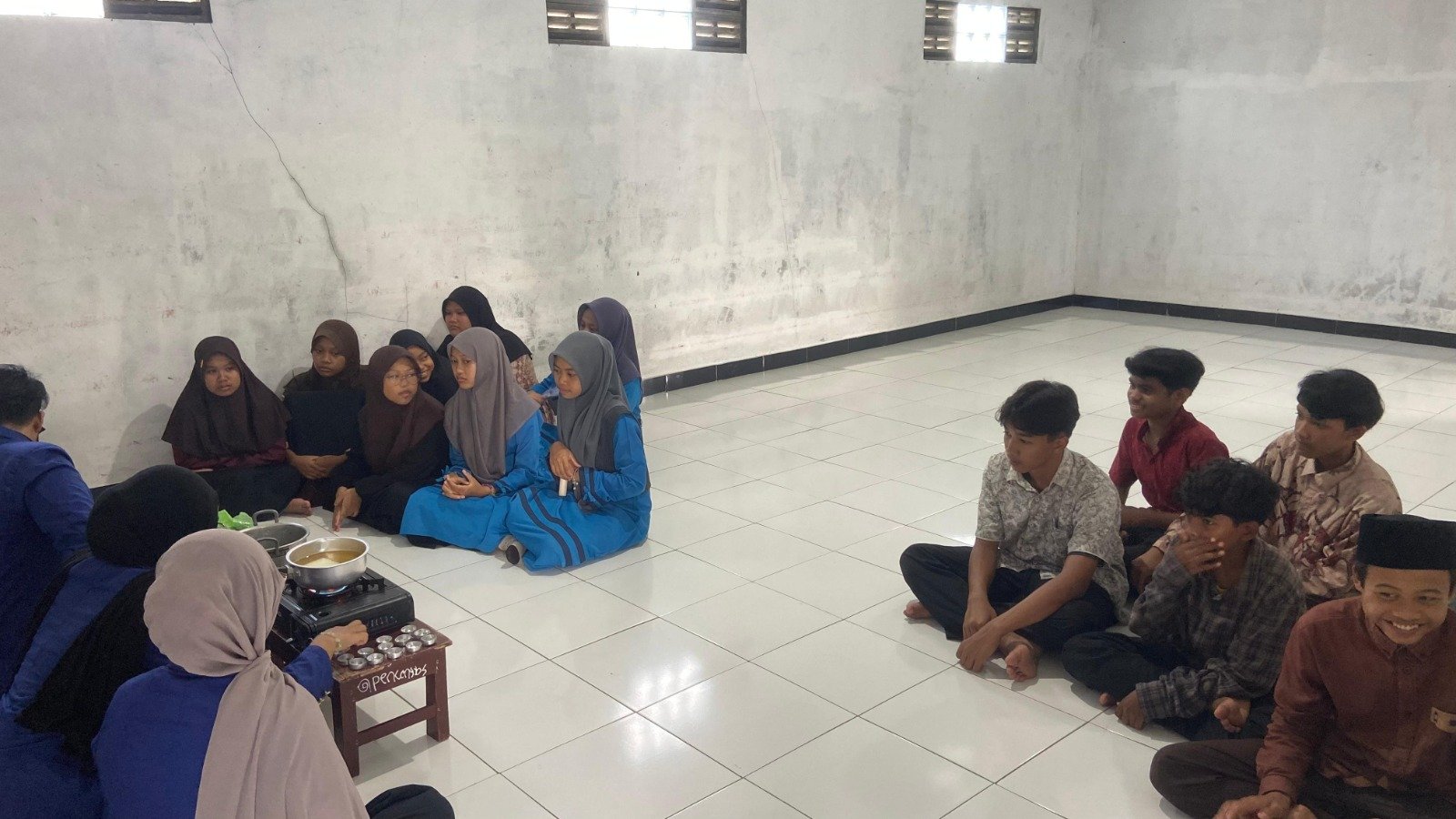
EduAsiaNews, Yogyakarta – Students of the Elementary School Teacher Education Study Programme (PGSD) at Yogyakarta State University (UNY) recently conducted a field study implementation activity involving the transformation of used cooking oil into candles at the Khodijah Sinar Melati Orphanage. The activity was attended by 17 children residing at the orphanage, ranging in age from 12 to 15 years old, from Grade 5 of elementary school through Grade 8 of junior high school. The programme was carried out as a form of environmental education as well as an effort to support the Sustainable Development Goals (SDGs), particularly Goal 8 on decent work and economic growth, Goal 9 on industry, innovation, and infrastructure, and Goal 17 on partnerships for the goals.
The activity commenced with an introductory session between the students and the participants, aimed at establishing a warm and interactive atmosphere. Subsequently, the students provided an explanation of used cooking oil and the environmental impact of its improper disposal. The participants were introduced to simple methods of repurposing household waste into more useful and functional products. This explanation was intended to help participants understand that household waste need not always be discarded, but can instead be reprocessed into creative products.
The students then proceeded to demonstrate the process of making candles from used cooking oil using simple tools and materials. During the demonstration, participants were shown the stages of processing used cooking oil, from the filtration process and mixing of materials to the candle moulding process. The children at the orphanage appeared enthusiastic throughout the activity and actively raised questions regarding the candle-making process. Beyond merely observing the demonstration, participants were also given the opportunity to try making candles themselves under the guidance of the students.
Through this activity, participants gained new knowledge regarding more environmentally friendly methods of managing household waste. In addition to raising awareness of the importance of environmental preservation, the activity also fostered creativity, teamwork, and practical skills among participants in producing simple items that can be utilised in daily life. The candles produced from processed used cooking oil also hold potential economic value if further developed as a creative product. “We hope that this activity can provide the children with new insights into the importance of environmental stewardship, while also enabling them to transform waste into products of practical and commercial value,” said Salsabilla Azizah Maulidini, the activity coordinator.
This field study implementation activity represents one form of contribution by PGSD UNY students in supporting the achievement of the SDGs through environmental education and community empowerment. Furthermore, the activity underscores the significance of collaboration between students and the community in creating simple yet beneficial innovations. It is hoped that similar activities can continue to be developed so as to generate a broader positive impact on both the environment and the surrounding community.