




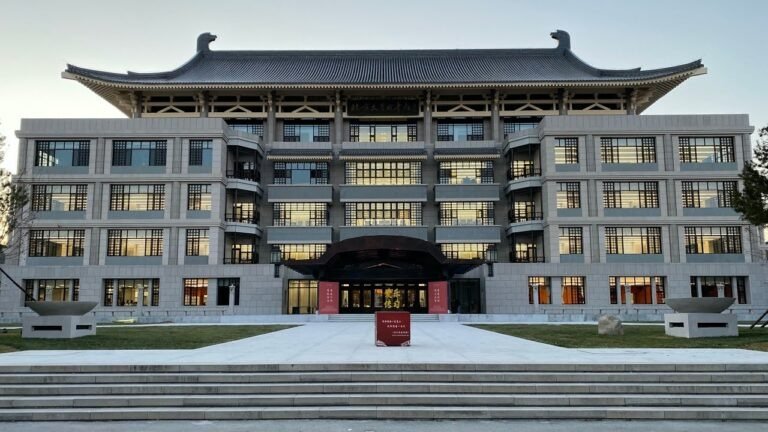
EduAsiaNews, Beijing — A pharmaceutical chemistry breakthrough from Peking University (PKU), China, has captured the attention of the international scientific community following its publication in the prestigious journal Nature on March 16, 2026. A research team from the State Key Laboratory of Natural and Biomimetic Drugs at PKU’s School of Pharmaceutical Sciences has solved a chemical puzzle that has confounded scientists for more than 160 years: converting alkenes — inexpensive and readily available coal-derived compounds — into high-value alkynes that serve as essential raw materials in drug production.
The study was led by Professor Ning Jiao, a leading scholar in organic chemistry at PKU. The team, comprising Junhong Meng, Yiqi Liang, Ruilin Xu, and several colleagues, developed a recyclable selenanthrene reagent as a medium for converting alkenes into alkynes under milder conditions than those required by previous methods. The approach is also compatible with a wide range of sensitive functional groups that are typically degraded during conventional synthesis processes.
The breakthrough not only revolutionises the concept of molecular synthesis, but also opens new opportunities for China’s coal-based chemical industry to venture into the production of high-value fine chemicals. PKU’s new method enables a reduction in synthesis steps by as much as 50 to 70 percent, significantly cutting production costs while substantially minimising chemical waste. Alkynes themselves are key compounds in the manufacture of several important drugs, including retapamulin (antibacterial), grazoprevir (hepatitis C), and erlotinib (lung cancer).
Selenanthrene, a compound first synthesised in 1896, had been largely overlooked by the scientific world for more than 130 years, its potential never fully explored. Ning Jiao’s team revived the compound through a “cascade activation” strategy that allows reactions to proceed at room temperature with broad substrate compatibility. This achievement is widely regarded as a striking example of the strategic thinking that has shaped China’s chemical industry in recent years — generating greater value from existing resources, without reliance on imported petroleum-based raw materials.
This publication further cements PKU’s reputation as one of the world’s foremost centres of chemical research. The accomplishment also reflects the long-term strategic direction of China’s chemical industry — that without increasing oil supply, the sector is capable of creating greater value through fresh ideas. International chemistry experts have described the approach as an “elegant revival” of selenanthrene, while global pharmaceutical industry players have begun examining its potential application at larger production scales. (**)
(Source: Nature (DOI: 10.1038/s41586-026-10372-3), South China Morning Post)