




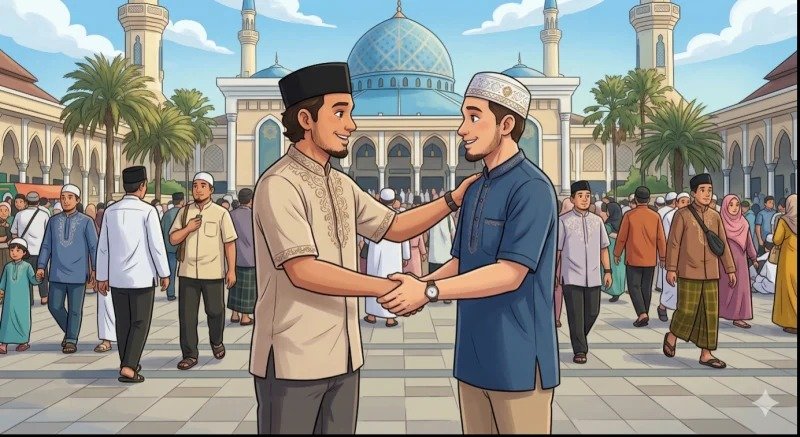
EduAsiaNews, Surabaya— Eid al-Fitr is often interpreted as a turning point to return to one’s natural state (fitrah), a moment in which sincerity of heart is tested through the act of forgiveness. Behind handshakes and words of apology lies a mechanism of self-healing.
A lecturer from the Faculty of Psychology (Fpsi) at the State University of Surabaya (Unesa), Miftakhul Jannah, explains that forgiveness is not merely a social norm, but an emotional transformation that converts lingering pain into a more adaptive sense of tranquility.
Referring to the ideas of psychology experts such as Robert Enright and Everett Worthington, Mifta notes that the tradition of mutual forgiveness functions as an emotional release, allowing burdens of trapped emotions to be let go.
The strong spiritual atmosphere during the holiday creates a unique space for reflection, where empathy grows more profoundly to strengthen relationships or restore those that have become strained.
The benefits of forgiveness directly affect the anatomy of an individual’s mental health. When a person chooses to let go of resentment, there is a shift in how past painful experiences are perceived.
This process effectively breaks the chain of rumination, an exhausting habit of repeatedly replaying negative memories in the mind.
“If left unchecked, rumination can trigger chronic stress and significant emotional burden. Conversely, individuals who are able to forgive tend to have lower stress levels, more stable emotions, and a much higher level of life satisfaction,” she explained.
Harboring anger over a long period is akin to carrying an invisible heavy burden. Suppressed negative emotions may lead to mental fatigue and even symptoms of depression.
From a psychological perspective, forgiveness is a form of emotion-focused coping—a self-empowered way for individuals to manage stress by regulating their emotional responses to painful events.
Although it may seem simple, she acknowledges that forgiveness is often a difficult journey. The depth of wounds and each person’s interpersonal history are highly personal.
However, she emphasizes that forgiveness does not mean justifying others’ mistakes, but rather a courageous decision to no longer allow the past to control one’s present and future happiness and inner peace.
Through reinterpreting painful experiences, individuals can gradually lay down the burdens they carry.
“When forgiveness is practiced sincerely, it not only reconnects social bonds, but also becomes the most valuable gift one can give oneself—to move forward more lightly, peacefully, and with greater psychological well-being,” she concluded.