




EduAsiaNews, Beijing — The Chinese government has positioned universities as the backbone of national science and technology development under the 15th Five-Year Plan covering the period 2026–2030. The strategic plan is currently under review by the National People’s Congress and is scheduled for formal adoption at the Two Sessions (Lianghui) in March 2026. The document serves as China’s most critical roadmap in realising its ambition to become a science and technology superpower by the end of this decade.
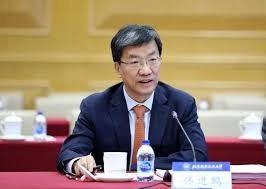
China’s Minister of Education Huai Jinpeng affirmed that the 15th Five-Year Plan period will be a pivotal moment in building a stronger Chinese education system. He noted that the ministry’s top priorities are to accelerate the establishment of a high-quality education system, strengthen science and technology innovation capacity, and advance the broader agenda of talent development and institutional reform. “We can no longer view education as a sector standing on its own, it must be aligned with the broader national strategy,” Huai said in an interview with Xinhua.
Minister of Science and Technology Yin Hejun stated that technological innovation is the “core element” in developing new productive forces. The plan’s recommendations propose four major steps: strengthening original innovation and breakthroughs in core technologies, deepening the integration of scientific innovation and industry, advancing the integrated development of education, science and technology, and talent, as well as accelerating the construction of the China Digital initiative.
At the implementation level, the government will invest heavily in basic research, promote private-sector innovation, and expand national laboratories and technology clusters. Education, research, and industry are designed to be fully integrated, with universities and businesses working together to cultivate new talent and produce strategic discoveries. This synergy mechanism is expected to connect the entire chain — from basic research to technological breakthroughs, application scenarios, and industrial transformation.
On the front of international openness, the plan encourages high-quality foreign universities in STEM fields to establish joint education programmes in China, while supporting the development of international cooperation laboratories and world-class talent development bases. The British Council, in its analysis of the document, assessed that this policy marks a new chapter in the opening of China’s education sector toward high-quality cooperation — a signal that Beijing is not merely building strength from within, but also opening its doors to selective and strategic global collaboration. (**)
(Sources: Ministry of Education China/Xinhua, China Government News Agency, British Council Opportunities Insight, China Daily )