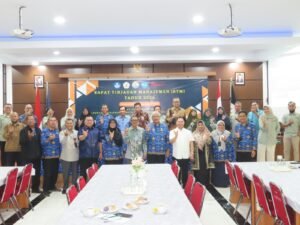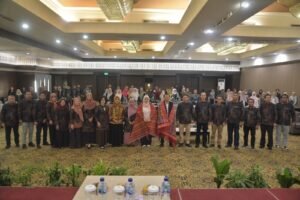





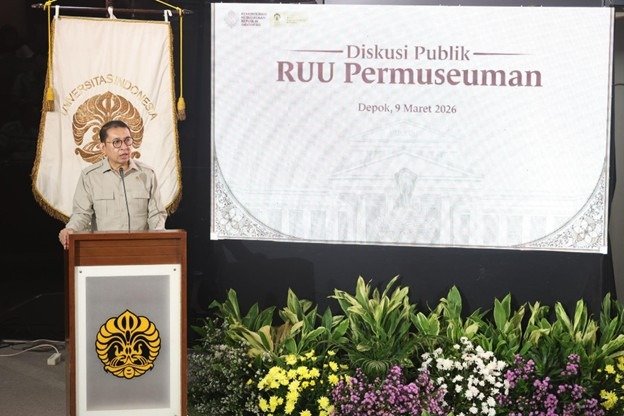
EduAsiaNews, Depok – The Kementerian Kebudayaan Republik Indonesia (Indonesian Ministry of Culture), in collaboration with the Faculty of Humanities of Universitas Indonesia, organized a Public Discussion on the Draft Museum Bill at the Auditorium Toety Herati Noerhadi, located on the FIB UI campus in Depok. The hybrid event was attended by more than 400 participants and aimed to gather input from academics, practitioners, and the broader public to ensure that the Draft Museum Bill remains relevant to the future challenges of Indonesia’s museum sector. 🏛️
The Draft Museum Bill is expected to serve as a legal instrument that will encourage Indonesian museums to transform into modern, accountable, and inclusive institutions. Key discussion points included museum standardization, collection protection, institutional strengthening, and the development of human resources in the museum sector.
In his opening remarks, the Indonesian Minister of Culture, Fadli Zon, emphasized the importance of the regulation and the crucial role of museums as centers of information, education, and culture that serve as showcases of a nation’s civilization and cultural heritage.
“Indonesia needs clear regulations regarding museums. As a country with megadiversity, we possess an extraordinary wealth of artifacts, and museums essentially serve as places to display our valuable heritage,” he stated.
Meanwhile, the Director General for Cultural Protection and Tradition at the Ministry of Culture, Restu Gunawan, explained that the study and preparation of the Draft Bill have been underway since early 2026.
“We invite various stakeholders to provide comprehensive input in order to formulate a grand plan for the development of Indonesia’s museum sector over the next 20 to 30 years, including the development of digital museums,” he said.
At the same time, the Dean of the Faculty of Humanities of Universitas Indonesia, Untung Yuwono, highlighted the role of universities in ensuring that regulations remain relevant to practical realities in the field.
“The Draft Museum Bill concerns how this nation preserves its collective memory and cultural heritage. In this regard, universities play a strategic role, as members of the academic community work daily with knowledge sources related to the past,” he explained.
The public discussion brought together officials from the Ministry of Culture, representatives from Universitas Indonesia, members of the Draft Museum Bill drafting team, as well as experts from various disciplines.
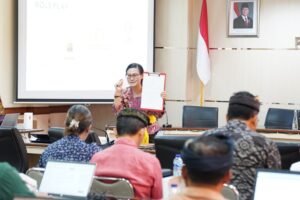
One of the speakers, Irmawati Marwoto, Professor of Archaeology at the Faculty of Humanities of Universitas Indonesia and Chair of the Research Cluster on Museums, Cultural Heritage, and Islamic Material Culture, emphasized the need for a stronger and more innovative legal framework.
“Our challenge is to ensure that this law is capable of going beyond the provisions of previous implementing regulations,” she stated.
Representatives from Universitas Indonesia attending the event included the Director of Culture of UI, Ngatawi Al-Zastrouw, and the Head of the Department of Archaeology of FIB UI, R. Cecep Eka Permana. In addition to Prof. Irmawati, other speakers included Fitriani Ahlan Sjarif, Aprina Murwanti, and Saiful Bakhri, while Ajeng Arainikasih served as the moderator.