



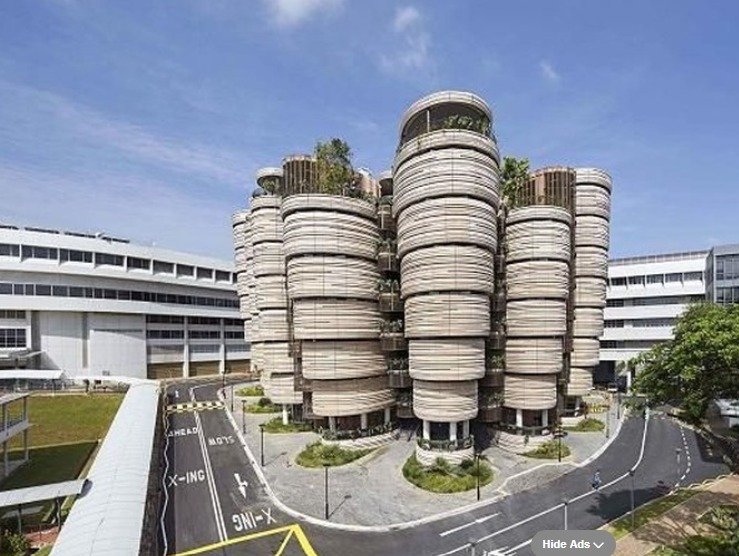
EduAsiaNews, Singapore — Nanyang Technological University, Singapore (NTU Singapore) and Musim Mas Group have launched a multi-year research collaboration to understand what drives independent oil palm smallholders to adopt sustainable farming practices and how such behaviour can spread within farming communities. The partnership was announced on 9 February 2026 and stands as one of the most relevant cross-border research initiatives for Indonesia, the world’s largest producer of palm oil.
The research is led by Assistant Professor Janice Ser Huay Lee from the Asian School of the Environment at NTU Singapore, with a focus on smallholder farmers in Riau Province. The study covers farmers both within and outside the Pelalawan Siak Oil Palm Smallholder Association (APSKS-PS), a farmer association supported by Musim Mas. It will explore the behavioural, social, and spatial factors that shape how sustainable practices are learned, shared, and adopted by smallholder communities.
NTU researchers will employ a combined approach encompassing spatial analysis, social network mapping, and large-scale farmer surveys. This methodology is designed to identify the factors that most strongly predict the spread of sustainable behaviour from one farmer to another within a community. The findings are expected to serve as evidence-based guidance for companies and policymakers in designing more effective farmer support programmes.
The project is scheduled to run for two years and nine months, from June 2025 to March 2028, with field visits to the districts of Pelalawan and Siak. NTU Singapore is partnering with three Indonesian universities as research collaborators: Universitas Sumatera Utara, IPB University, and Universitas Riau. The involvement of these Indonesian institutions reinforces the regional academic collaboration dimension that characterises NTU’s research on environmental and food security issues across the region.
Musim Mas operates the largest independent smallholder programme in Indonesia, having trained more than 40,000 farmers since 2015. This collaboration with NTU extends Musim Mas’s research network, which previously included partnerships with ETH Zurich, the University of Cambridge, and IPB University. For Indonesia, the significance of this research extends well beyond the palm oil sector — the sustainable behaviour diffusion model it produces has the potential to be applied to other agricultural commodities predominantly cultivated by smallholder farmers. (**)