




EduAsiaNews, Jakarta – The International Relations Study Program of the Faculty of Social and Political Sciences at UPN “Veteran” Jakarta (UPNVJ) implemented an Adjunct Professor Program by hosting Prof. Dr. Mohd Kamarulnizam Bin Abdullah, Director of the Institute of Malaysian and International Studies (IKMAS), Universiti Kebangsaan Malaysia, from 2–5 March 2026 on the UPNVJ campus.
This program was organized in response to the increasing complexity of security threats in Southeast Asia, ranging from terrorism, cross-border migration, and border governance, to the impact of climate change on maritime security. Through initiatives aimed at strengthening teaching, policy knowledge transfer, and international research collaboration, FISIP UPNVJ affirms its commitment to internationalization and enhancing global academic competitiveness.
The strategic dynamics of the region indicate that security issues are no longer solely conventional. Non-traditional threats, such as climate change, migration, and maritime security risks, increasingly intersect with regional political and economic stability. In this context, the presence of academics and policy experts from Malaysia serves as a significant opportunity to enrich students’ and faculty members’ perspectives on national and regional security policy practices.
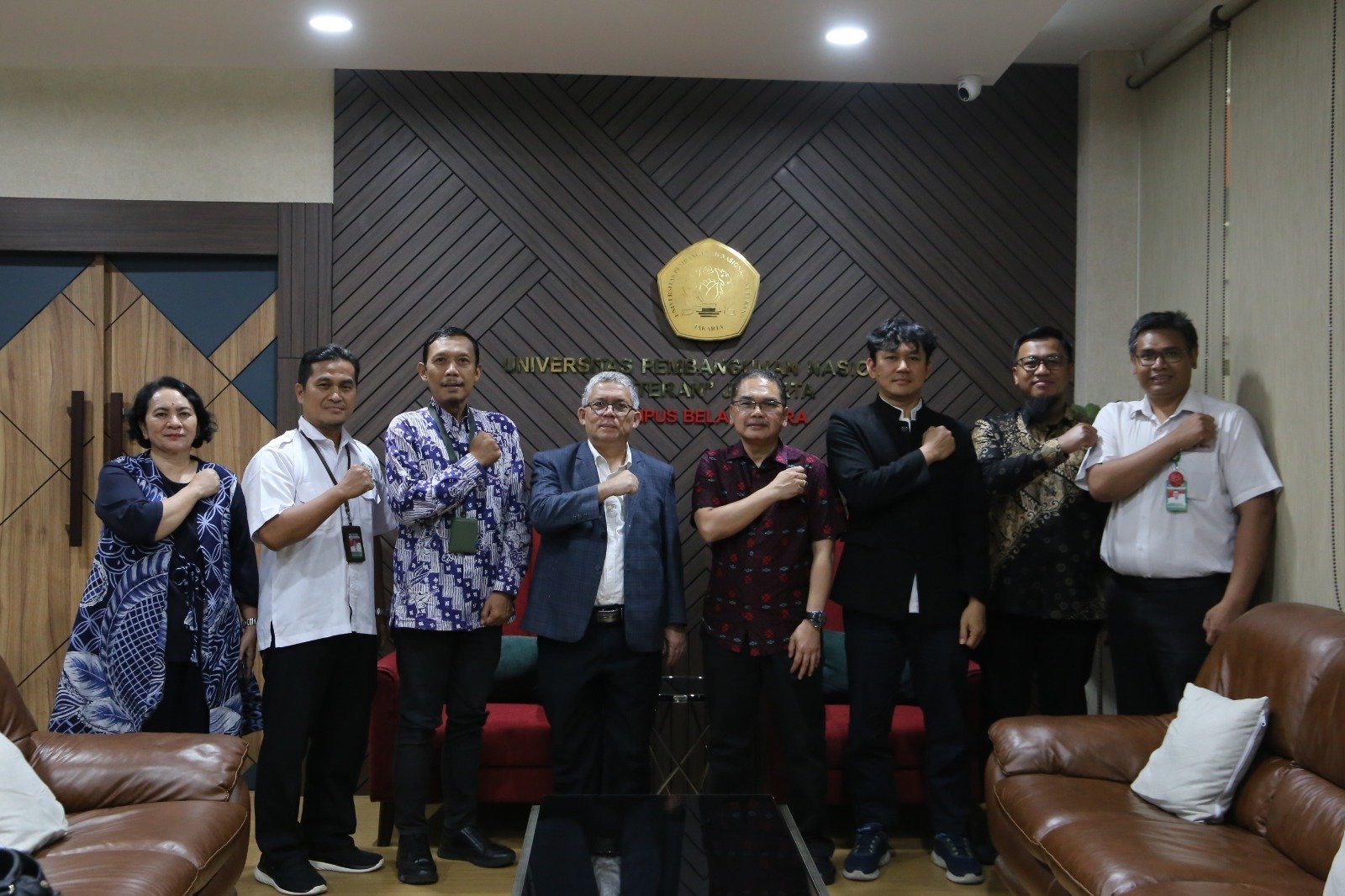
UPNVJ Rector, Prof. Dr. Anter Venus, MA, Comm, welcomed the implementation of the Adjunct Professor Program. In a meeting at the Rector’s Office, he emphasized that the activities organized by the International Relations Study Program at FISIP are expected to provide academic exposure to Malaysian and Southeast Asian security policy practices, while also strengthening the campus community’s capacity for analyzing national security policies.
According to Prof. Venus, the collaboration also aims to initiate joint research and publications between UPNVJ and UKM, as well as to develop a research cluster in the field of regional and border security. “This program not only enriches the learning process but also expands international academic networks and enhances institutional reputation,” he stated.
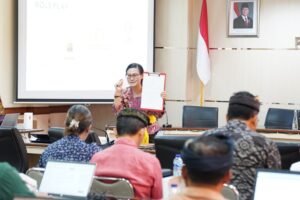
Over the four-day program, activities were organized in a structured and thematic manner. On Monday, 2 March 2026, a public lecture was held on the theme Board of Peace from the Malaysian Perspective, attended by undergraduate and graduate students as well as faculty members. This session explored Malaysia’s approach to maintaining regional stability and peace.
On Tuesday, 3 March 2026, a faculty workshop was conducted on National Security Policy Design: From White Paper to Implementation, discussing the formulation of national security policies from strategic document preparation to operational-level implementation.
On Wednesday, 4 March 2026, the program continued with interactive small-class lectures for undergraduate and graduate students on Non-Traditional Security: Climate, Migration, and Maritime Risks in Southeast Asia. The discussion deepened understanding of the interconnections between climate change, migration, and maritime risks in the regional security context.
The program concluded on Thursday, 5 March 2026, with a curriculum consultation for the International Relations Study Program under the theme Curriculum Alignment and Global Benchmarking: Strengthening International Relations Studies in the Era of Non-Traditional Security and Regional Dynamics. This agenda focused on aligning the curriculum with global standards and enhancing graduate competencies to adapt to regional security dynamics.
Through this program, UPNVJ reaffirms its commitment to advancing the internationalization of higher education, positively impacting academic quality, collaborative research, and the university’s positioning in the study of security and international relations in Southeast Asia. Under the leadership of Prof. Anter Venus, policies on global collaboration and the development of strategic research clusters form part of UPNVJ’s transformation into a leading, adaptive, and internationally competitive public university.(www.upnvj.ac.id)