




EduAsiaNews, Bandung — Institut Teknologi Bandung (ITB), through its Directorate of Partnerships, has once again strengthened its international network through the organization of the Short Program Nagoya University–ITB. The program serves as a platform for academic and cultural exchange for international students, while also introducing ITB’s academic environment and Indonesia’s rich cultural heritage firsthand.
The program was attended by 17 students from Nagoya University representing diverse academic backgrounds, ranging from the humanities to engineering, and was accompanied by one faculty member. The three-week series of activities commenced with the participants’ arrival on 8 February, followed by the opening ceremony on 9 February, the closing session on 25 February, and their return to Japan on 26 February.
According to Fathatus Sania Noer, S.S., Head of the International Mobility Services Section at ITB’s International Relations Office (IRO), the program was initiated by Nagoya University with the aim of introducing Indonesia and ITB’s academic system to Japanese students, particularly as their first international experience.
“Most of the participants were traveling abroad for the first time, and Indonesia became the first country they visited outside Japan. We hope this program will inspire them to pursue a semester exchange, either at ITB or at other universities overseas,” she explained.
Throughout the program, students engaged in academic activities through a sit-in system across various faculties at ITB in accordance with their respective fields of study. In addition, participants were introduced to Indonesian culture through a range of non-academic activities designed to enrich their cross-cultural experience.
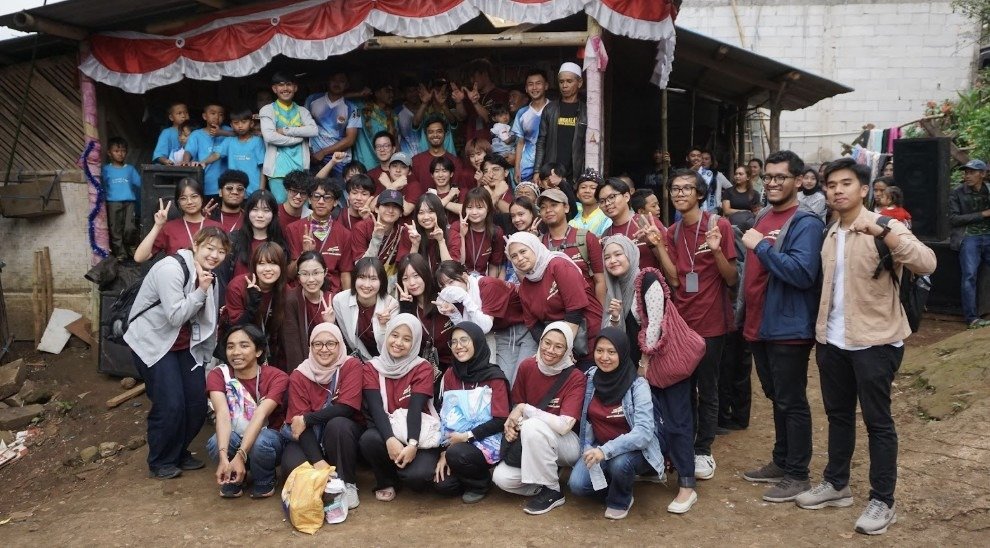
One such activity was a visit to Mekarlaksana Village in West Bandung Regency. During this visit, students participated in various cultural activities, including traditional textile weaving, crafting handmade bracelets, and exploring local cuisine and performing arts. The initiative reflects ITB’s commitment to providing contextual cultural experiences beyond the campus environment.
“Cultural introduction is also conducted on campus, for example through Indonesian language classes and angklung sessions. However, the visit to Mekarlaksana Village offered a more immersive experience, as students could directly witness cultural richness while interacting with the local community,” she added. ITB hopes to further develop similar initiatives in the future, whether in the same village or other cultural villages, with improvements in facilities and program management.
One of the participants, Yuu Hiranatsu, an Aerospace Engineering student from Nagoya University, shared his positive impressions of the program at ITB. He expressed admiration for ITB’s green and open campus environment.
“The ITB campus is very spacious and green. I can walk around and find many spaces for studying or discussion. There is even a pond and a small waterfall, which is very impressive,” he remarked.
Yuu also described his interactions with ITB students as warm and memorable. According to him, ITB students not only supported academic activities but also introduced participants to the surrounding campus area.
“They were very friendly. They took us to cafés and shopping centers around the campus, so we truly felt welcomed,” he said.
From an academic perspective, Yuu observed differences between ITB and Nagoya University, particularly regarding the availability of learning spaces. He noted that ITB offers more open spaces that encourage discussion and student interaction.
Prior to joining the program, Yuu had hoped to improve his English proficiency through international interaction. However, the experience exceeded his initial expectations.
“Through this program, I was able to observe how Indonesian students study, communicate, and experience campus life. By comparing these experiences, I learned many positive aspects from them,” he stated.
He also views the program as the beginning of long-term collaboration among students. During the program, participants exchanged contact information and shared common interests, including in design and the arts.
“Some ITB students are also planning to go to Japan. We can exchange information and experiences, and stay connected online,” he added.
Concluding his remarks, Yuu expressed his hope to engage in future academic collaborations with ITB.
“I gained a truly valuable experience here. If there is an opportunity in the future to contribute again through joint projects or research, I would be very pleased to do so,” he concluded.