




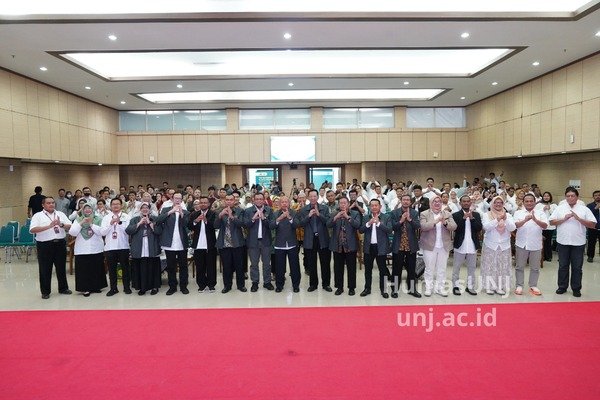
EduAsiaNews,Jakarta — In an effort to strengthen the institutional foundation following its transformation into a State University with Legal Entity Status (PTN-BH), the leadership of Universitas Negeri Jakarta (UNJ) held a strategic gathering of the UNJ academic community under the theme “Synergizing Toward a World-Class University and Financial Independence.”
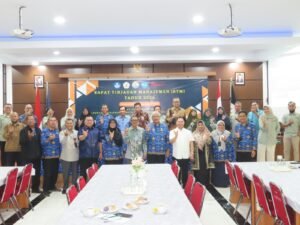
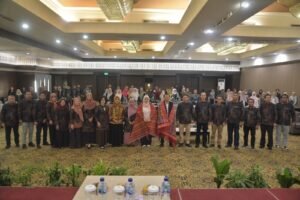
The event, which embraced a spirit of togetherness, was conducted over two consecutive days, Monday and Tuesday, 9–10 February 2026, at the Latief Hendraningrat Hall, UNJ Campus A. This grand forum brought together the university’s three governing bodies—the Rectorate, the Board of Trustees (Majelis Wali Amanat, MWA), and the University Academic Senate (Senat Akademik Universitas, SAU)—along with faculty members and administrative staff from all faculties.
The gathering was specifically designed to unify vision, align perceptions, and strengthen synergy among all campus elements in realizing UNJ’s ambitious goal of becoming a World-Class University (WCU) while solidifying sustainable financial independence for the institution.
The series of activities began with a report from the University Secretary, Prof. Suyono, who emphasized the urgency of this meeting. He explained that the theme “Synergy to Achieve a World-Class University” was chosen as a crucial moment for the university leadership and academic community to synchronize their steps.
“Synergy is the key to accelerating the achievement of the Key Performance Indicators (IKU) set by the ministry and to boost UNJ’s position in increasingly competitive international rankings,” he stated.
On the same occasion, UNJ Rector Prof. Komarudin delivered a comprehensive presentation on the 2025 performance evaluation and the strategic policy direction for 2026. Prof. Komarudin noted that several IKU metrics remain in the red, particularly IKU 1 and 2, which must be addressed immediately by Deans and Program Coordinators.
Furthermore, Prof. Komarudin outlined three main strategies to accelerate performance in 2026:
Strengthening global research reputation by requiring Professors and Senior Lecturers to produce research outputs in high-impact journals such as those indexed in Scopus.
Optimizing income-generating activities to ensure financial independence through productive university business units.
Transforming digital services into fully integrated systems to streamline bureaucracy, enabling academic, financial, and human resources services to operate more efficiently, transparently, and data-driven.
“UNJ must run fast, even leap ahead, to catch up with other world-class universities,” he encouraged.
Strategic perspectives on governance were also shared by the Chair of the Board of Trustees (MWA), Prof. Nizam. He reminded participants that the change to PTN-BH status is not an ultimate goal, but rather a “vehicle” to allow UNJ to move faster and more flexibly toward its vision and mission. Prof. Nizam emphasized financial independence, urging the university to creatively explore new funding sources through optimization of intellectual assets, commercialization of research outcomes, and professional management of physical assets.
“There is a red line that must not be crossed: PTN-BH status should not burden students with unreasonable tuition increases, but rather serve as a solution that enhances welfare,” Prof. Nizam stressed.
Complementing leadership perspectives, the Chair of the University Academic Senate (SAU), Prof. Ahman Sya, highlighted the strategic role of the Senate in safeguarding academic dignity and quality in the PTN-BH autonomy era. He called on all university elements to accelerate the number of Professors as an indicator of high-quality human resources.
“The Academic Senate acts as a strategic partner to the Rectorate, performing a check-and-balance function to ensure all academic policies remain within ethical boundaries and high-quality standards for the advancement of the institution,” he said.
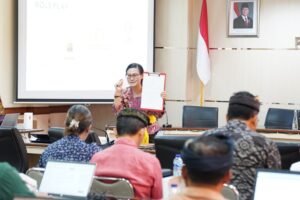
To ensure effective discussions and maximum absorption of aspirations, the gathering was organized by faculty clusters. On the first day, Monday, 9 February 2026, participants from the Faculty of Education, Faculty of Sport Science and Health, Faculty of Engineering, and Faculty of Psychology and the Postgraduate School attended. On the second day, Tuesday, 10 February 2026, participants from the Faculty of Social Sciences and Law, Faculty of Mathematics and Natural Sciences, Faculty of Economics and Business, and Faculty of Language and Arts engaged in dialogues. Interactive discussion sessions, directly facilitated by Prof. Suyono, provided a crucial platform for faculty members and administrative staff to convey ideas, constructive criticism, and suggestions directly to the university’s top leadership and the heads of the three governing bodies. Through this activity, the UNJ academic community’s spirit is expected to be further internalized in every step of the university’s development.