




EduAsiaNews, Jember – Amid the growing global threat of antibiotic resistance, University of Jember (UNEJ) has once again achieved a historic academic milestone.
Dr. Riska Ayu Febrianti, S.Pd., M.Biotek., a young lecturer and researcher from the Faculty of Agricultural Technology (FTP), UNEJ, successfully completed her doctoral studies through biotechnology research offering a novel approach to combating antibiotic-resistant bacterial infections. This achievement marks the emergence of the first generation of biotechnology PhD graduates at UNEJ who are conducting impact-driven research.
Riska is one of the first three graduates of the UNEJ Doctoral Program in Biotechnology. She is also the youngest among her peers and has contributed significantly to the development of alternative therapies addressing the antibiotic resistance crisis, which has become a pressing global health issue.
Her academic journey is marked not only by her study accomplishments but also by her courage in selecting a research topic with direct relevance to public health. Her interest in biotechnology, particularly bacteriophage research, developed from her undergraduate studies through to her doctoral program, guided by intensive mentorship at the University of Jember.
“The guidance from Prof. Erlia Narulita, my mentor since my Bachelor’s and Master’s studies, has been invaluable. She not only provided academic supervision but also encouraged me to keep dreaming and developing. Personally, I aspire to become a competent expert who makes a tangible impact through scientific innovation, especially in biotechnology and bacteriophage research,” Riska stated.
Her dissertation addressed the global urgency of Salmonella enterica infections, which, according to 2024 data, ranks among the top ten causes of foodborne disease deaths and is one of the most antibiotic-resistant bacteria worldwide. Dependence on conventional antibiotics, combined with stagnant drug innovation for decades, underscores the need for alternative therapeutic approaches.
Through her research, Riska developed bacteriophage-based therapy, utilizing lytic viruses that specifically target and destroy pathogenic bacteria. By employing CRISPR/Cas9 genome engineering, she successfully modified local bacteriophages to expand their host range. The recombinant bacteriophages developed in her study were not only effective against a single Salmonella serovar but also capable of lysing several other clinically significant serovars.
“The multi-drug resistance crisis has made antibiotic therapy increasingly ineffective. Therefore, this research focuses on bacteriophages as a precise, resistance-resilient, and host-safe alternative therapeutic agent,” she explained during her dissertation defense.
Riska’s research excellence is highlighted not only by its novelty but also by her academic track record and international network. Her findings have been published in high-impact international journals, including Scopus Q1, and presented at international scientific forums, such as the 76th Annual Meeting of the Society for Biotechnology in Japan, as well as other national and international bioscience conferences. She actively participates in research grant programs and international collaborations.
Behind these academic achievements, Riska acknowledges that her doctoral research journey demanded perseverance and mental resilience.
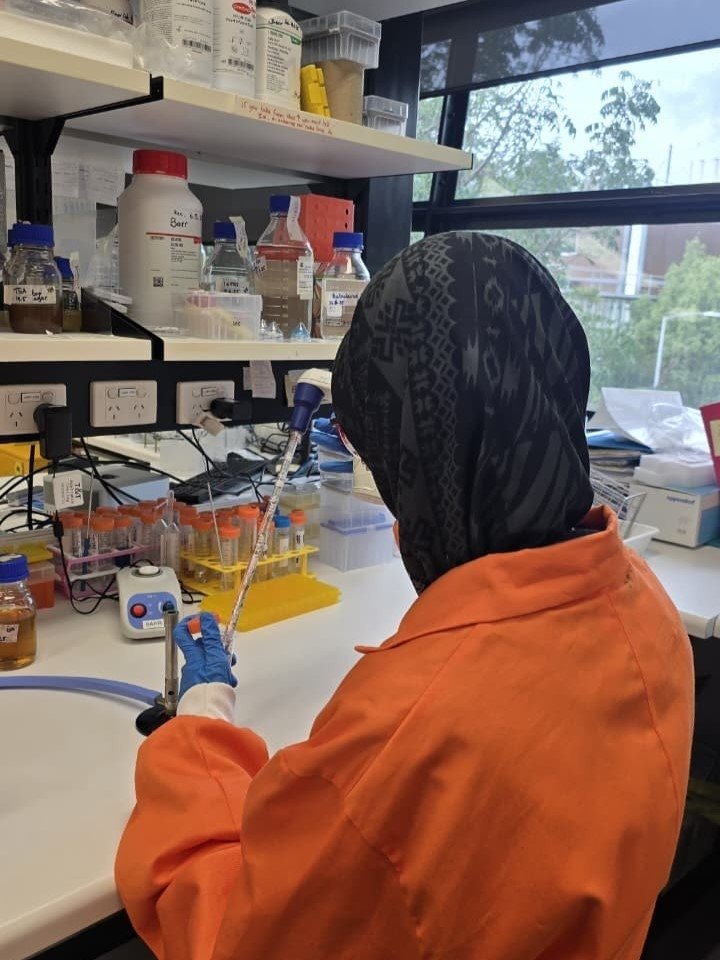
“One of the most memorable moments was working late in the lab just to observe growth and analyze samples. From this, I learned that biotechnology is not just about numbers—it is about understanding life at a highly precise molecular level,” she shared.
Her accomplishments also reflect the unwavering support of her family, which has been the foundation of her studies.
“For me, my parents have been my main support system. Their prayers and understanding, especially when I had to sacrifice time with family for my research, gave me the strength to complete my doctoral studies,” she concluded.
Riska’s graduation reinforces UNEJ’s commitment as an impact-driven research university, not only producing outstanding graduates but also nurturing young scientists who contribute meaningfully to solving global health challenges through science and innovation.