





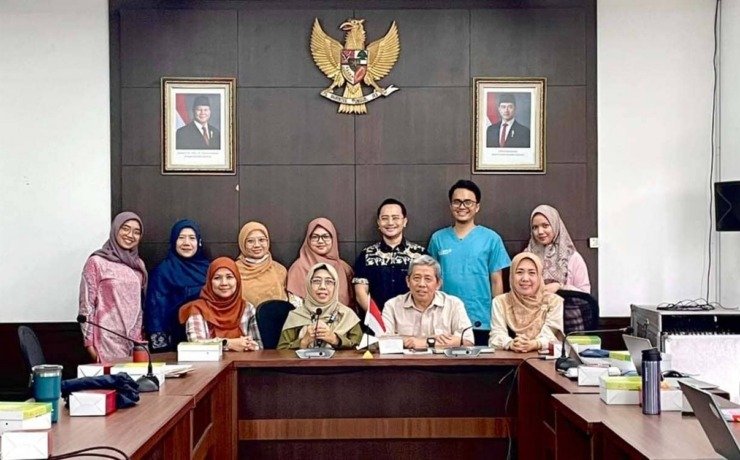
EduAsiaNews, Bogor – IPB University Launches Online Research Ethics Review Service: Faster, Transparent, and Adaptive
The Research Ethics Committee of IPB University has launched an Online Ethics Review Service. With this new system, all stages have now transitioned to an integrated web-based online service.
The Head of the Research Ethics Committee, Prof. Suwardi, stated that this step was taken to ensure research integrity, improve service quality for researchers, and foster a culture of ethical research.
“With this new system, the duration of the ethics review process can be shortened from 30 days to 20 working days. In addition to faster processing, applicants can monitor the progress of their submissions in real time, making the process more transparent, accountable, and measurable,” he explained.
Applicants can now upload documents, track the evaluation status, and receive structured feedback. Submissions can be made through the website kep.ipb.ac.id, and a submission guide is available on Instagram @komiteetikipb.
Furthermore, the Research Ethics Committee of IPB University has officially expanded its structure from two committees into three specialized committees: the Animal Ethics Committee (KEH), the Health Research Ethics Committee (KEPK), and the Social and Humanities Research Ethics Committee (KEPSH).
Animal Ethics Committee (KEH)
Evaluates research involving experimental animals or other species, emphasizing animal welfare, reduction of suffering, and the application of the principles of replacement, reduction, and refinement (3Rs).
Health Research Ethics Committee (KEPK)
Reviews research involving human subjects in health, biomedical, or clinical intervention contexts. Its primary focus includes participant safety, informed consent, and the confidentiality of personal data.
Social and Humanities Research Ethics Committee (KEPSH)
Assesses social, economic, cultural, and behavioral research involving communities or individuals as respondents. Key considerations include privacy protection, cultural sensitivity, and prevention of harmful social impacts.
According to Prof. Suwardi, this structural expansion aims to enhance the depth of ethical review according to the characteristics of each research field. This ensures that ethical assessments are more precise, proportional, and expertise-based.
“Ethics review is not merely an administrative requirement but a primary mechanism for protection in scientific research. In studies involving humans, ethics review ensures that participation is voluntary, based on adequate understanding, and free from exploitation or unnecessary risk,” he elaborated.
In research involving animals, ethics review guarantees that their use is conducted ethically, minimizing suffering while ensuring clear scientific benefits.
Prof. Suwardi further emphasized, “Ethics review serves to maintain public trust in academic institutions. Research conducted in accordance with ethical principles demonstrates that science progresses in harmony with human values, social responsibility, and care for living beings.