




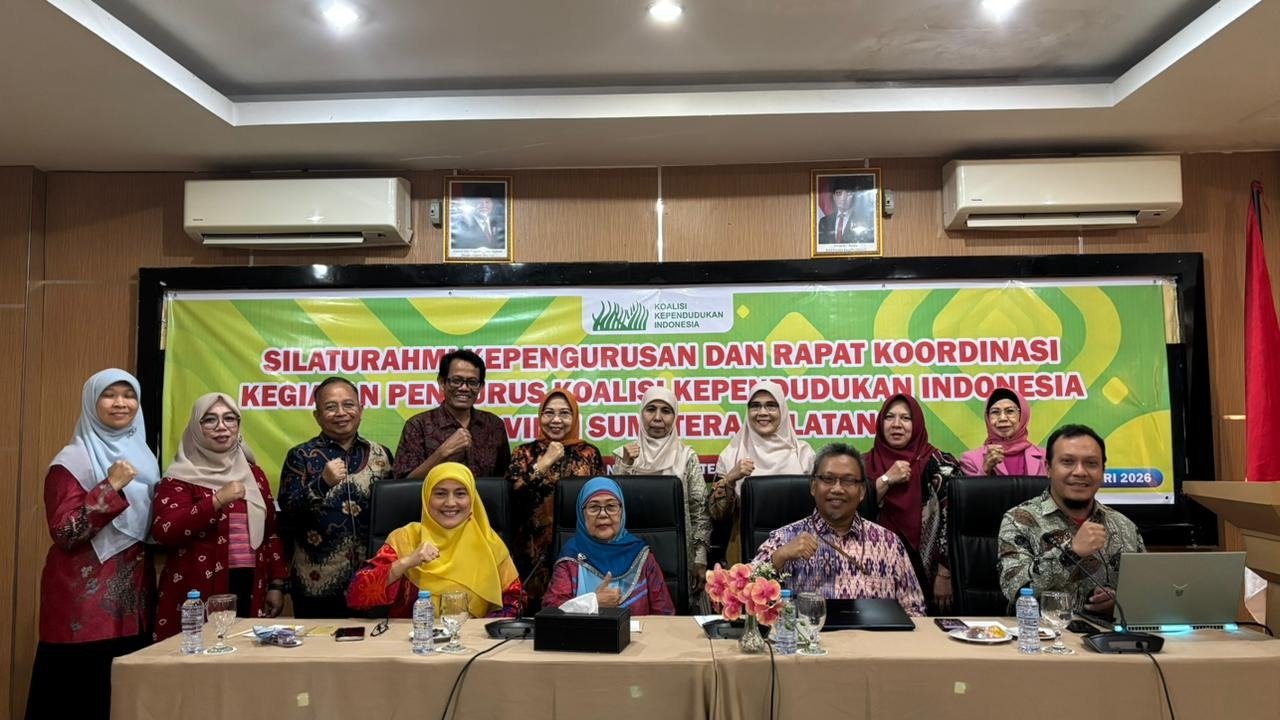
EduAsiaNews, Palembang – Sriwijaya University (UNSRI) has once again reaffirmed its role as a higher education institution that excels not only in teaching and research, but also actively contributes to addressing strategic issues in regional and national development. This commitment is reflected in the active involvement of UNSRI faculty member Prof. Dr. rer. med. H. Hamzah Hasyim, S.K.M., M.K.M., who was once again entrusted as a resource person in a strategic forum organized by the Indonesian Population Coalition (KKI) of South Sumatra Province.
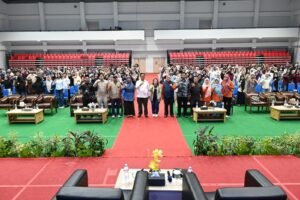
The event, entitled “Stunting and the Implementation of the Free Nutritious Meal Program in South Sumatra: An Evidence-Based Review and the Role of the Indonesian Population Coalition,” was held at the Karang Anyar Meeting Room, Swarna Dwipa Hotel, Palembang, on Saturday, 24 January 2026.
This forum served as a cross-sectoral meeting space bringing together academics, local government representatives, civil society organizations, and public health practitioners. The discussion specifically addressed the latest developments in stunting prevention and management in South Sumatra, drawing on data from the 2024 Indonesian Nutritional Status Survey (SSGI).
In his presentation, Prof. Dr. rer. med. H. Hamzah Hasyim highlighted that the prevalence of stunting in South Sumatra remains above the target recommended by the World Health Organization (WHO), thus requiring more focused, integrated, and evidence-based intervention strategies.
“Stunting is not merely a child health issue, but a long-term development challenge that has the potential to reduce labor productivity, widen social inequality, and increase regional fiscal burdens in the future,” he explained.
Furthermore, Prof. Hamzah emphasized that stunting interventions cannot be carried out in a sectoral manner. In the context of South Sumatra, the main determinants of stunting are closely related to household food security, access to adequate sanitation, and the affordability of basic health services. Therefore, a cross-sectoral approach—engaging the health, food, sanitation, education, and social protection sectors—is a key prerequisite for achieving sustainable impact.
Discussions in the forum also addressed a crucial strategic question for local governments: which interventions are the most cost-effective and have a tangible impact on reducing stunting? At this point, the role of higher education institutions becomes particularly important. Through robust research, context-based community service, and the ability to translate scientific evidence into policy recommendations, UNSRI academics serve as intellectual partners to local governments in designing more effective and targeted public policies.
The involvement of UNSRI faculty members in this activity reflects the concrete implementation of the Tri Dharma of Higher Education, particularly in the areas of community service and research-based scholarly contribution. Knowledge generated within the academic environment does not remain confined to classrooms or scientific journals, but is transformed into strategic input for regional development policymaking.
UNSRI believes that collaboration between academics and policymakers is key to delivering sustainable development solutions. Through active participation in strategic forums such as this, UNSRI continues to strengthen its role in the development of healthy, high-quality, and globally competitive Indonesian human resources.