




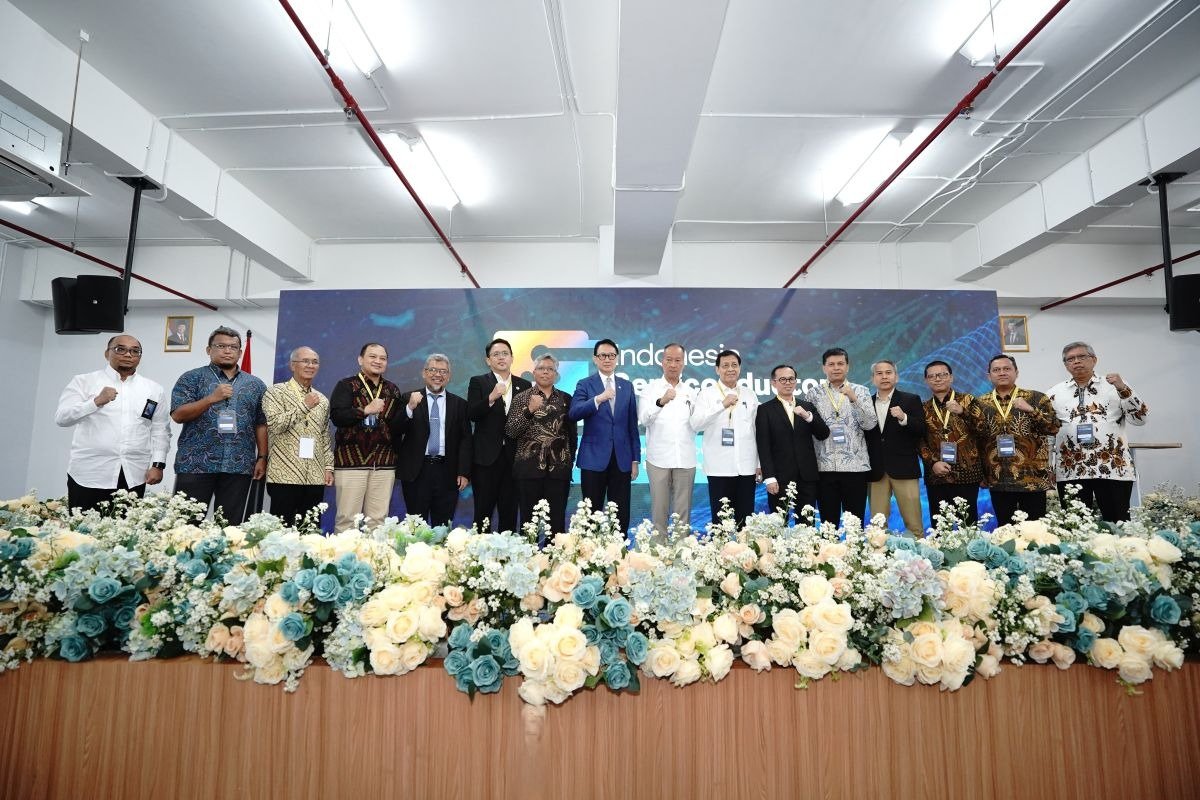
EduAsiaNews, Bandung — The Indonesia Chip Design Collaborative Center (ICDeC) hosted the Indonesia Semiconductor Summit 2026 on Thursday and Friday (January 29–30, 2026) at the ITB Innovation Park, Gedebage, Bandung. The forum serves as a strategic platform for collaboration among the government, universities, industry, and international partners to strengthen the national semiconductor ecosystem and its integration into the global value chain.
The Indonesia Semiconductor Summit 2026 was held in response to the designation of the semiconductor and artificial intelligence industries as key pillars of Indonesia’s new economic development strategy.
The Rector of ITB, Prof. Dr. Ir. Tatacipta Dirgantara, M.T., in his remarks, reaffirmed ITB’s commitment to advancing national semiconductor technology and strengthening cross-sector collaboration. He highlighted that the event serves as a strategic forum and represents a shared commitment to positioning the semiconductor industry as a driver of Indonesia’s emerging economy.
ITB has been exploring and developing semiconductor technology since 1986, marked by the establishment of the Inter-University Center (PAU). This initiative has laid a crucial foundation for advancing scientific knowledge and human resources in the field of national microelectronics.
“As part of our ongoing commitment, ITB has invested in cleanroom facilities to support the development of various microelectronics devices and systems, for research, education, and industry collaboration,” he said.
In the context of semiconductors, ITB has actively supported the establishment of the Indonesia Chip Design Collaborative Center (ICDeC), a collaborative initiative involving 16 universities and seven industries in Indonesia, with support from various ministries and state agencies. ICDeC is expected to serve as a strategic platform to strengthen national capacity in chip design, talent development, and research acceleration toward commercial products and industry.
Industry Perspective
The Minister of Industry, Agus Gumiwang Kartasasmita, noted that Indonesia already possesses several key elements within the semiconductor ecosystem. The country has one semiconductor assembly and testing facility in Batam, as well as a company engaged in integrated circuit (IC) design. In addition, Indonesia has a strong ecosystem in Electronic Manufacturing Services (EMS), supported by Original Equipment Manufacturers (OEMs) and a growing national automotive industry, which together reinforce the semiconductor ecosystem.
“This situation indicates that Indonesia has a foundational ecosystem that can be strengthened through upstream industry development, enhanced design capabilities, and closer integration with the electronics and automotive sectors,” he said.
He also mentioned that Indonesia’s semiconductor exports doubled in 2025, reflecting positive progress in the sector. The government has developed a national semiconductor ecosystem roadmap spanning two to ten years, covering materials, design, fabrication, and Assembly, Test, and Packaging (ATP).
Talent Development
The Director General of Research and Development at the Ministry of Education, Culture, Research, and Technology (Kemdikbudristek), Fauzan Adziman, emphasized that talent is a key factor in developing this strategic industry. Indonesia currently produces nearly 90,000 skilled graduates annually across various fields, providing a solid foundation to strengthen the national ecosystem.
“What is needed is to build an ecosystem that focuses on the areas that are currently required, such as materials and design,” he said.
The Deputy Minister of Foreign Affairs, Arif Havas Oegroseno, highlighted the global strategic importance of the industry.
“We need technological self-reliance, especially in semiconductors. Ideally, we should be able to design chips domestically, use them nationally, and also export them,” he stated. He also emphasized the importance of collaboration with international countries and industries to expand Indonesia’s chip design capabilities and talent pool.
Strategic National Collaboration
The Chairman of ICDeC, Prof. Trio Adiono, S.T., M.T., Ph.D., who is also an ITB lecturer and researcher, noted that Indonesia possesses three strengths in the semiconductor sector: materials, talent, and market.
“We have the potential to produce products for our domestic market while also meeting global demand. No single country can develop a semiconductor industry in isolation. This event shows that Indonesia can integrate into the global value chain,” he said.
Through the Indonesia Semiconductor Summit 2026, ITB reaffirmed its role as a strategic hub for research collaboration, innovation, and talent development in national semiconductors. The forum is expected to strengthen cross-sector synergies and accelerate the establishment of a globally competitive and sustainable Indonesian semiconductor industry.